 MAPI
MAPIHow to Adjust a Cabinet Door That Sits Too Low
A cabinet door that sits too low may rub against the cabinet frame, touch another door, or leave an uneven gap at the top. On many cabinets with concealed hinges, the door height can be corrected without removing the door. The exact adjustment point varies by hinge, so identify how your hinge is mounted before loosening any screws.
Support the cabinet door, then use the vertical adjustment on its hinges to move the whole door upward a little at a time. Tighten the hinge screws and check that the gaps around the door are even before closing it fully.
Things you'll need
- A Phillips or Pozidriv screwdriver that fits the hinge screws
- A small level or ruler
- A helper or support for a large cabinet door
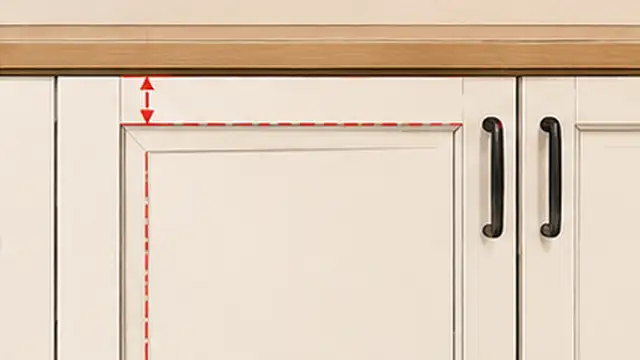
Check where the door is too low
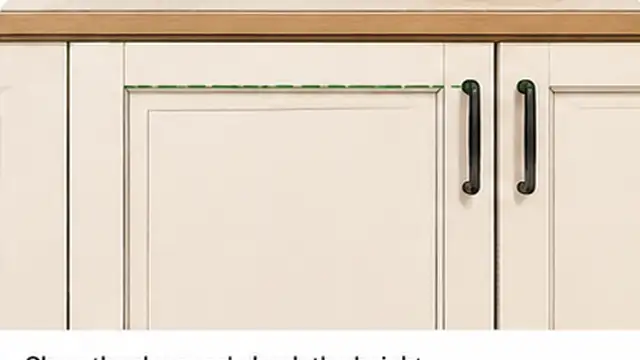
Close the cabinet door and look at the gaps along the top, bottom, and sides. If the whole door sits lower than the neighboring door or cabinet opening, it needs a vertical adjustment. If only one corner hangs low, the problem may also involve side-to-side or depth adjustment rather than simply raising the entire door.
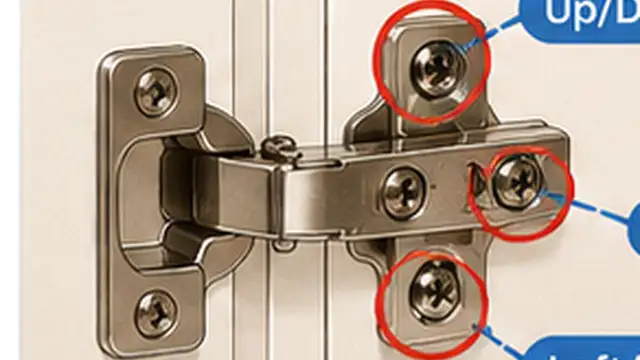
Open the door and inspect the hinges
Open the cabinet door and look at the hinges where they attach to the cabinet. Many concealed European-style hinges have mounting screws or an adjustment mechanism that allows the door to move vertically. Identify the screws that secure the hinge mounting plate before turning anything. Do not loosen the screws that hold the hinge cup inside the door unless the hinge design requires it.
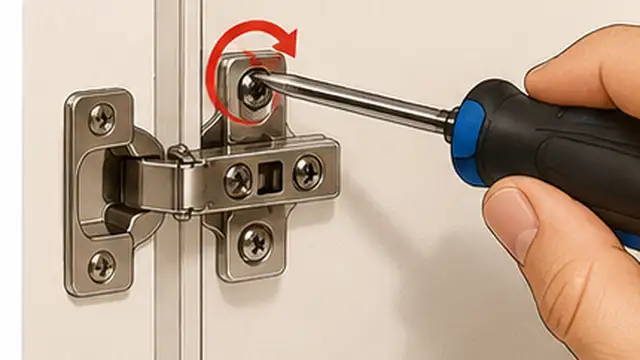
Loosen the height adjustment slightly
Support the bottom of the door with one hand or ask someone to hold it. On hinges that use slotted mounting plates, loosen the vertical mounting screws just enough for the hinge plate or door to move. Do not remove the screws. If your hinges use a dedicated height-adjustment cam instead, turn that adjustment according to the hinge design rather than loosening the mounting plate.
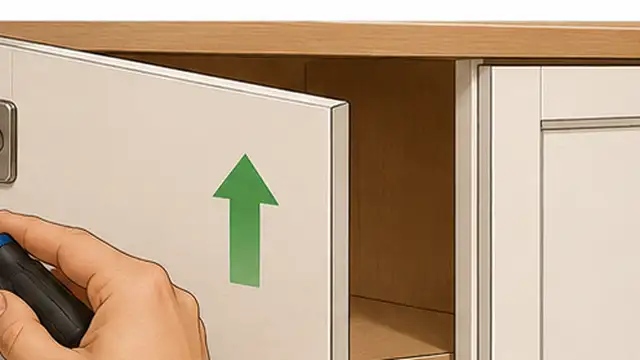
Raise and secure the door
Move the door upward a few millimeters while keeping it level. Adjust both the upper and lower hinges so the door rises evenly rather than twisting. Hold the door in the new position and tighten the screws firmly. Avoid overtightening, especially if the screws are fixed into particleboard or MDF.
Close the door and fine-tune the alignment
Close the door slowly and compare the gaps again. The top edge should now line up with nearby cabinet doors, and the door should open and close without rubbing. If one corner is still uneven, make a small side-to-side or depth adjustment using the appropriate hinge screw instead of raising the whole door again.
Tips & common mistakes
Tips for best results
- Make small adjustments and check the door after each change instead of moving it a large distance at once.
- Support heavy cabinet doors while loosening hinge screws so their weight does not pull the hinges downward.
- Before adjusting the height, tighten any obviously loose hinge screws because looseness alone can cause a door to sag.
- Compare the adjusted door with neighboring doors rather than relying only on a level; cabinet openings are not always perfectly square.
- If a screw keeps turning without tightening, the screw hole may be stripped and should be repaired before final alignment.
Common mistakes
- Turning the wrong adjustment screw: Concealed hinges may have separate controls for height, side-to-side position, and depth. Identify the height adjustment before turning screws.
- Loosening the screws too far: The door can suddenly drop or shift. Loosen mounting screws only enough to allow controlled movement.
- Adjusting only one hinge: Raising one hinge much more than the other can twist the door and create uneven gaps.
- Overtightening screws: Excessive force can damage screw holes in particleboard or MDF.
- Ignoring loose or damaged hinges: Adjustment will not last if the hinge, mounting plate, or screw holes are damaged.
Frequently asked questions
Which screw raises a cabinet door?
It depends on the hinge. Many concealed hinges use mounting-plate screws or a dedicated height-adjustment mechanism. Side and depth screws usually perform different adjustments, so identify your hinge type before turning them.
Why does one corner of my cabinet door hang lower?
The door may be slightly twisted or one hinge may be loose. Tighten the hinge screws first, then use small height and side adjustments to make the gaps even.
What if the cabinet hinge has no height adjustment?
Traditional hinges may require loosening and repositioning the hinge itself. If the screw holes are worn or the hinge is bent, repair the holes or replace the damaged hinge before trying to align the door.
Why does my cabinet door keep dropping after I adjust it?
The mounting screws may be loose, the screw holes may be stripped, or the hinge may be worn. The underlying problem needs to be repaired before the door will stay aligned.
Written by Mapiance Editorial Team
The Mapiance Editorial Team researches, writes, reviews, and maintains practical guides and explainers for MAPIANCE.
Published Aug 21, 2026 · Updated Oct 1, 2026