 MAPI
MAPIHow to Clean a Dishwasher
Food particles, grease, detergent residue, and mineral buildup can collect inside a dishwasher over time. Cleaning the filter, spray arms, seals, and interior helps water circulate properly and reduces odors. Check the appliance manual before using any cleaner because recommended products and cleaning cycles vary by model.
Empty the dishwasher, clean the filter and spray arms, wipe the door seals and interior edges, then run an empty cleaning cycle using a dishwasher cleaner approved for your model. Finish by wiping the exterior and leaving the door slightly open until the inside is dry.
Things you'll need
- Microfiber cloths
- Warm water
- Mild dish soap
- Soft brush or old toothbrush
- Dishwasher cleaner approved for your model
- Small bowl or sink for washing removable parts
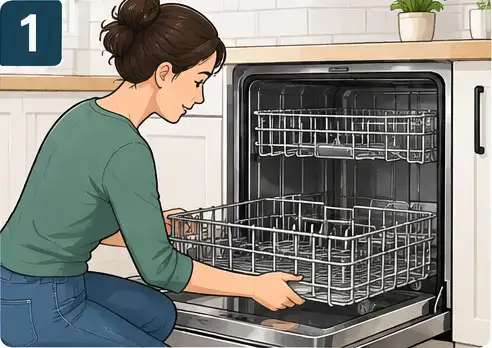
Empty the dishwasher
Remove all dishes, utensils, and loose items from the dishwasher. Pull out the lower rack so you can reach the filter and bottom of the tub. Check the floor of the dishwasher for pieces of food, labels, broken glass, or other debris and remove them carefully.
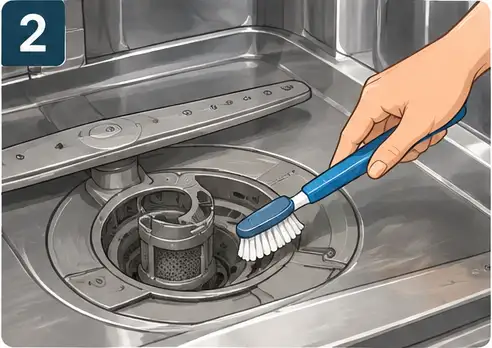
Clean the filter
Remove the dishwasher filter according to the manual, usually by turning and lifting it from the bottom of the tub. Rinse it under warm running water and use a soft brush with a small amount of mild dish soap to loosen grease or trapped food. Rinse thoroughly and reinstall the filter securely.
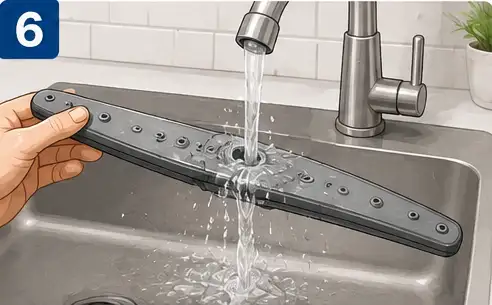
Check the spray arms
Inspect the holes in the upper and lower spray arms for food particles or mineral deposits. Wipe the arms with a damp cloth and remove visible debris from the openings with a soft brush or a non-metal tool that will not enlarge the holes. Make sure each spray arm turns freely before replacing the racks.
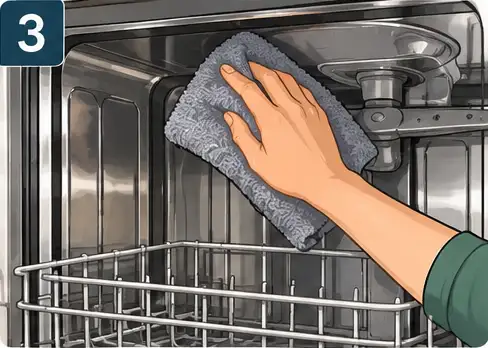
Wipe the seals and door edges
Dip a microfiber cloth in warm soapy water and wipe the rubber door seal, inner door edges, detergent dispenser area, and the narrow spaces that the regular wash cycle may not reach. Use a soft toothbrush for tight corners, then wipe again with a clean damp cloth to remove soap residue.
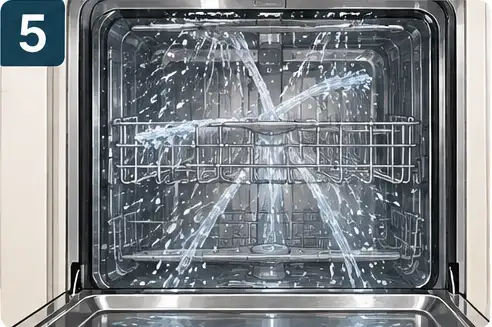
Run an empty cleaning cycle
Return the clean filter and racks to their correct positions. Run the dishwasher empty using its cleaning or hottest appropriate cycle and a dishwasher cleaner approved by the manufacturer. Follow the cleaner label and appliance manual for placement and quantity. Never mix chlorine bleach with vinegar, ammonia, or other cleaners.
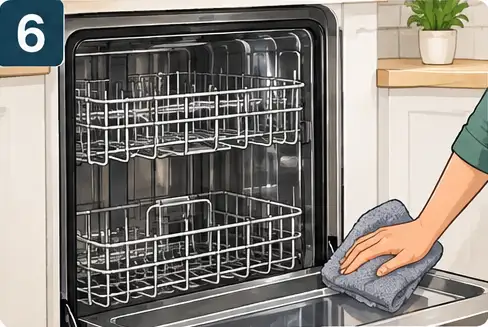
Dry and wipe the exterior
After the cycle finishes and the machine has cooled, wipe any remaining moisture from the door edges and interior with a clean cloth. Clean the control panel and exterior using a product suitable for the finish. Leave the door slightly open for a while so trapped moisture can escape.
Tips & common mistakes
Tips for best results
- Scrape large food scraps from dishes before loading them, but follow your dishwasher manufacturer's guidance about pre-rinsing.
- Check the filter regularly if your model has a manual-clean filter, especially when you notice food residue or odors.
- Keep spray-arm holes clear so water can reach dishes evenly.
- Wipe the lower door edge and seal regularly because these areas may not be washed directly during a cycle.
- Use only the amount and type of detergent recommended for your dishwasher and water conditions.
Common mistakes
- Using regular hand dish soap inside the dishwasher: It can create excessive suds and leaks. Use dishwasher detergent or an approved dishwasher cleaner for machine cycles.
- Mixing cleaning products: Never combine chlorine bleach with vinegar, ammonia, or other cleaners because dangerous gases can form.
- Forcing the filter out: Filters use different locking systems, so follow the manual to avoid breaking the filter or housing.
- Using sharp metal objects on spray-arm holes: They can enlarge or damage the openings and affect water spray.
- Ignoring material restrictions: Some stainless-steel interiors, finishes, and components require specific cleaners, so check the manual before using bleach or acidic products.
Frequently asked questions
How often should I clean my dishwasher?
Clean visible residue when you notice it and follow the maintenance schedule in your dishwasher manual. Filters may need more frequent cleaning depending on how often the machine is used.
Can I clean a dishwasher with vinegar?
Some manufacturers allow vinegar in specific situations, while others recommend dedicated dishwasher cleaners. Check your manual before using acidic cleaners because materials and components vary by model.
Why does my dishwasher smell bad?
Odors often come from trapped food, grease, a dirty filter, wet seals, or drainage problems. Clean the accessible parts first and check the drain if the smell continues.
Can I use bleach to clean a dishwasher?
Only use bleach if the dishwasher manufacturer allows it. Avoid bleach in machines with stainless-steel interiors or components unless the manual specifically says it is safe, and never mix bleach with other cleaners.
Why are my dishes still dirty after cleaning the dishwasher?
Check that the filter is installed correctly, spray arms rotate freely, spray holes are clear, and dishes are loaded without blocking water flow. Detergent choice, water temperature, or a mechanical problem can also affect cleaning.
Written by Mapiance Editorial Team
The Mapiance Editorial Team researches, writes, reviews, and maintains practical guides and explainers for MAPIANCE.
Published Aug 21, 2026 · Updated Oct 2, 2026