 MAPI
MAPIHow to Clean a Stovetop Without Damaging It
Stovetops can be made from ceramic glass, stainless steel, enamel, or other finishes, and a cleaner that is safe for one surface may damage another. The safest approach is to identify the surface first, use gentle cleaning methods, and increase cleaning strength only when needed. Gas burner caps, electric coil connections, and glass surfaces also need different care, so check your appliance manual before using a scraper, strong cleaner, or dishwasher.
Let the stovetop cool, remove loose parts if your model allows it, and start with warm water, mild dish soap, and a soft cloth or non-abrasive sponge. Use only cleaners and scrapers approved for your specific cooktop material, then dry everything fully before reassembly.
Things you'll need
- Soft microfiber cloths
- Non-abrasive sponge
- Mild dish soap
- Warm water
- Soft cleaning brush
- Cooktop cleaner approved for your surface, if needed
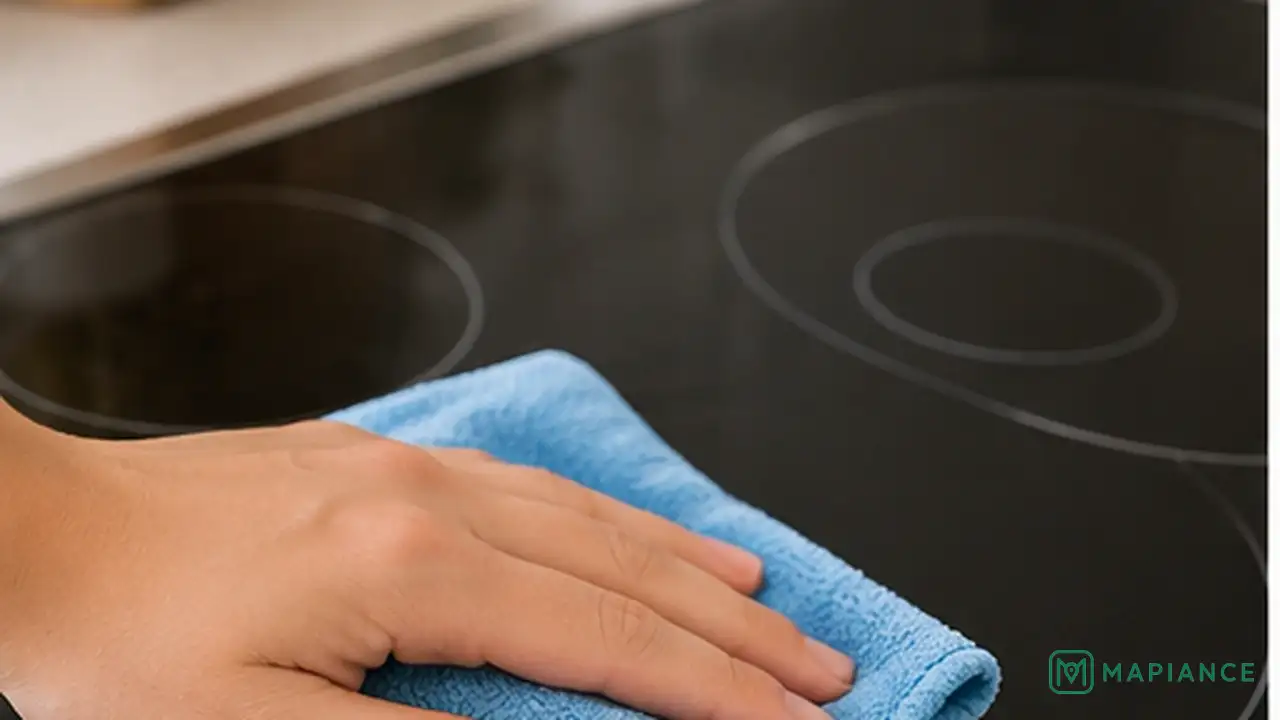
Cool and Identify the Surface
Turn every control off and wait until the stovetop is cool enough to touch safely. Identify whether the cooking surface is ceramic glass or induction glass, stainless steel, enamel, gas with removable grates, or an electric-coil design. Check the appliance manual if you are unsure, because instructions for scrapers, cleaners, grates, burner caps, and removable parts can differ by model.
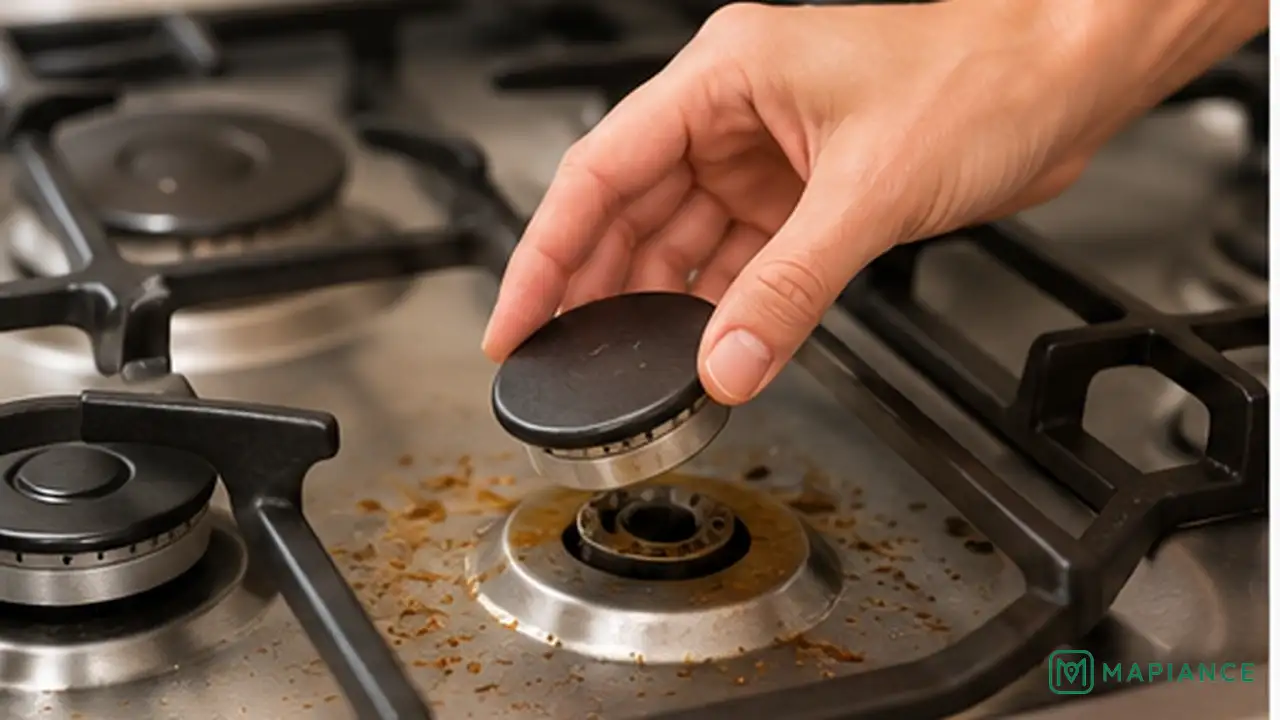
Remove Loose Parts and Debris
Lift off removable gas grates and burner caps only after they are cool, keeping each cap with its matching burner. For a flat cooktop, brush or wipe away crumbs and loose food before adding cleaner so they do not scratch the surface while you wipe. If your stove has exposed electric coils, follow the manual before removing them and keep electrical connections dry.
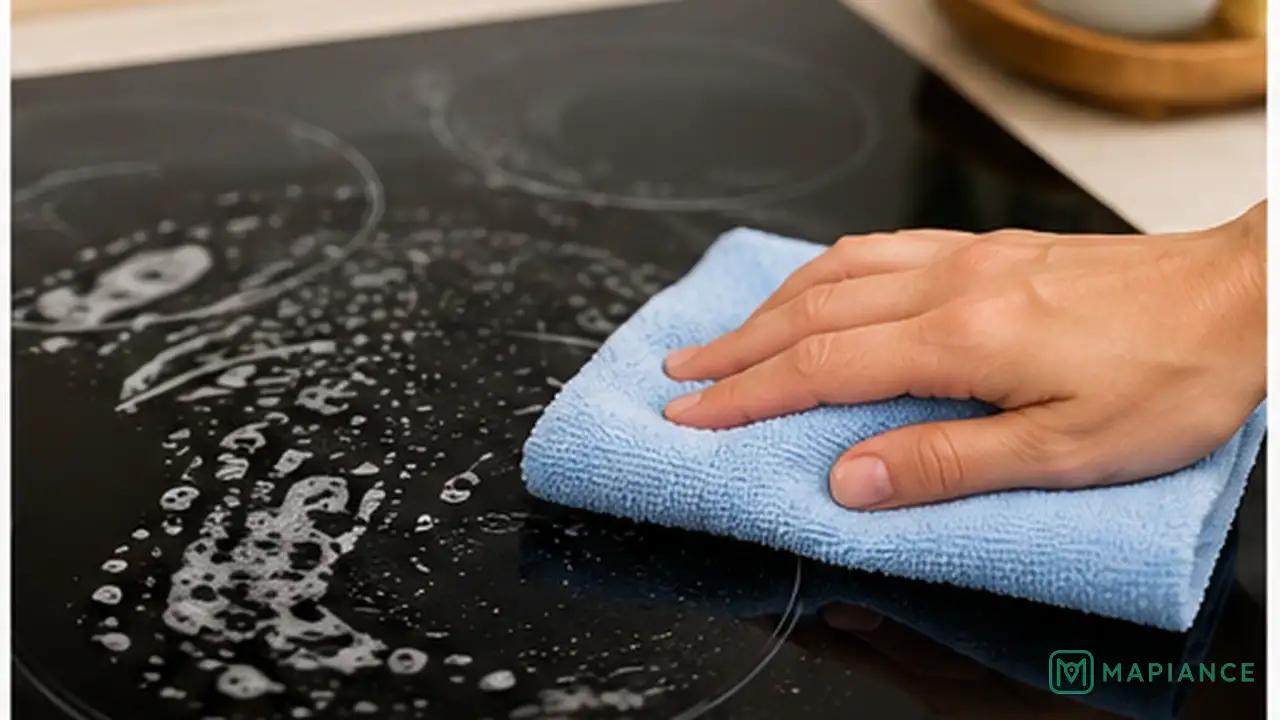
Wash With a Gentle Cleaner
Mix a small amount of mild dish soap with warm water, dampen a soft microfiber cloth or non-abrasive sponge, and wring it out well. Wipe grease and fresh spills without pressing hard. On stainless steel, wipe in the direction of the grain when it is visible. Keep excess liquid away from gas igniters, burner openings, control shafts, and electrical connections.
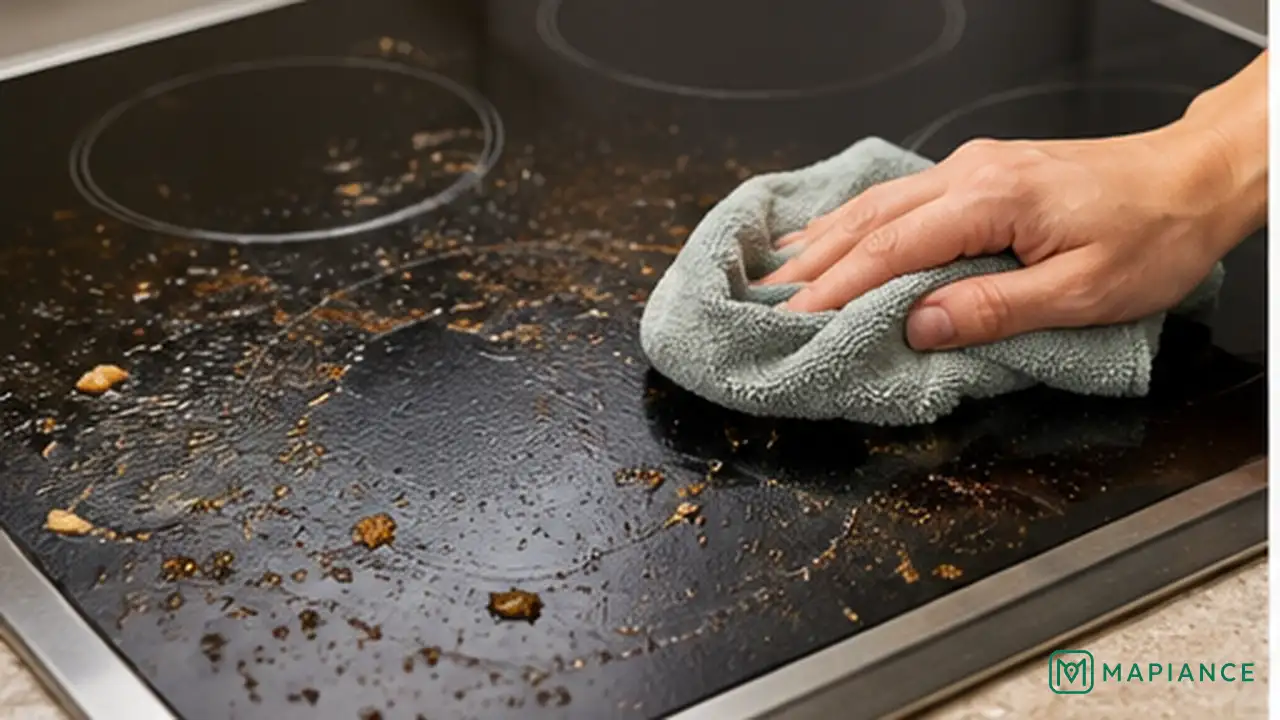
Loosen Stubborn Residue Safely
For cooked-on residue, soften the spot with a warm damp cloth for several minutes before wiping again. On ceramic glass, use a non-abrasive cleaner made for ceramic or glass cooktops if gentle washing is not enough. Do not use steel wool, abrasive powders, harsh scouring pads, or a general razor blade. Use a cooktop scraper only when your appliance manual specifically permits it, because some glass surfaces can be scratched by scraping.
Clean and Dry Removable Parts
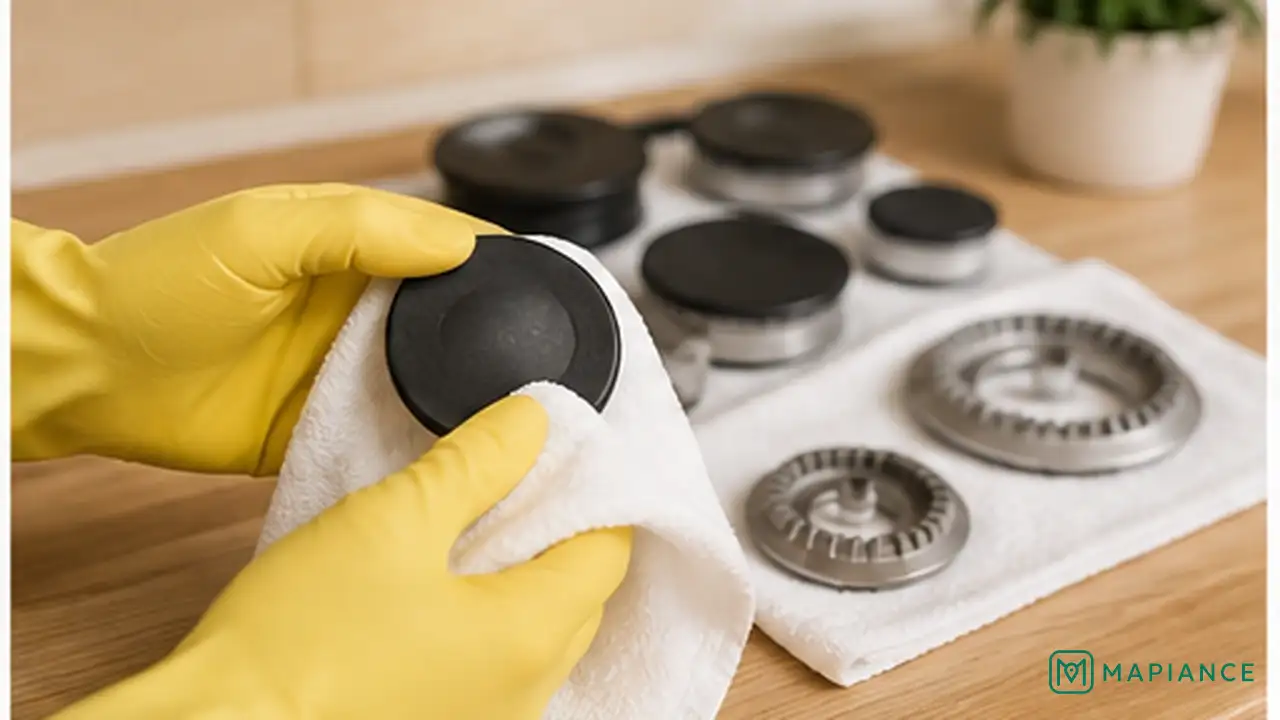
Wash removable grates and burner caps according to the appliance manual, because dishwasher use and soaking rules vary between models. Mild soap, warm water, and a non-abrasive pad are a safe starting point for many removable parts. Rinse away cleaner and dry each piece completely. Do not reinstall wet burner caps, and avoid banging heavy grates together because their finish can chip.
Dry and Reassemble the Stovetop
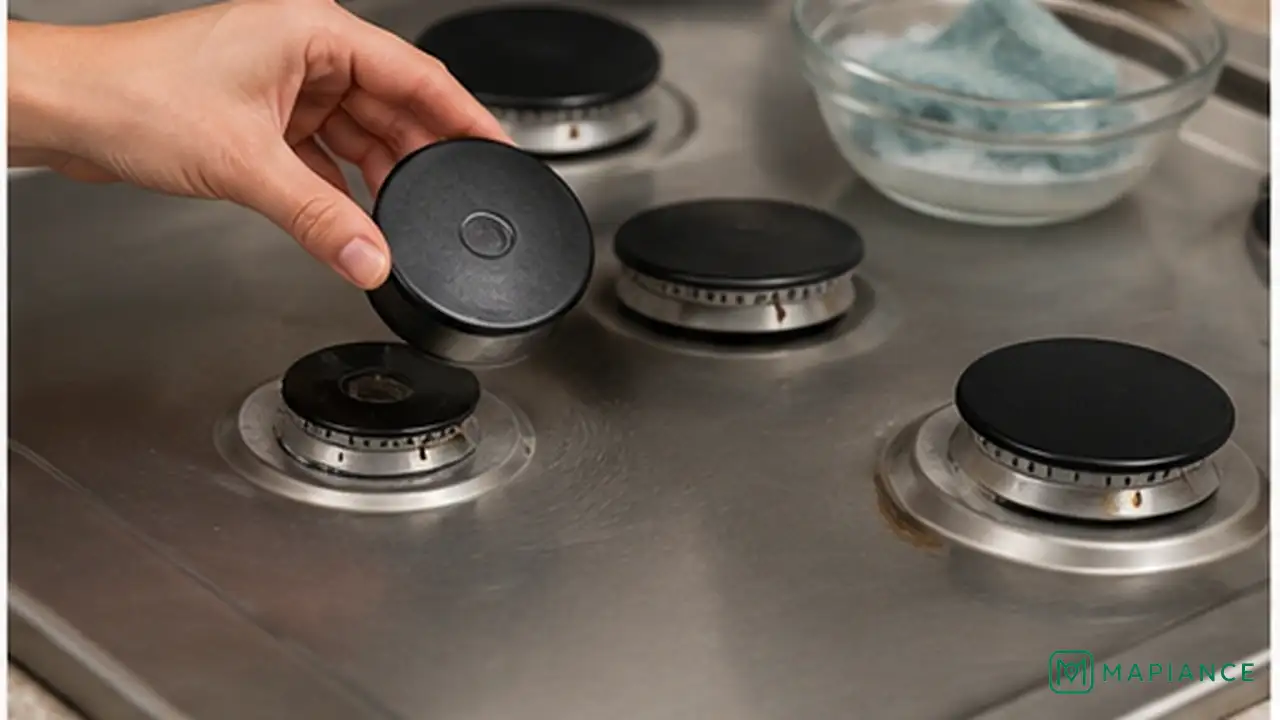
Wipe the cooking surface with a clean damp cloth to remove any soap or cleaner, then dry it with a fresh microfiber cloth. Reinstall completely dry grates, burner caps, or other approved removable parts in their correct positions. For a gas stovetop, make sure each burner cap sits flat and centered before lighting the burner. The finished surface should feel clean and smooth, with no cleaner residue left behind.
Tips & common mistakes
Tips for best results
- Wipe fresh splashes after the stovetop cools instead of letting them harden through several cooking sessions.
- Keep one soft microfiber cloth only for the cooktop so grit picked up from other cleaning jobs does not scratch the surface.
- On stainless steel, wiping with the grain helps reduce visible streaks and the chance of marking the finish.
- Clean acidic spills such as tomato sauce after the surface cools because leaving them on some finishes can cause discoloration or surface damage.
- Use only the amount of cleaner needed for the dirty area; excess liquid can run into burner or control openings.
Common mistakes
- Cleaning while the stovetop is still hot can cause burns and may make some cleaners dry onto the surface before they can be wiped away.
- Using steel wool, abrasive powder, gritty pads, or harsh scouring products can scratch glass, stainless steel, enamel, and decorative finishes.
- Assuming every glass cooktop can be scraped is risky; some models allow an approved cooktop scraper while others warn against scraping, so check the manual first.
- Flooding the stovetop with water can allow moisture to reach igniters, burner openings, controls, or electrical connections.
- Reinstalling damp gas burner caps can interfere with ignition or flame quality, so dry them completely before putting them back.
- Putting grates or burner caps in a dishwasher without checking the manual can damage finishes on models that are not dishwasher-safe.
Frequently asked questions
Can I use baking soda on a glass stovetop?
Because baking soda is mildly abrasive, it is safer to use a cleaner specifically approved for your cooktop rather than assuming baking soda is suitable for every glass surface.
Can I use vinegar to clean a stovetop?
Vinegar is used on some cooktops, but surface finishes vary. Check the appliance manual before using it, especially on coated, stone-like, or specialty finishes.
Can I use a razor blade on a glass stovetop?
Do not use a general razor blade by default. Some ceramic-glass cooktops allow a purpose-made scraper at a specific angle, while other models warn against scraping. Follow the instructions for your exact appliance.
How do I clean around gas burner openings?
Wipe the surrounding surface with a lightly damp cloth and keep liquid out of the openings and igniter. If the burner ports are blocked, follow the appliance manual for the correct cleaning tool rather than enlarging or damaging the holes.
How often should I clean the stovetop?
Wipe spills and crumbs after cooking once the surface is cool. A deeper clean is easier when grease and burned food have not been allowed to build up.
Written by Mapiance Editorial Team
The Mapiance Editorial Team researches, writes, reviews, and maintains practical guides and explainers for MAPIANCE.
Published Aug 29, 2026 · Updated Sep 13, 2026