 MAPI
MAPIHow to Clean Grout Without Damaging It
Grout can collect soap residue, dirt, and mildew while still being softer and more porous than the surrounding tile. Aggressive acids, stiff metal brushes, and repeated harsh scrubbing can weaken grout or damage nearby stone and finishes. The safest approach is to begin with a mild cleaner, use a soft brush, and increase cleaning strength only when the surface material allows it.
Start with warm water and a small amount of mild dish soap, then scrub the grout gently with a soft nylon brush. Rinse well, dry the area, and avoid acidic cleaners, wire brushes, and harsh scrubbing unless the grout or tile manufacturer specifically allows them.
Things you'll need
- Warm water
- Mild dish soap
- Soft nylon grout brush or old toothbrush
- Microfiber cloth or sponge
- Clean towel
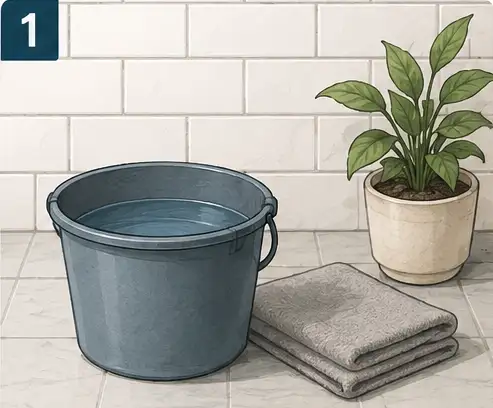
Identify the grout and tile surface
Look at the tile and grout before cleaning. If the surrounding surface is natural stone such as marble, limestone, or travertine, avoid acidic cleaners. If you are unsure whether the grout is sealed, colored, epoxy, or cement-based, start with only warm water and mild soap and test a small hidden area first.
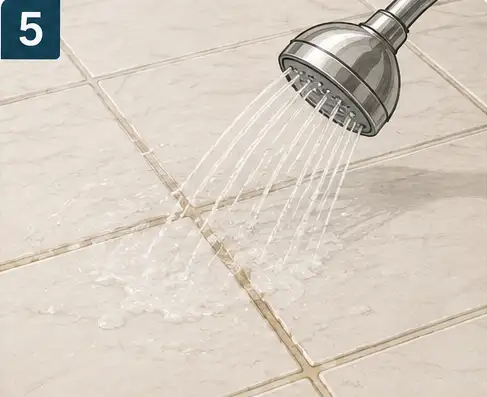
Wash away loose dirt
Wipe or rinse the grout with warm water to remove loose dust, hair, and surface residue. On floors, vacuum or sweep first so grit is not rubbed across the tile while you scrub.
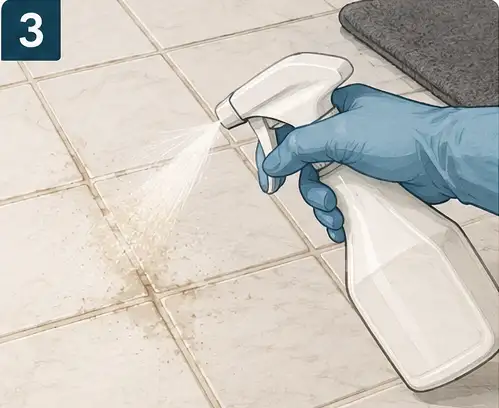
Apply mild soapy water
Mix a small amount of mild dish soap into warm water. Apply the solution to the grout with a sponge or cloth and leave it in contact for about five minutes so dried residue can soften. Keep the area damp rather than letting the soap dry on the surface.
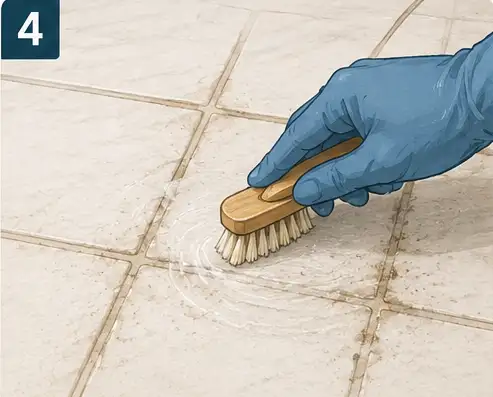
Scrub gently with a nylon brush
Use a soft nylon grout brush or old toothbrush and scrub along the grout line with short, controlled strokes. Use only enough pressure to lift the dirt. Avoid wire brushes, razor blades, and aggressive scouring pads because they can erode grout or scratch tile.
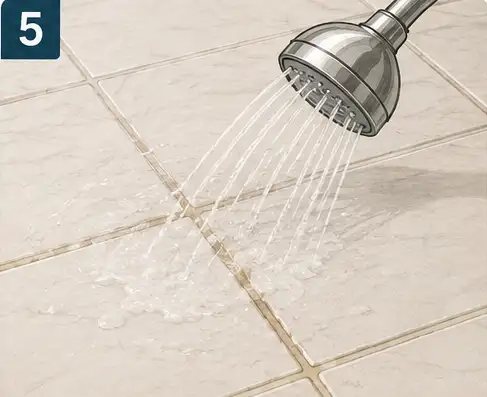
Rinse and dry the grout
Wipe away the loosened dirt and soap with clean water, rinsing the cloth or sponge often. Dry the tile and grout with a clean towel so you can see the true result. If stains remain, repeat the mild cleaning process before trying a stronger product that is approved for your specific grout and tile.
Tips & common mistakes
Tips for best results
- Clean small sections at a time so the soapy water does not dry before you rinse it away.
- Use a brush sized close to the grout line so most of the scrubbing stays on the grout instead of the tile surface.
- Blot or dry wet grout after cleaning, especially in showers, to reduce moisture that can encourage mildew.
- If the grout was previously sealed, check whether the sealer needs renewal after the area is fully clean and dry.
- For persistent staining, use only a grout cleaner that is compatible with both the grout type and the surrounding tile.
Common mistakes
- Using vinegar on cement grout or natural stone: Acid can weaken cement-based grout and etch stone surfaces.
- Scrubbing with a wire brush: Metal bristles can wear away grout and scratch tile.
- Using excessive pressure: Hard scrubbing can gradually remove the grout surface instead of only removing dirt.
- Leaving soap residue behind: Cleaner left on the surface can attract more dirt, so rinse thoroughly.
- Using bleach or another strong cleaner without checking compatibility: Strong products can discolor grout, affect sealers, or damage nearby materials.
Frequently asked questions
Can I use vinegar to clean grout?
It is safer to avoid vinegar on cement-based grout and on natural stone because acid can weaken grout or etch the surrounding surface. Use a mild pH-neutral method unless the manufacturer specifically approves vinegar.
What type of brush is safest for grout?
A soft or medium nylon grout brush or an old toothbrush is usually suitable. Avoid metal brushes and very abrasive pads.
How do I clean colored grout without fading it?
Start with warm water and mild soap, test the cleaner in a hidden area, and avoid bleach or strong chemicals unless the grout manufacturer confirms they are safe for the color.
Why does grout still look dark after cleaning?
The grout may still be damp, deeply stained, or permanently discolored. Allow it to dry completely before deciding whether another cleaning treatment is needed.
Should grout be resealed after cleaning?
Some cement-based grout benefits from sealing, while epoxy grout generally does not need the same treatment. Follow the grout or sealer manufacturer's instructions and allow the grout to dry fully first.
Written by Mapiance Editorial Team
The Mapiance Editorial Team researches, writes, reviews, and maintains practical guides and explainers for MAPIANCE.
Published Aug 21, 2026 · Updated Sep 29, 2026