 MAPI
MAPIHow to Fix a Cake That Sank in the Middle
A cake usually sinks because the center did not set strongly enough before the cake came out of the oven. Common causes include underbaking, opening the oven too early, too much leavening, inaccurate ingredient ratios, or an oven temperature that is too high or too low. Once the cake has cooled, the center will not rise again, but you can often make the cake look and taste good with a simple repair.
If the cake is still hot and the center is clearly underbaked, return it to the oven briefly and test again with a skewer. If it is already baked through but has a sunken center, let it cool completely, trim the top if needed, and fill the dip with frosting, whipped cream, fruit, ganache, or another suitable filling. A badly collapsed cake can also be repurposed as a trifle or cake pops.
Things you'll need
- Skewer, toothpick, or thin knife for checking doneness
- Serrated knife if the cake needs leveling
- Frosting, ganache, whipped cream, fruit, or another suitable filling
- Cooling rack
- Cake board or serving plate
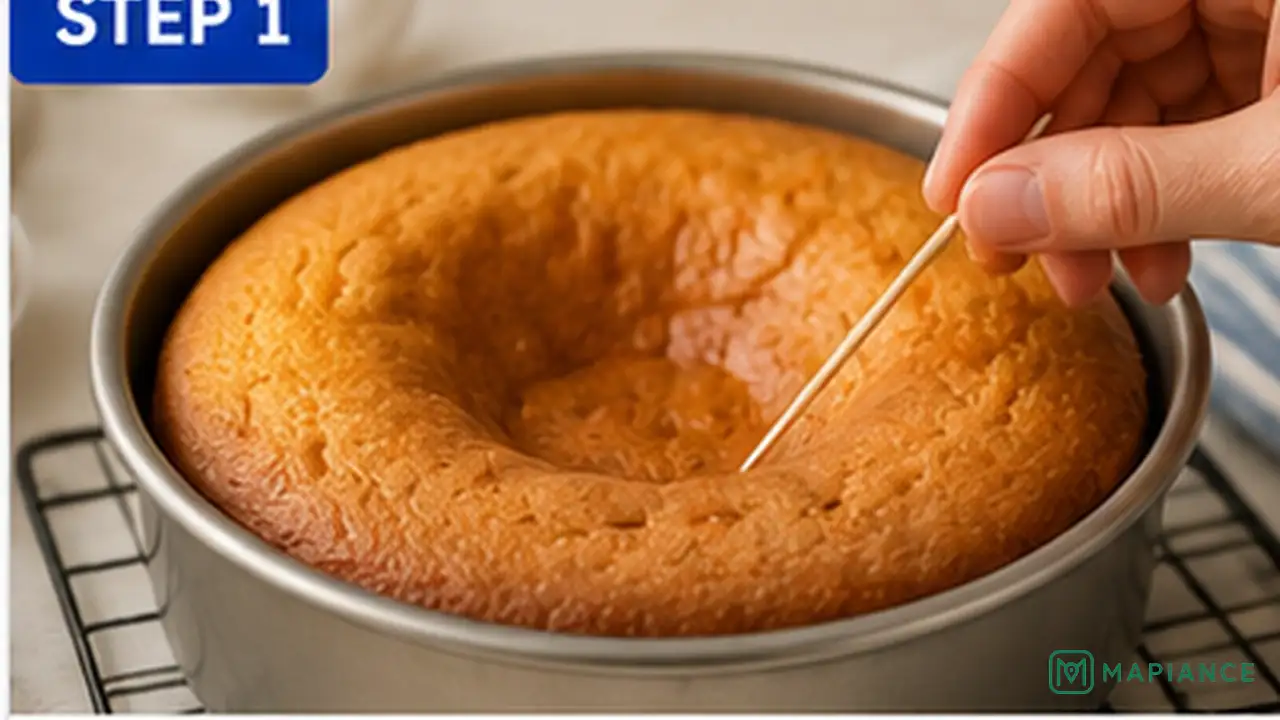
Check whether the center is underbaked
If the cake has just come out of the oven, test the center with a skewer or thin knife. A few moist crumbs are usually fine, but wet batter means the center is not set. If the cake is still hot and has not been out of the oven long, put it back in and bake for a few more minutes, then test again. Cover the top loosely with foil if it is already browning too much.
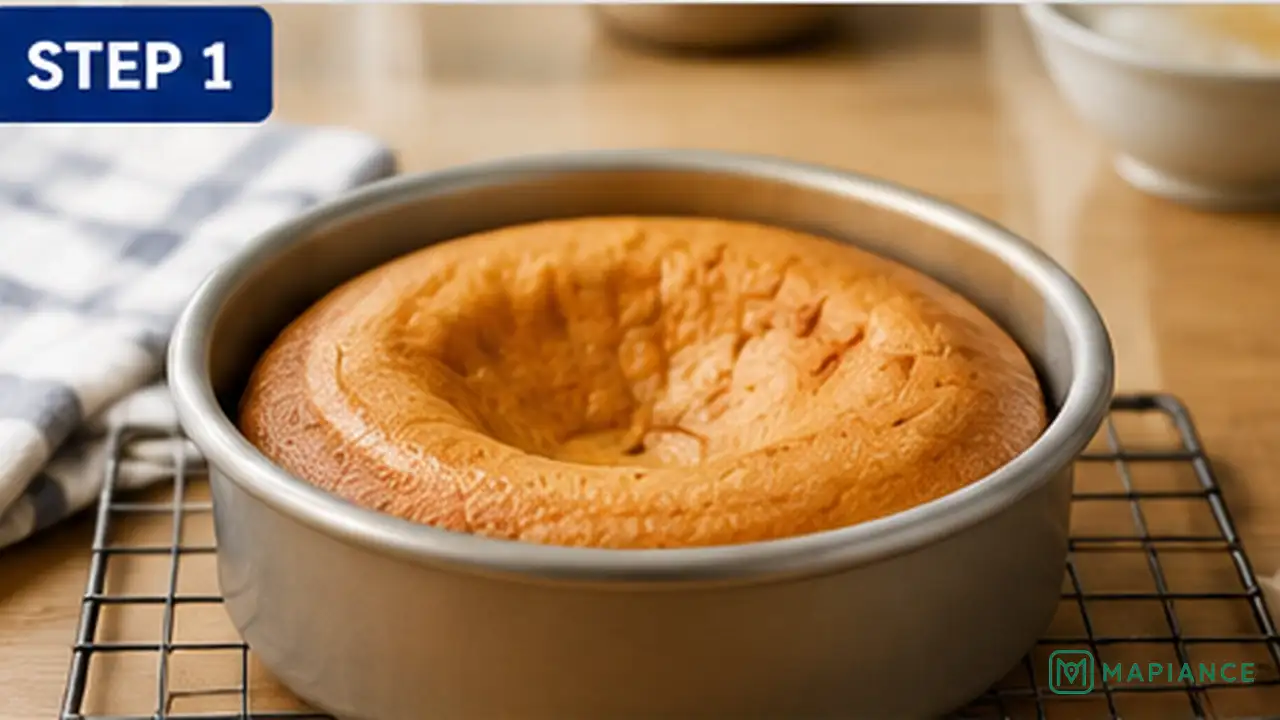
Finish baking if the center is still raw
Return an underbaked cake to the oven only if it is still warm and the center is clearly raw. Bake in short intervals and check often. This may not restore a perfectly level top, but it can make the center safe to eat and firm enough to decorate. If the cake has already cooled completely, rebaking usually will not restore the original texture.
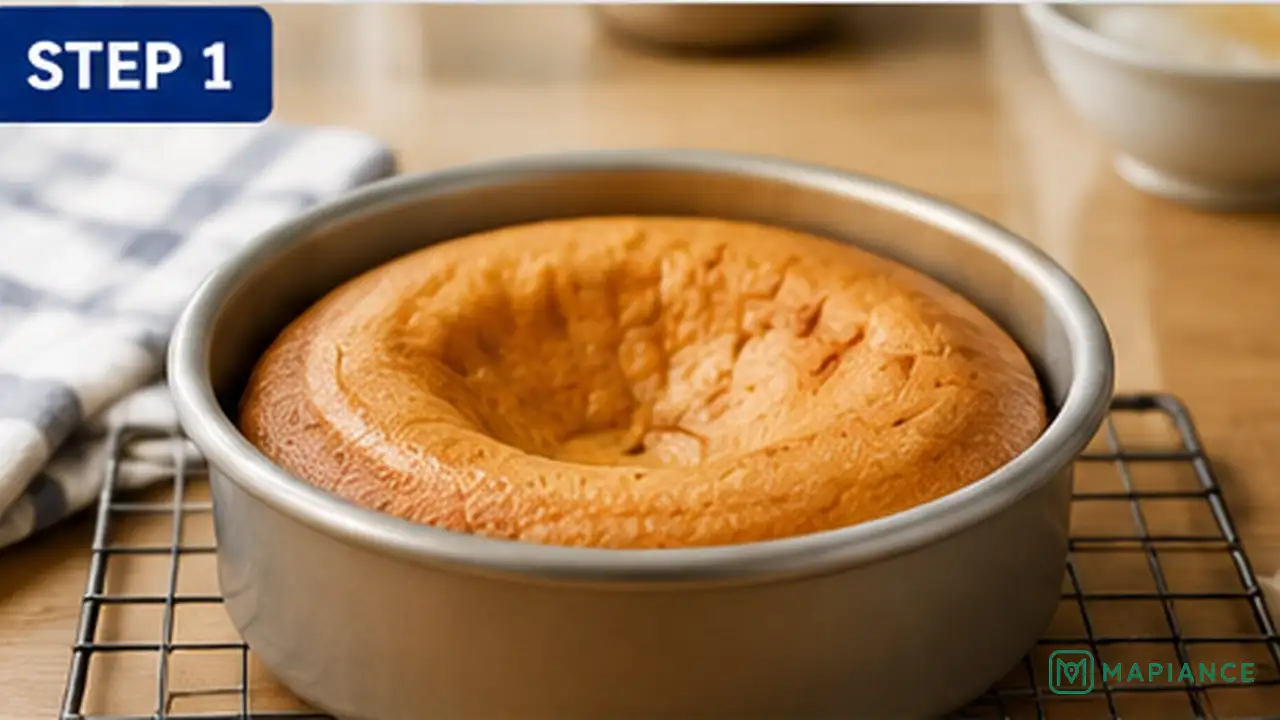
Cool the cake completely
Once the cake is baked through, let it cool in the pan for the time recommended by the recipe, then move it to a cooling rack if appropriate. Do not try to level or fill a warm cake because the crumb can tear and frosting can melt. A fully cooled cake is much easier to repair neatly.
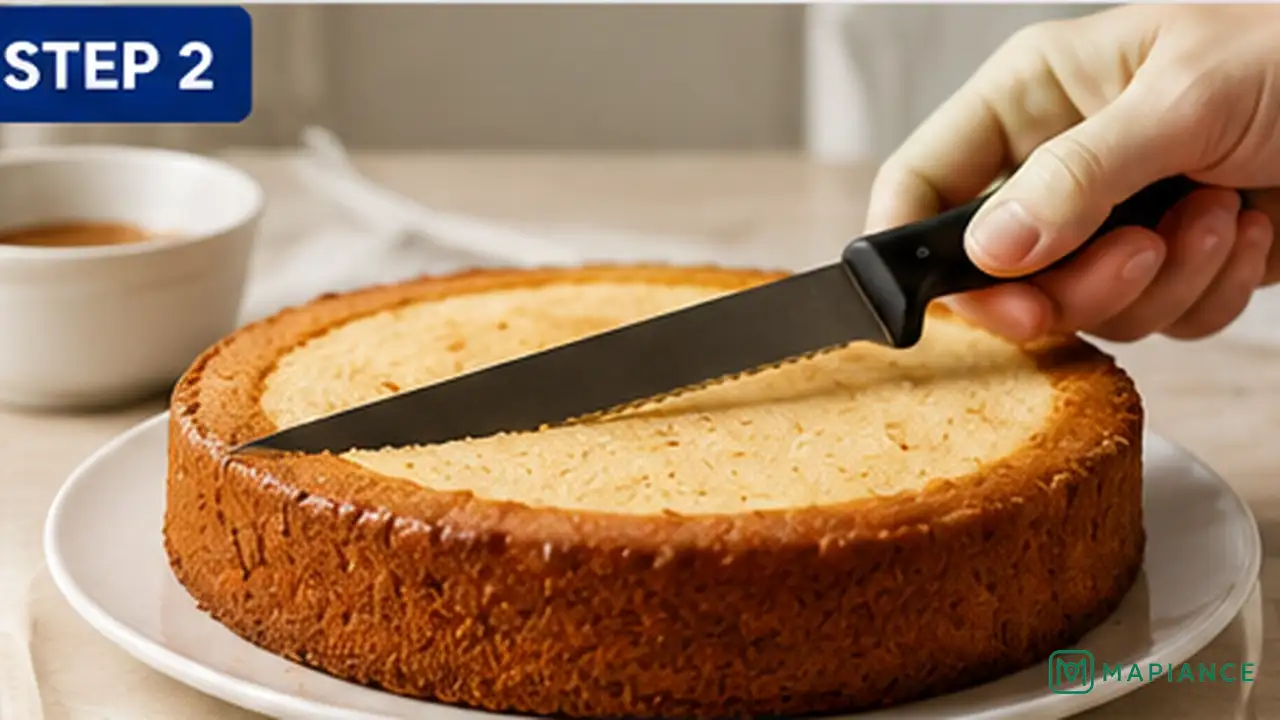
Level the top if needed
If the cake has a high rim around the sunken center, use a serrated knife to trim the raised edge carefully after the cake is fully cool. Remove only enough to create a more even surface. Save the trimmed cake pieces for crumbs, cake pops, or another dessert instead of throwing them away.
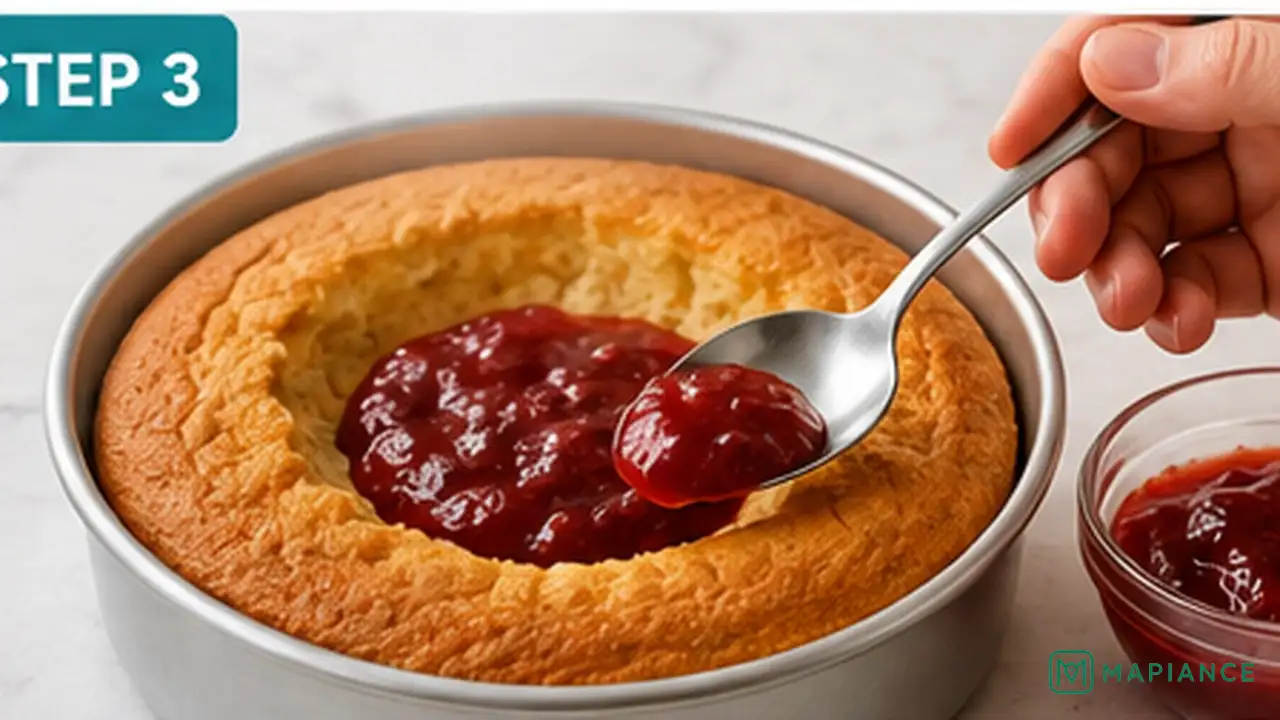
Fill and decorate the sunken center
Use the dip as part of the design. Fill it with frosting, ganache, whipped cream, fruit, custard, or another filling that suits the cake. Spread or pipe the topping so the surface looks intentional. If the cake is too fragile to decorate normally, cut it into pieces and use it for a trifle, layered dessert, or cake pops.
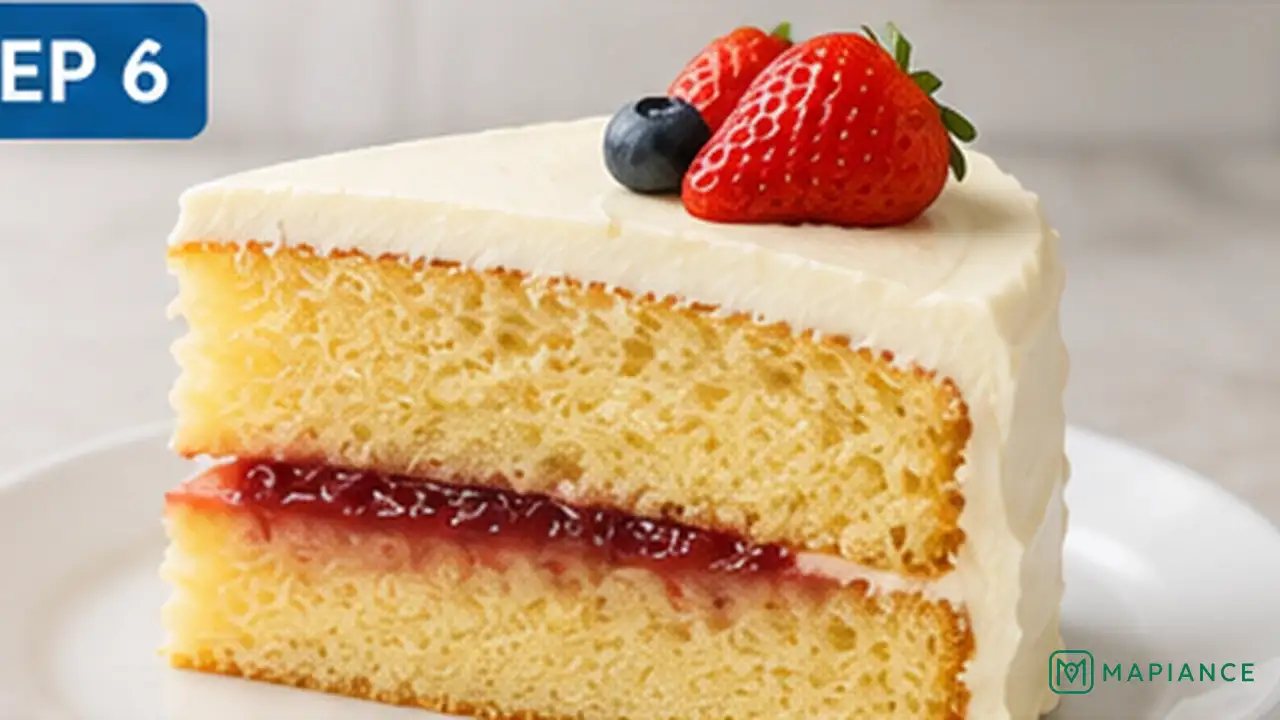
Prevent the next cake from sinking
Measure ingredients accurately, use the amount of baking powder or baking soda called for in the recipe, and preheat the oven fully. Avoid opening the oven door during the early part of baking, and test the center before removing the cake. If cakes often sink even when the recipe is followed, check the oven temperature with an oven thermometer because an inaccurate oven can cause the outside to set before the center is ready.
Tips & common mistakes
Tips for best results
- Do not judge doneness only by the color of the top; always check the center before removing the cake.
- Use room-temperature ingredients when the recipe calls for them so the batter mixes evenly.
- Measure baking powder and baking soda carefully because too much leavening can make a cake rise quickly and then collapse.
- Avoid opening the oven door early because a sudden temperature drop can weaken a cake before the center has set.
- If the cake is structurally weak but tastes good, repurposing it as a trifle or cake pops is often better than forcing a perfect layer cake.
Common mistakes
- Trying to level a warm cake: The crumb can tear and collapse further.
- Putting a fully cooled cake back in the oven hoping it will rise again: The structure has already set and the texture may become dry.
- Adding extra baking powder to prevent sinking: Too much leavening can make the problem worse.
- Opening the oven repeatedly to check the cake: Heat loss can slow the setting of the center.
- Covering the sunken middle with heavy frosting before checking doneness: A raw center should be baked through before the cake is decorated or served.
Frequently asked questions
Why did my cake sink in the middle?
Common causes include underbaking, opening the oven too early, too much leavening, inaccurate ingredient measurements, or an oven temperature that is not accurate.
Can I put a sunken cake back in the oven?
Yes, if it is still warm and the center is clearly underbaked. Return it to the oven for a short extra bake and test again. A fully cooled cake usually cannot be restored by rebaking.
Is a sunken cake safe to eat?
It can be safe if the center is fully baked. If the middle still contains wet raw batter, finish baking it before serving.
Can I hide a sunken cake with frosting?
Yes, once the cake is fully baked and cooled. Frosting, ganache, whipped cream, fruit, or another filling can turn the depression into part of the design.
How can I stop cakes from sinking next time?
Measure ingredients accurately, use the correct amount of leavening, fully preheat the oven, avoid opening the door too early, and test the center for doneness before removing the cake.
Written by Mapiance Editorial Team
The Mapiance Editorial Team researches, writes, reviews, and maintains practical guides and explainers for MAPIANCE.
Published Aug 27, 2026 · Updated Sep 30, 2026