 MAPI
MAPIHow to Fix a Dropped Stitch in Knitting
A dropped stitch happens when a live loop slips off the needle and begins to unravel downward. The loose column often looks like a ladder of horizontal strands. Most dropped stitches can be repaired without undoing entire rows if you catch the live loop quickly and rebuild the stitches in the correct direction.
Stop knitting as soon as you notice the dropped stitch. Secure the loose loop with a stitch marker or safety pin, then use a crochet hook to pull each horizontal strand through the loop one row at a time. For stockinette stitch, keep the knit side facing you while rebuilding the column. Once you reach the current row, place the repaired stitch back on the knitting needle in the correct orientation.
Things you'll need
- Knitting project with the dropped stitch
- Crochet hook close to the yarn thickness
- Stitch marker or safety pin
- Knitting needles already used for the project
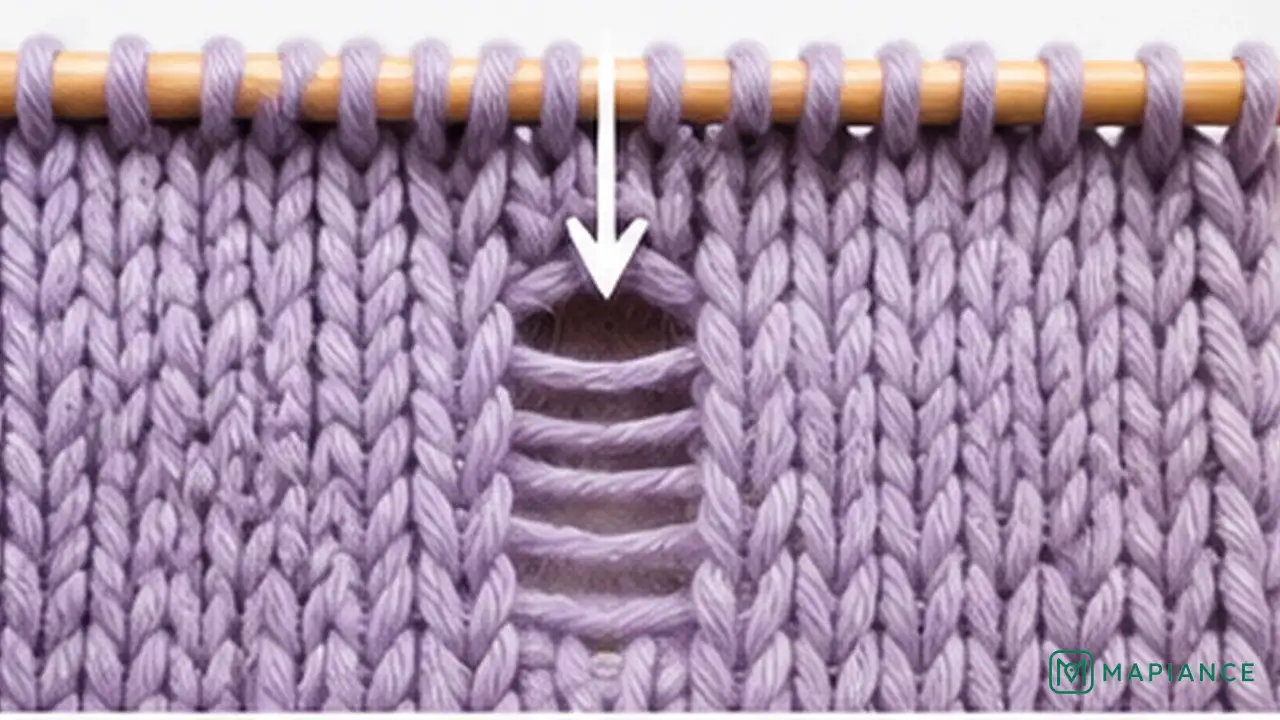
Stop and secure the dropped loop
Stop knitting when you notice the dropped stitch. Find the loose live loop at the bottom of the ladder and place a locking stitch marker or safety pin through it so it cannot unravel farther. Avoid pulling the fabric because stretching can make the dropped column run down more rows.
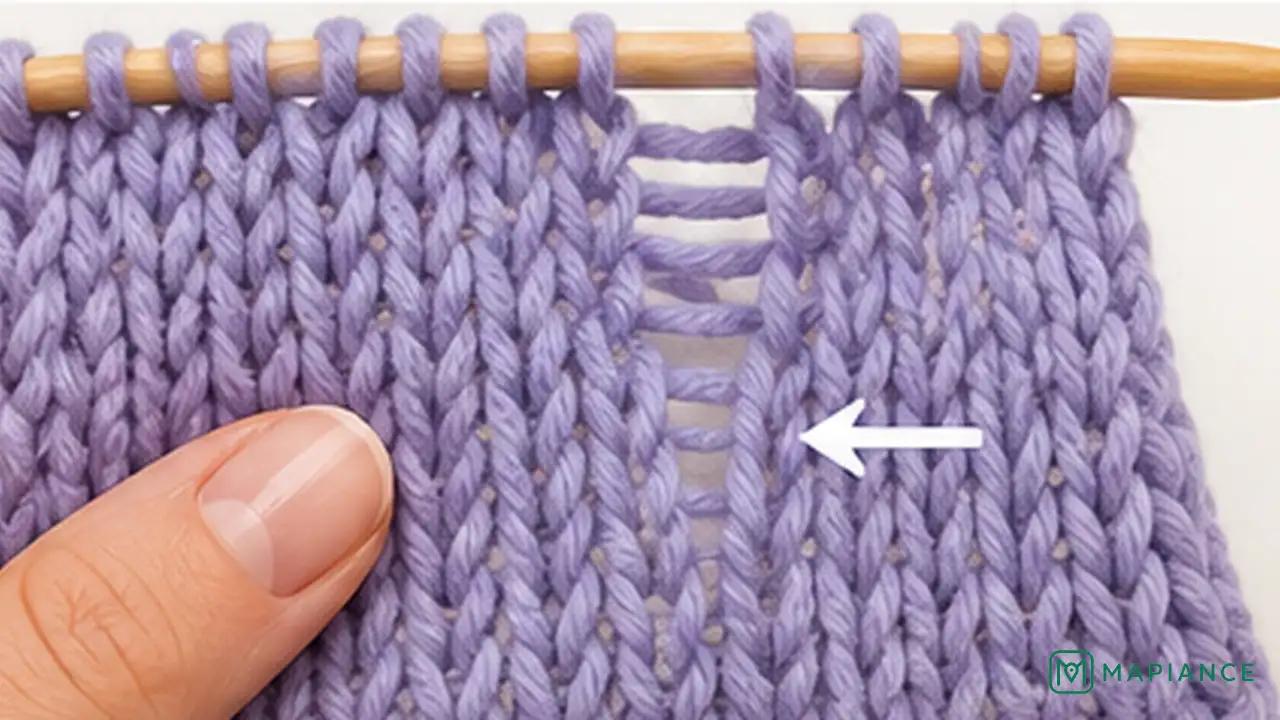
Find the laddered strands
Look above the dropped loop for the horizontal strands of yarn that connect the two sides of the fabric. Each strand represents one row that has unraveled. Keep the strands in their natural order from bottom to top so you rebuild the column correctly.
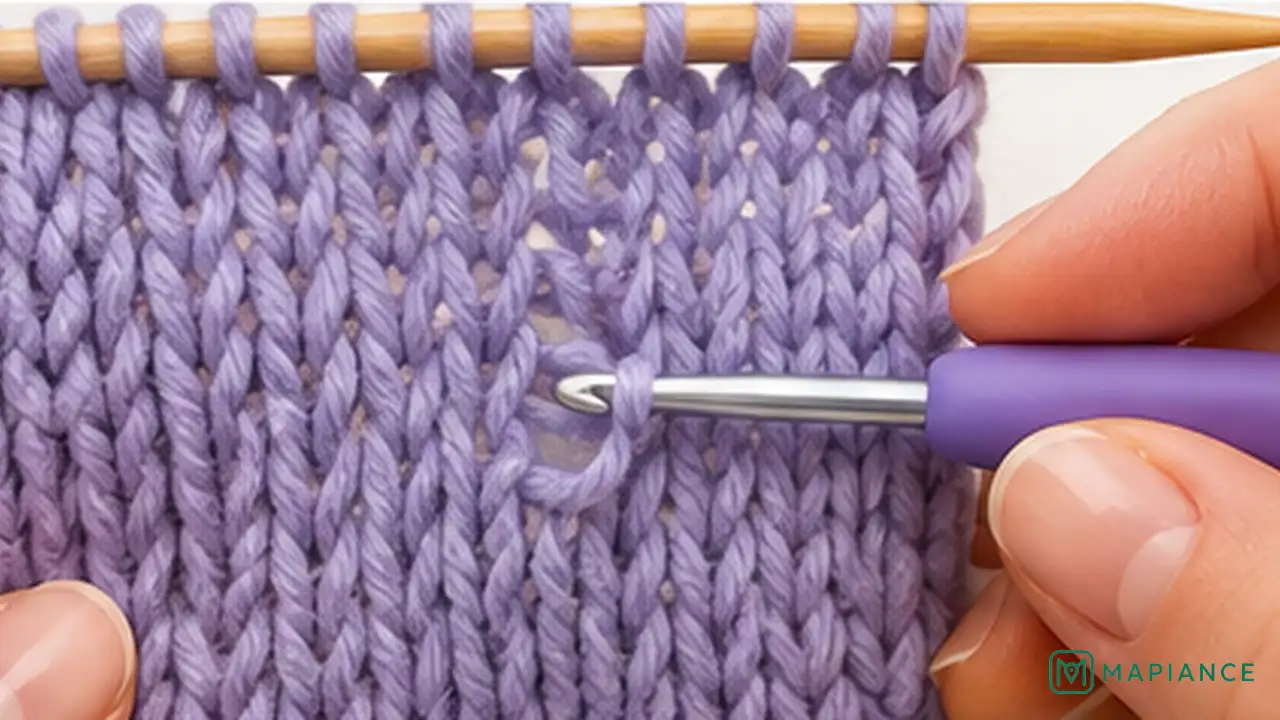
Insert a crochet hook through the loop
Remove the stitch marker while holding the live loop securely. Insert a crochet hook through the dropped loop. For a dropped knit stitch in stockinette, work with the knit side facing you and insert the hook through the loop from front to back.
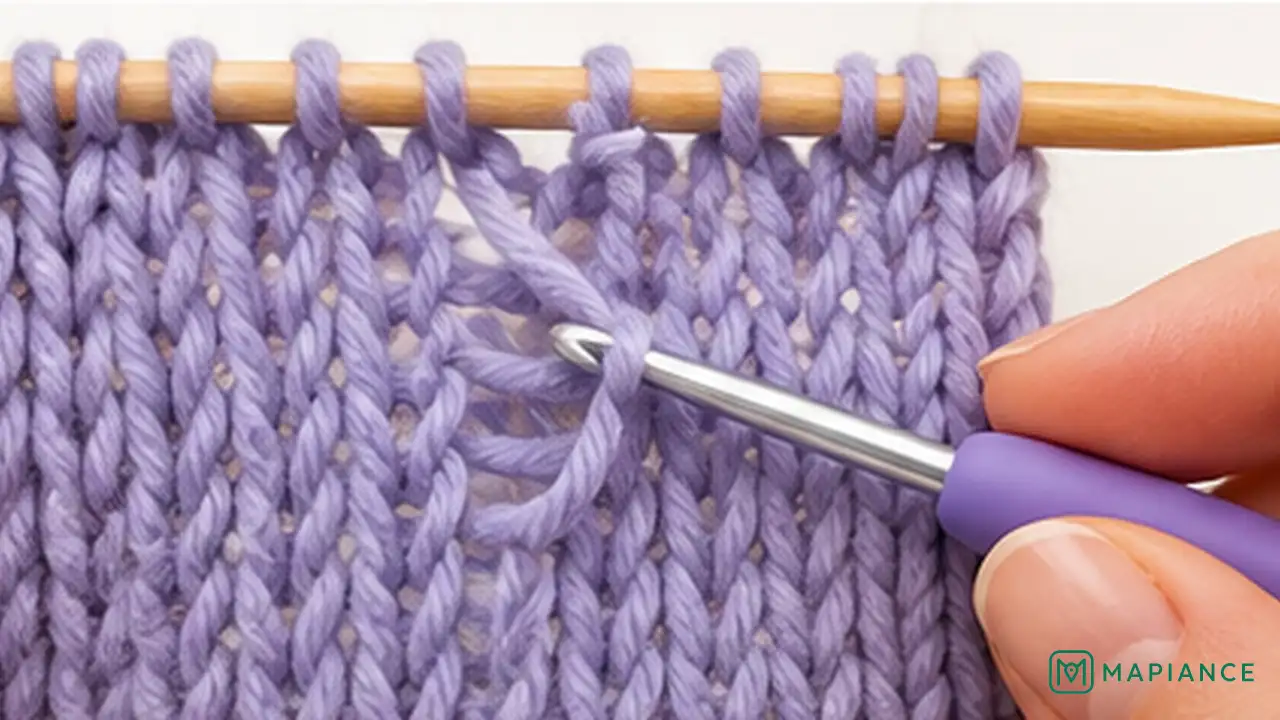
Pull the lowest strand through the loop
Catch the lowest horizontal strand with the crochet hook and pull it through the live loop. This recreates one knit stitch. Keep the new loop on the hook and make sure the strand is not twisted around neighboring stitches.
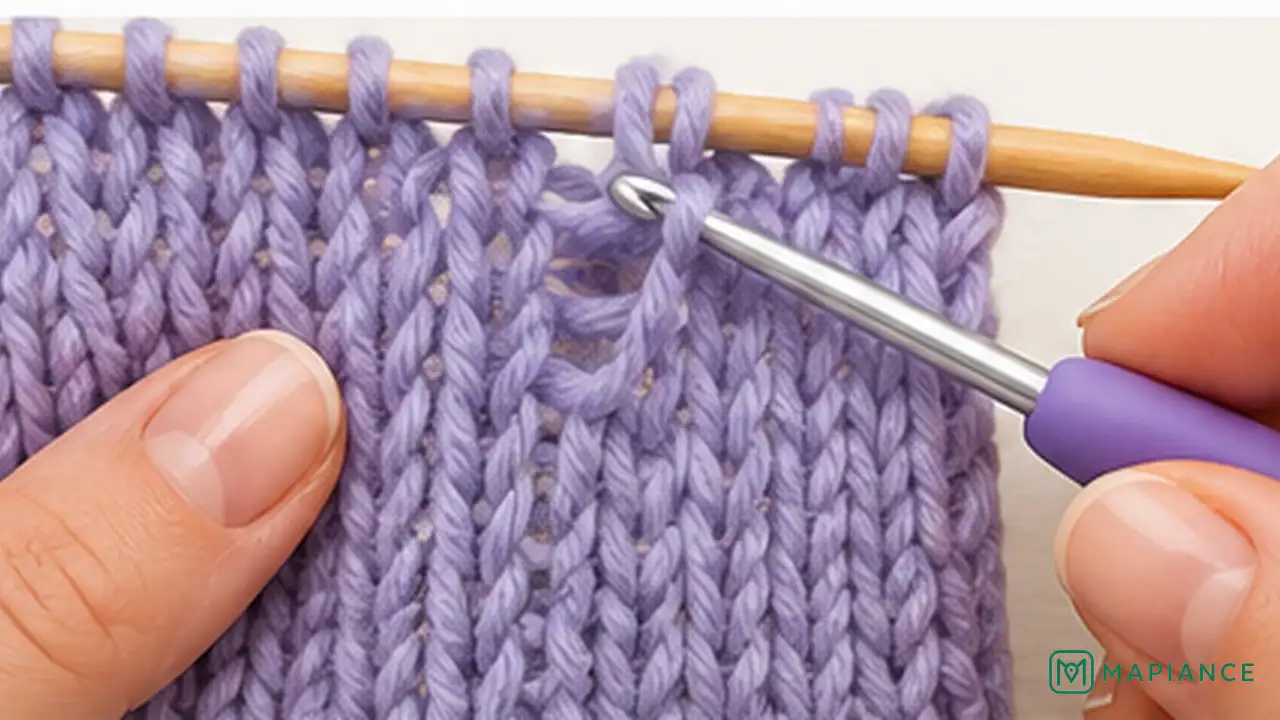
Rebuild the stitch column one row at a time
Continue catching the next horizontal strand above the hook and pulling it through the current loop. Work from the lowest remaining strand upward until no ladder strands are left. Check the front of the fabric as you go so each repaired stitch matches the surrounding knit stitches.
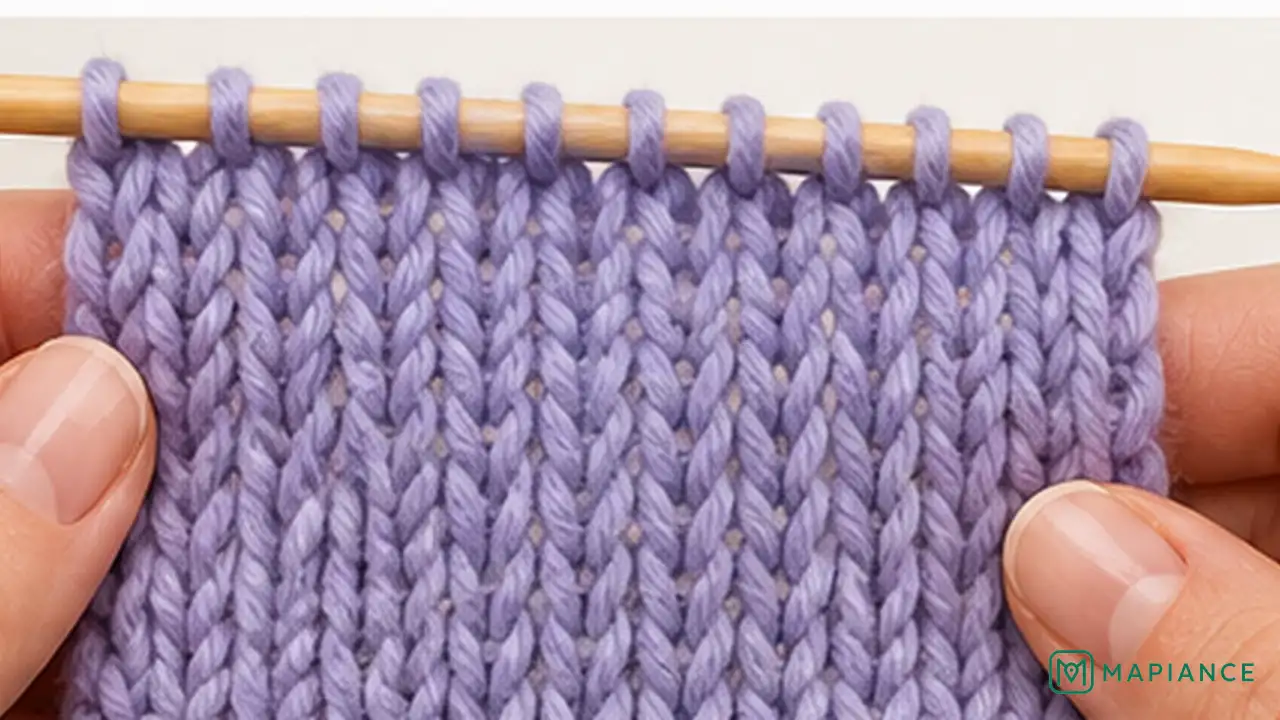
Put the repaired stitch back on the needle
When the repaired loop reaches the current row, transfer it from the crochet hook to the knitting needle. For a normal knit stitch, the right leg of the loop should usually sit at the front of the needle so the stitch is not twisted. Compare the repaired column with the surrounding fabric, then continue knitting.
Tips & common mistakes
Tips for best results
- Secure the live loop as soon as you see it so the dropped stitch cannot run farther down the fabric.
- Use a crochet hook close to the yarn thickness so it can move easily through the loop without stretching it.
- For stockinette stitch, rebuild a dropped knit stitch with the knit side facing you so the stitch structure is easier to follow.
- If the repaired column looks loose, gently redistribute the extra yarn into the neighboring stitches instead of pulling one stitch tight.
- Take a close photo of the fabric before repairing a complicated pattern so you can compare the stitch structure while working.
Common mistakes
- Pulling the fabric before securing the dropped loop: This can make the stitch unravel several more rows.
- Skipping a ladder strand: Each horizontal strand normally represents one lost row and should be rebuilt in order.
- Pulling the strands through in the wrong direction: This can create a purl bump or twisted stitch where a knit stitch should be.
- Putting the final loop back on the needle twisted: A twisted stitch can look tighter and different from the surrounding fabric.
- Using this simple method on a complex cable or lace section without checking the pattern: Some patterned stitches need to be reconstructed differently.
Frequently asked questions
Can I fix a dropped stitch without undoing the whole row?
Yes. In many plain knit or stockinette sections, you can use a crochet hook to rebuild the dropped stitch vertically without unraveling the entire row.
What does a dropped stitch look like?
It usually looks like a loose loop below the working row with one or more horizontal yarn strands above it, creating a ladder-like gap in the fabric.
What size crochet hook should I use to fix a dropped stitch?
Use a hook that is close to the thickness of the yarn and small enough to move easily through the live loop without stretching it.
How do I know if the repaired stitch is twisted?
Compare it with nearby stitches. In a normal knit stitch, the two legs should sit in the same orientation as the surrounding stitches rather than crossing tightly at the base.
Can I repair a dropped stitch in ribbing or lace the same way?
The same basic idea applies, but ribbing, lace, cables, and patterned stitches may need knit and purl stitches rebuilt in a specific sequence. Follow the stitch pattern rather than treating every ladder strand as a plain knit stitch.
Written by Mapiance Editorial Team
The Mapiance Editorial Team researches, writes, reviews, and maintains practical guides and explainers for MAPIANCE.
Published Aug 27, 2026 · Updated Sep 13, 2026