 MAPI
MAPIHow to Fix a Loose Door Handle
A loose door handle usually comes from mounting screws that have worked loose, a small set screw that no longer grips the spindle, or worn parts inside the handle. Most handles can be tightened without removing the lock completely. Work gently so you do not strip the screws or damage the decorative plate.
Check the screws that hold the handle and mounting plate to the door, then tighten them evenly. If the handle still moves, tighten its small set screw. If the screws will not stay tight or the handle still wobbles, inspect the spindle and internal parts for wear.
Things you'll need
- Screwdriver that fits the handle screws
- Small Allen key or hex key, if the handle has a set screw
- Small flat screwdriver, if needed to remove a cover plate
- Replacement screws or handle parts, if damaged
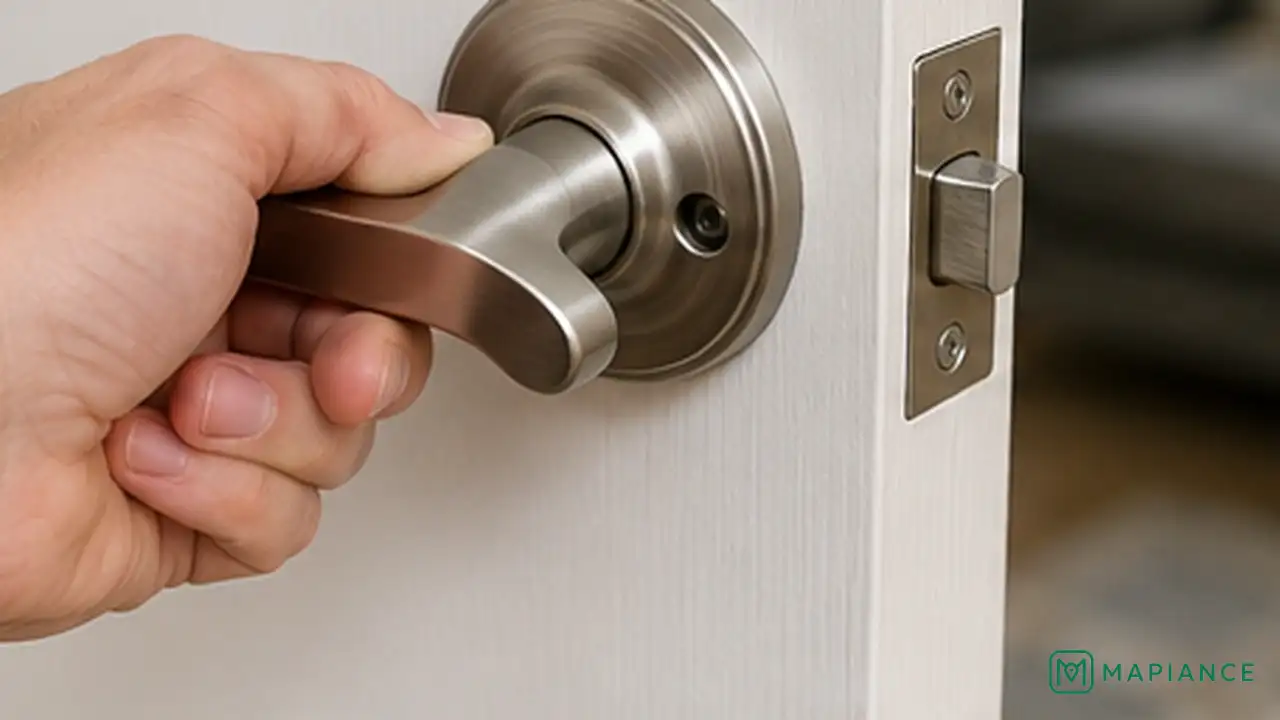
Find Where the Handle Is Loose
Hold the handle and move it gently up, down, and side to side. Check whether the whole mounting plate moves against the door or only the lever or knob moves around the spindle. Turn the handle several times as well. Finding the exact loose part helps you avoid taking apart more hardware than necessary.
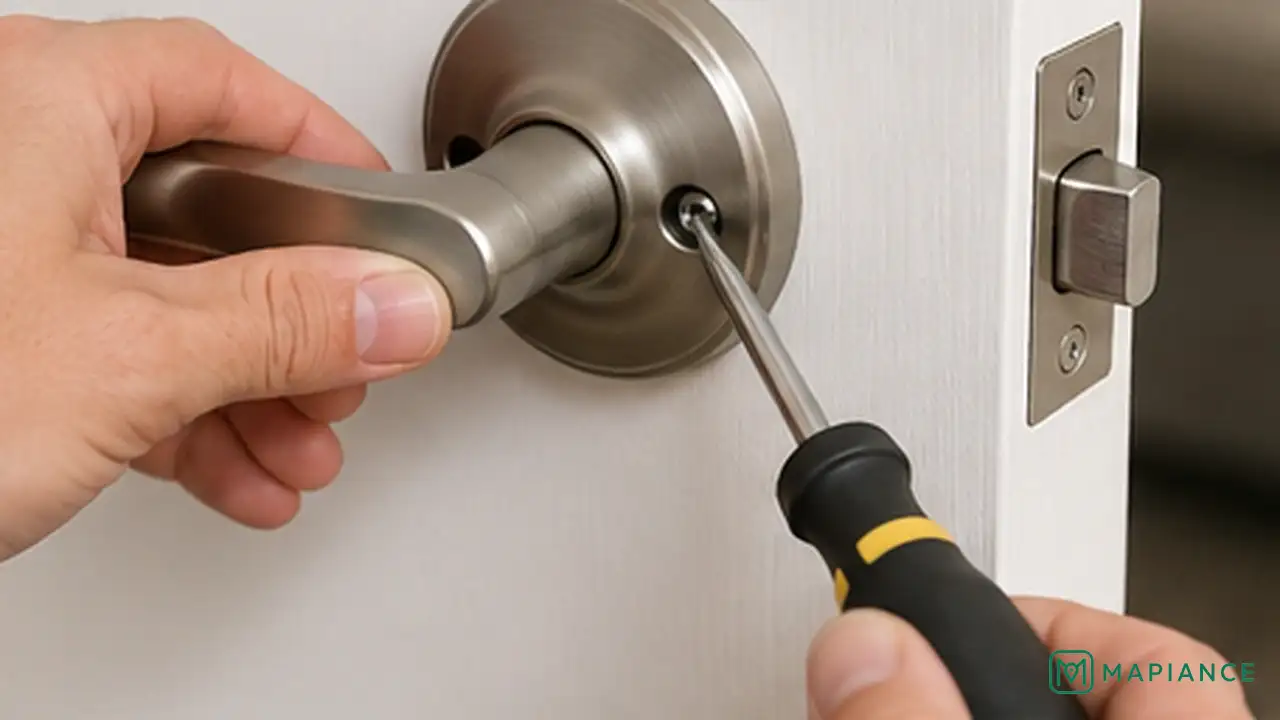
Tighten the Visible Mounting Screws
If you can see screws on the handle plate, hold both sides of the handle in their correct position and tighten the screws with the correct screwdriver. Alternate between the screws so the plate sits evenly against the door. Stop when the handle feels secure. Do not force the screws after they are snug because over-tightening can strip the threads or distort the hardware.
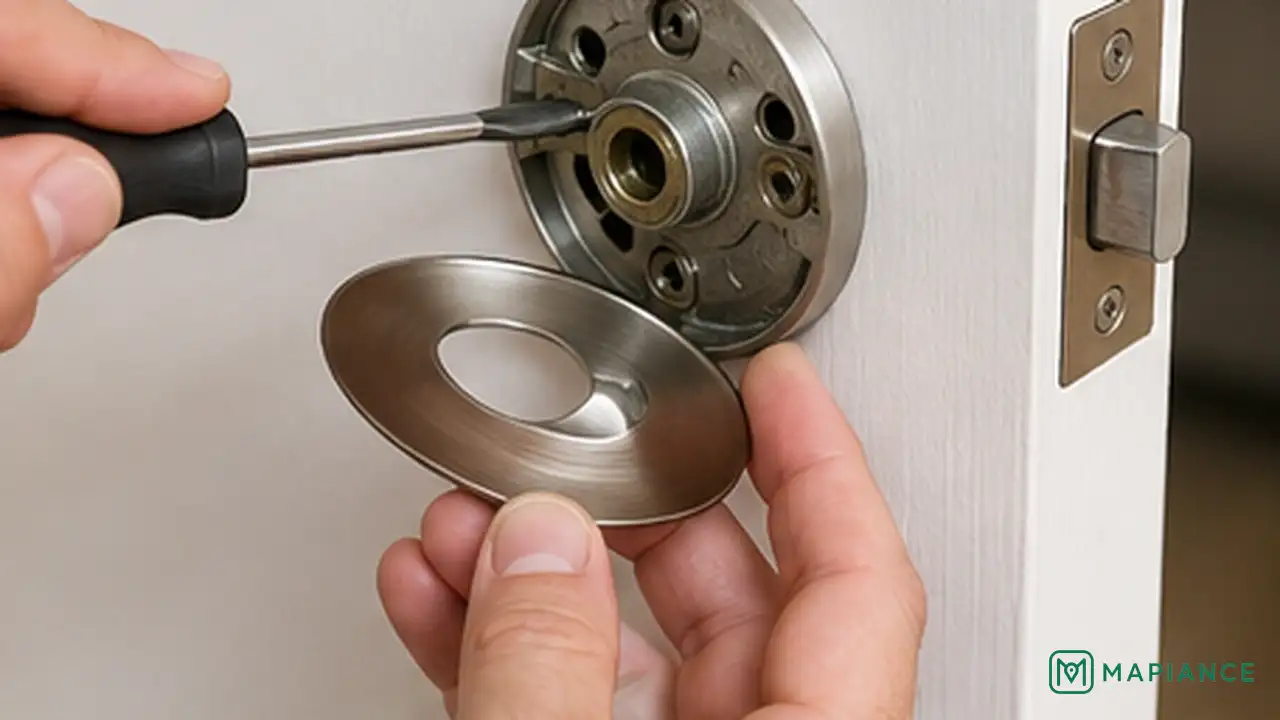
Expose Hidden Mounting Screws
Many handles hide their mounting screws behind a decorative cover plate. Look around the edge for a small notch, release point, or removable rose. Carefully pry or twist the cover according to the handle design, then tighten the screws underneath. Refit the cover only after the handle base is firmly secured.
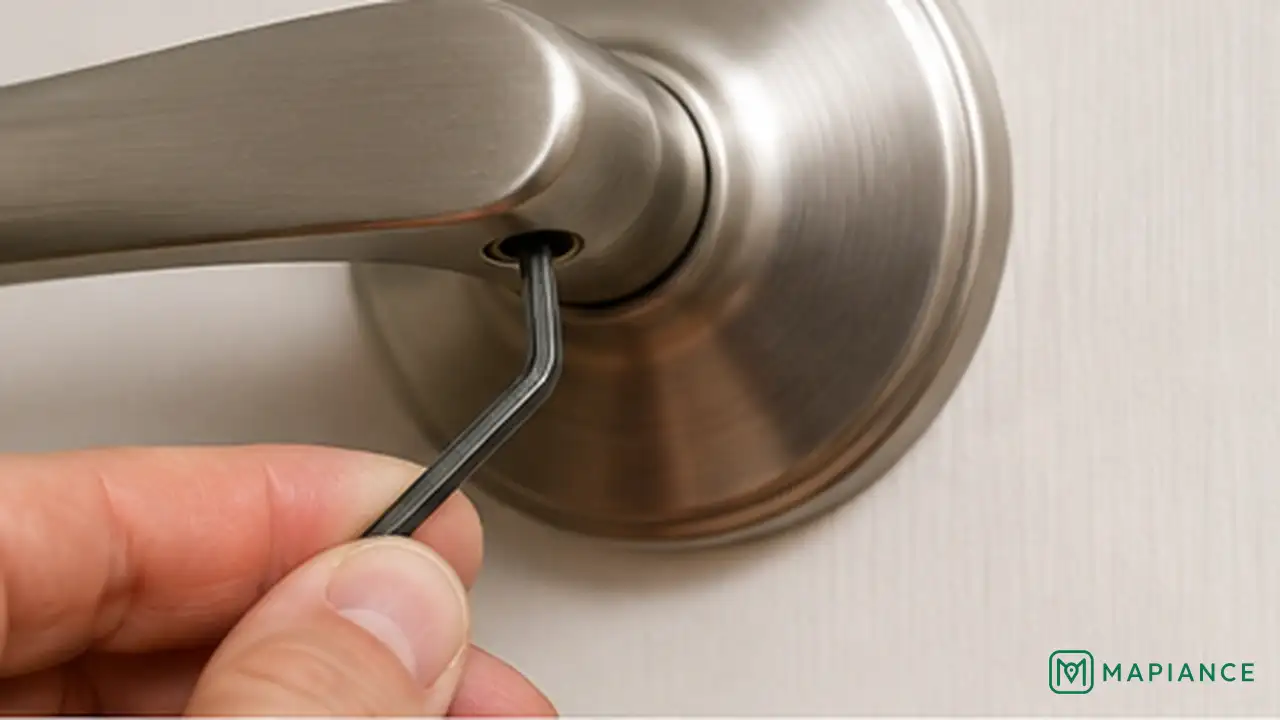
Tighten the Handle Set Screw
If the mounting plate is secure but the lever or knob still feels loose, look underneath or along the side of the handle for a small set screw. Push the handle fully onto the spindle, then tighten the set screw with the correct Allen key or screwdriver. The screw should grip the spindle firmly without being forced.
Check the Spindle and Internal Parts
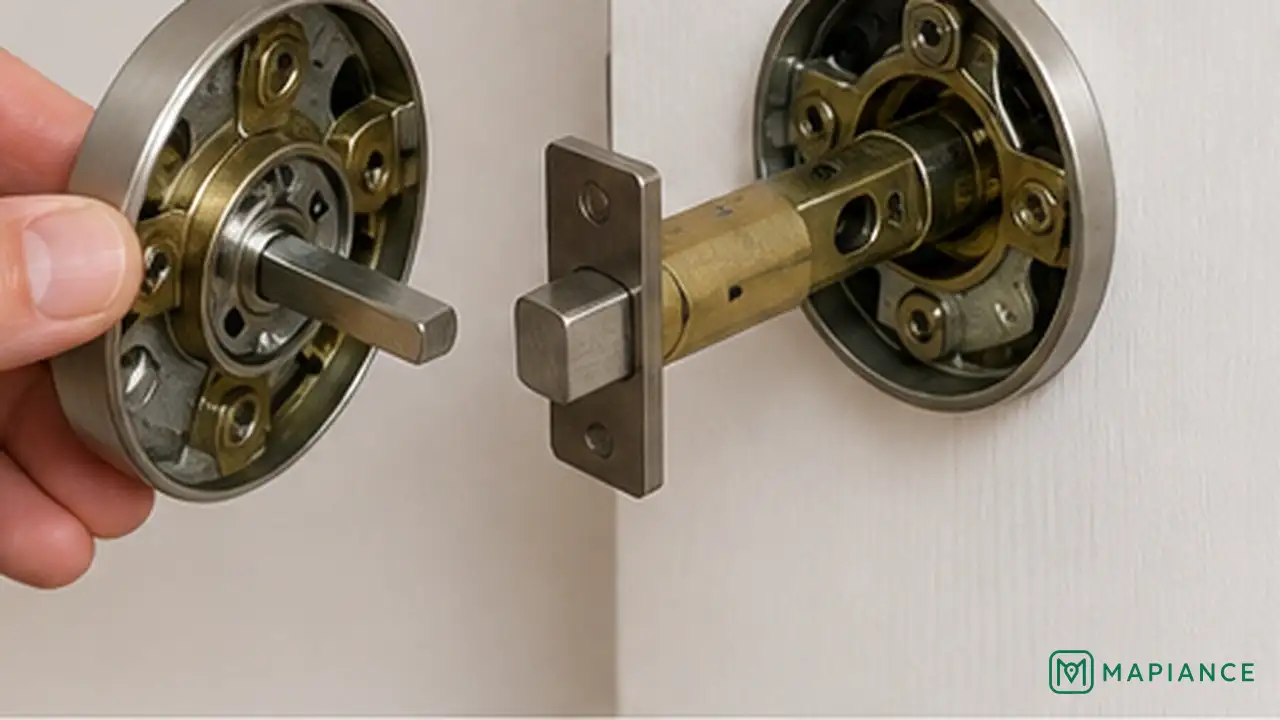
If tightening the screws does not solve the problem, remove the handles far enough to inspect the square spindle and the openings that grip it. A badly worn spindle, rounded connection, cracked handle hub, or damaged spring mechanism can keep the handle loose. Replace the damaged part or the complete handle set if the worn component is not replaceable on its own.
Reassemble and Test the Handle
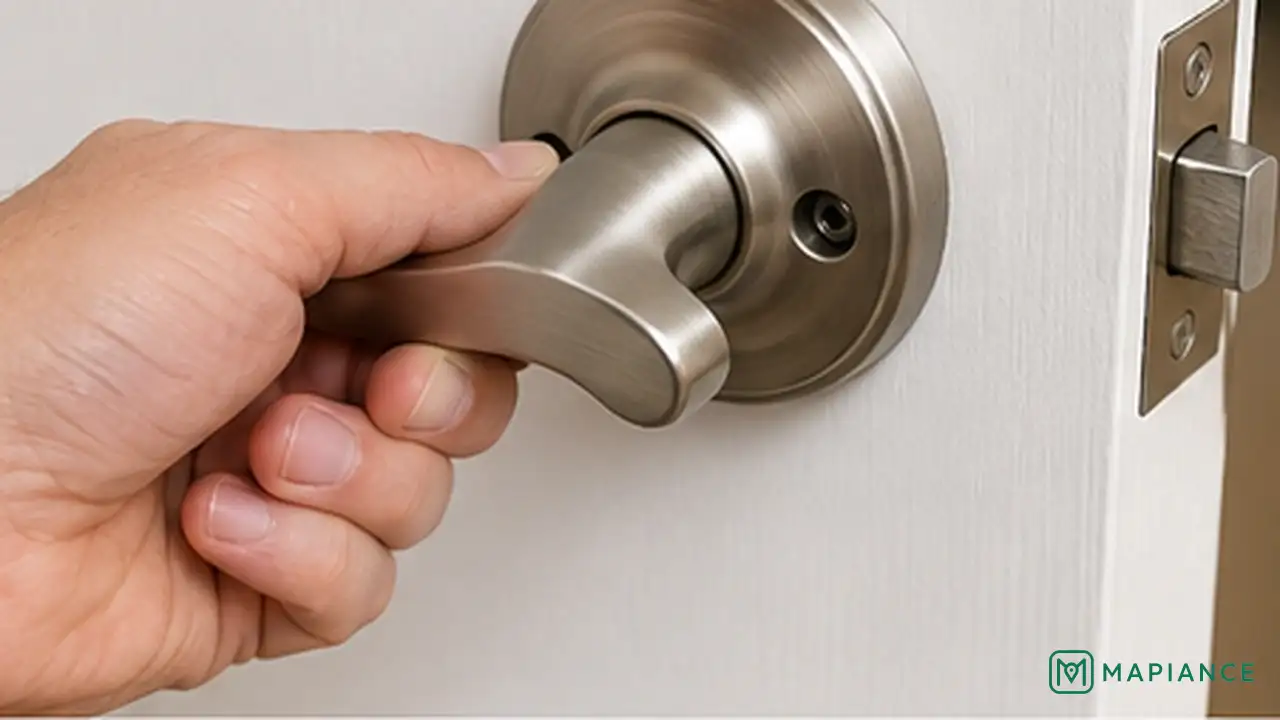
Reinstall any parts you removed and make sure both handle plates sit flat against the door. Turn the handle several times and check that the latch retracts and returns smoothly. Then pull and push the door gently while holding the handle. It should feel firm without wobbling, scraping, or sticking.
Tips & common mistakes
Tips for best results
- Use a screwdriver that fits the screw head closely so you do not damage it.
- Tighten opposite mounting screws gradually instead of fully tightening one first.
- Check the handle again after several days if it has been loose for a long time.
- Keep small set screws and decorative covers in a container while the handle is apart.
- If the handle repeatedly loosens, inspect the hardware for worn threads instead of tightening it harder.
Common mistakes
- Over-tightening the mounting screws can strip threads or distort the handle plate.
- Using the wrong Allen key can round out a small set screw and make it difficult to remove later.
- Tightening only one side of the handle can leave the two plates misaligned.
- Forcing a decorative cover off without finding its release point can bend or scratch it.
- Ignoring a worn spindle or cracked handle hub can cause the looseness to return quickly.
Frequently asked questions
Why does my door handle keep becoming loose?
The mounting screws or set screw may be working loose, but repeated movement can also indicate worn threads, a damaged spindle, or wear inside the handle mechanism.
Where are the screws on a door handle with no visible screws?
They are often hidden behind a decorative round or rectangular cover plate. Look for a small notch, release hole, or removable rose around the handle base.
What is the small screw underneath a door lever?
It is usually a set screw that secures the lever to the spindle or handle shaft. Tightening it can remove movement from a lever whose mounting plate is already secure.
Should I use thread-locking adhesive on a loose door handle?
Usually, tightening correctly is enough. If the manufacturer permits thread-locking compound, use only the recommended type and amount. Do not use permanent adhesive as a substitute for damaged hardware.
When should I replace the door handle instead of tightening it?
Replace it if the handle body is cracked, the spindle connection is badly worn, the mounting threads are damaged, or the internal spring or latch mechanism no longer works correctly.
Written by Mapiance Editorial Team
The Mapiance Editorial Team researches, writes, reviews, and maintains practical guides and explainers for MAPIANCE.
Published Aug 30, 2026 · Updated Oct 2, 2026