 MAPI
MAPIHow to Fix a Running Toilet
A running toilet usually wastes water because the tank never finishes its normal fill cycle. The most common causes are a flapper that does not seal, a chain that holds the flapper open, a float set too high, or a fill valve that no longer shuts off correctly. Most repairs can be diagnosed from inside the tank without removing the toilet.
Remove the tank lid and watch what happens after a flush. If water keeps entering the bowl, check whether the flapper seals fully and whether the chain is too tight. If water rises into the overflow tube, lower the float or adjust the fill valve. Replace worn parts if adjustment does not stop the running.
Things you'll need
- Clean towel or rag
- Adjustable pliers if needed
- Replacement flapper if the old one is worn
- Replacement fill valve if adjustment does not stop the water
- Sponge or small container if you need to empty part of the tank
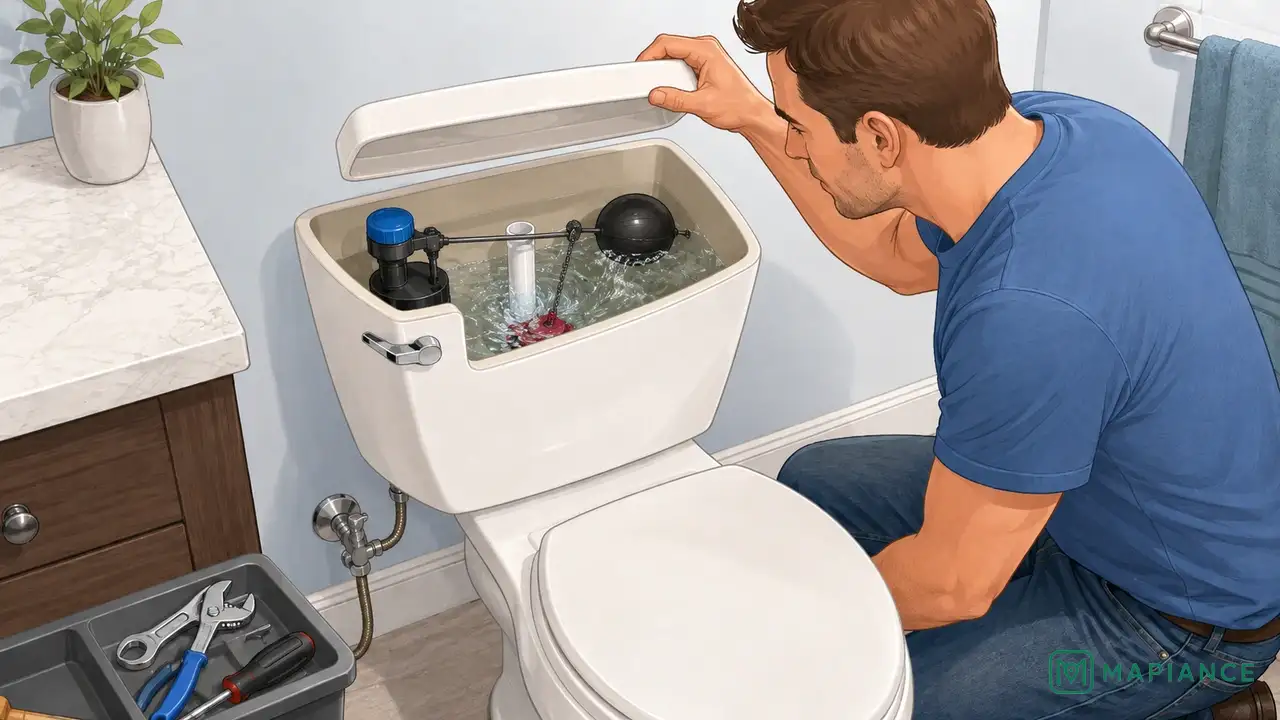
Remove the tank lid and find the cause
Lift off the tank lid carefully and place it somewhere safe. Flush the toilet and watch the parts inside the tank. If water keeps flowing into the bowl, focus on the flapper and chain. If the water rises until it spills into the overflow tube, focus on the float and fill valve.
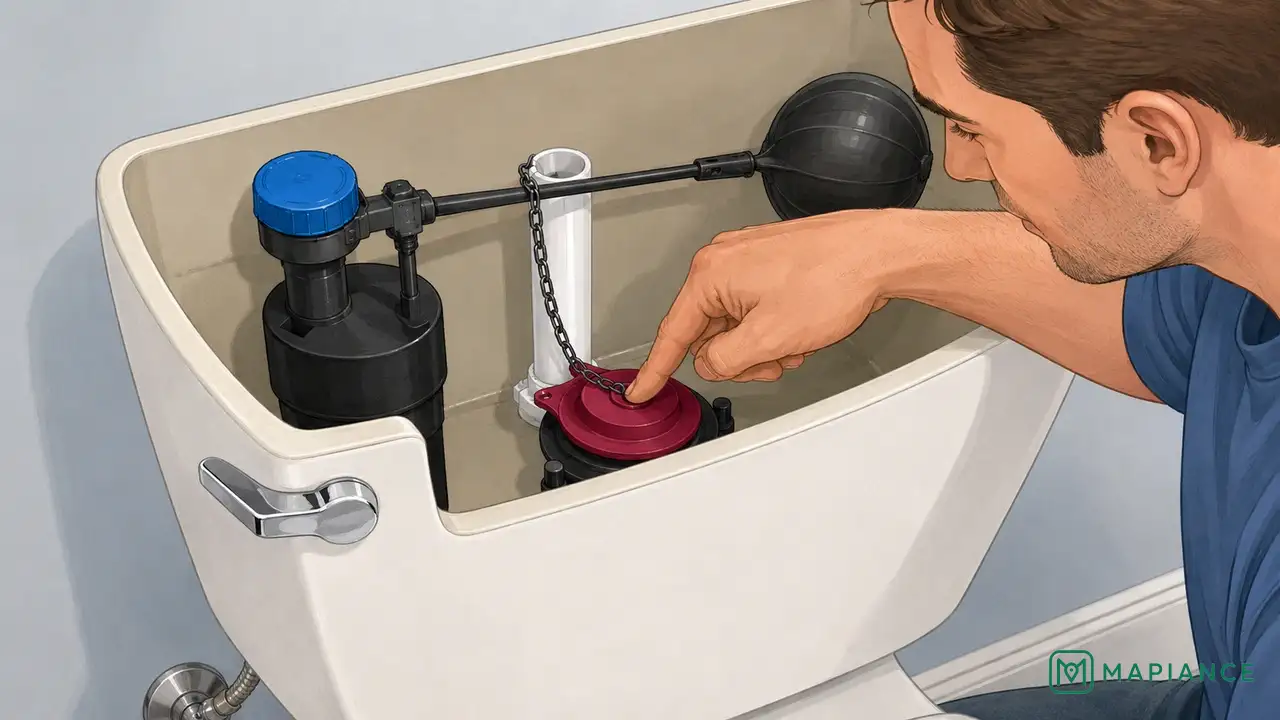
Check the flapper seal
Look at the rubber flapper at the bottom of the tank after the flush. It should fall back into place and seal the flush valve opening completely. Wipe away light mineral buildup from the sealing surface. If the flapper is warped, cracked, stiff, or does not sit flat, replace it with a compatible one.
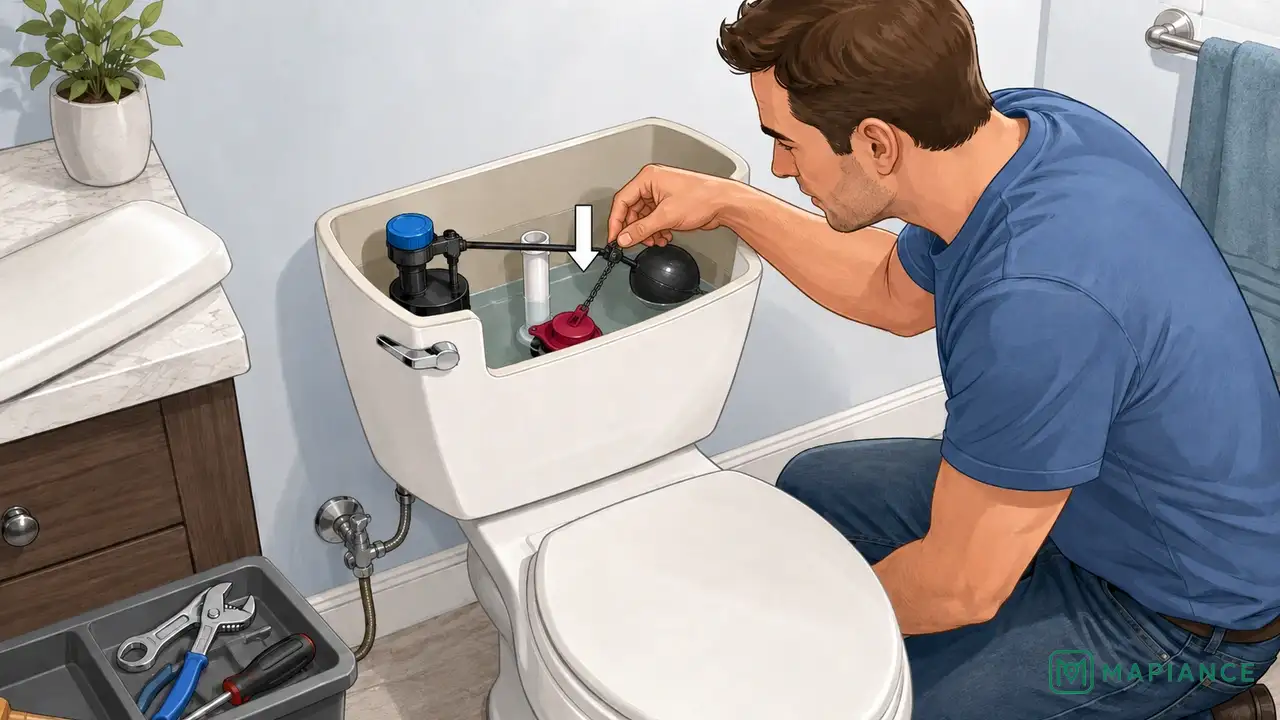
Adjust the flapper chain
Check the chain between the flush lever and flapper. It should have a small amount of slack when the flapper is closed. If the chain is too tight, it can hold the flapper open. If it is much too loose, it can tangle or prevent a full flush. Move the chain connection one link at a time until the flapper closes freely.
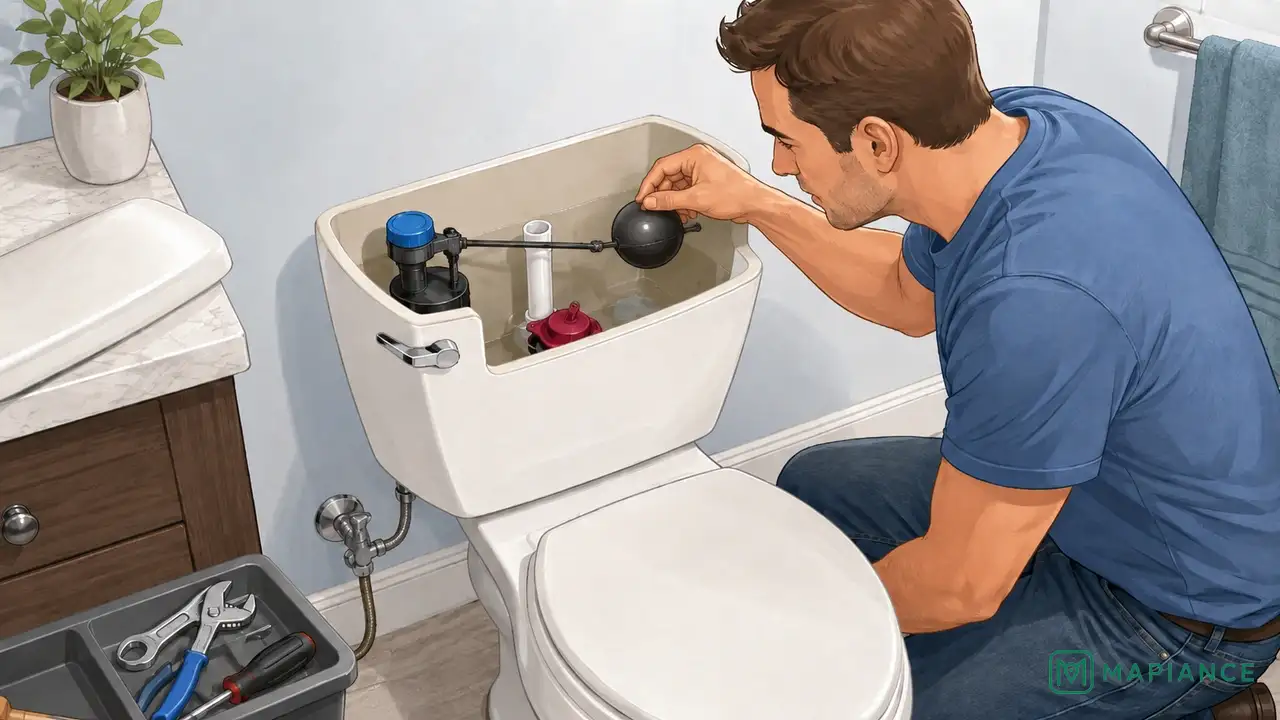
Lower the tank water level
If water keeps entering the overflow tube, lower the float so the fill valve shuts off sooner. Depending on the valve, this may mean turning an adjustment screw or moving a clip on the float. Set the final water level slightly below the top of the overflow tube and flush again to test it.
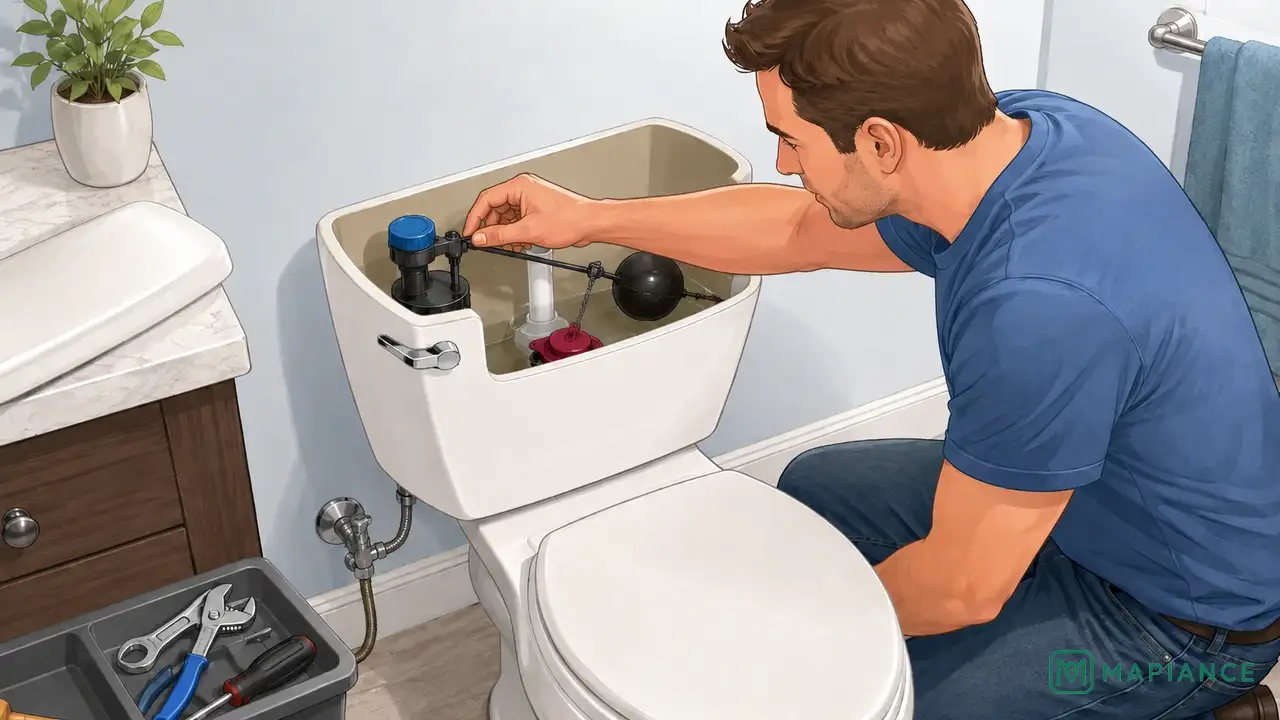
Check the fill valve
If the water level is set correctly but the fill valve keeps running, gently move the float by hand. The water should stop when the float reaches its shutoff position. If the valve continues to hiss or send water into the tank, shut off the toilet supply valve and replace the fill valve with a compatible model.
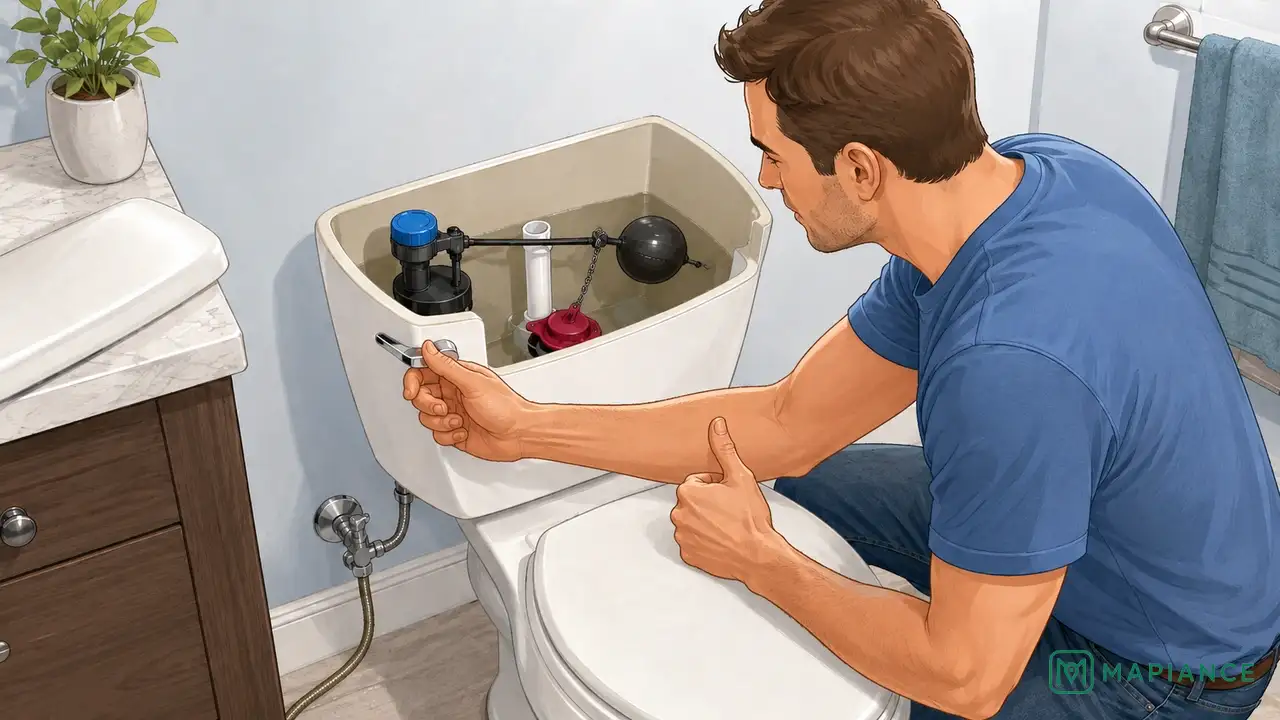
Flush and confirm the repair
Turn the water supply back on if you shut it off, then let the tank fill completely. Flush the toilet several times and listen after each refill. The water should stop, the tank level should remain below the overflow tube, and no water should continue trickling into the bowl. Replace the tank lid once everything works normally.
Tips & common mistakes
Tips for best results
- Before buying parts, compare the old flapper or fill valve with the replacement so the new part matches your toilet.
- Place the tank lid on a towel or soft surface because porcelain lids can chip or crack if they are set on a hard floor.
- If mineral deposits are preventing a flapper from sealing, clean the sealing surface before replacing parts.
- Make one adjustment at a time and flush after each change so you know which repair solved the problem.
- If water is leaking outside the tank or around the supply connection, shut off the water before continuing.
Common mistakes
- Setting the float too high: Water can keep spilling into the overflow tube even when the fill valve works.
- Making the flapper chain too tight: The flapper may stay slightly open and allow water to leak into the bowl.
- Using a flapper that does not match the flush valve: A poor fit can prevent a reliable seal.
- Overtightening plastic fill-valve parts: Plastic nuts and fittings can crack if excessive force is used.
- Ignoring water outside the tank: A running toilet and an external leak are different problems, and an external leak should be addressed immediately.
Frequently asked questions
Why does my toilet keep running after it fills?
The flapper may not be sealing, the chain may be holding it open, or the fill valve may be allowing the water level to rise into the overflow tube.
How do I know if the toilet flapper is bad?
A bad flapper may look warped, cracked, stiff, or swollen, and it may not sit flat over the flush valve opening after a flush.
How high should the water be in a toilet tank?
The water should stop below the top of the overflow tube. Many toilets also have a recommended waterline marked inside the tank.
Can a fill valve make a toilet run continuously?
Yes. If the fill valve does not shut off when the float reaches the correct level, water can continue entering the tank and flow into the overflow tube.
When should I call a plumber for a running toilet?
Call a plumber if the toilet still runs after the flapper, chain, float, and fill valve are checked, or if you find a cracked tank, damaged flush valve seat, leaking supply connection, or another problem you are not comfortable repairing.
Written by Mapiance Editorial Team
The Mapiance Editorial Team researches, writes, reviews, and maintains practical guides and explainers for MAPIANCE.
Published Aug 26, 2026 · Updated Sep 28, 2026