 MAPI
MAPIHow to Fix Gravy That’s Too Thin
Thin gravy usually means there is too much liquid or not enough thickener. The easiest fix is to reduce some of the liquid first, then add a small amount of thickener only if needed. Work gradually because gravy thickens quickly and can become pasty if too much starch is added at once.
Start by simmering the gravy uncovered for a few minutes. If it is still too thin, whisk a small cornstarch slurry made with cold water into the simmering gravy, then cook briefly and check the texture before adding more.
Things you'll need
- Whisk or spoon
- Small bowl
- Cornstarch, if needed
- Cold water or cold broth
- Unsalted broth or water, if the gravy becomes too thick
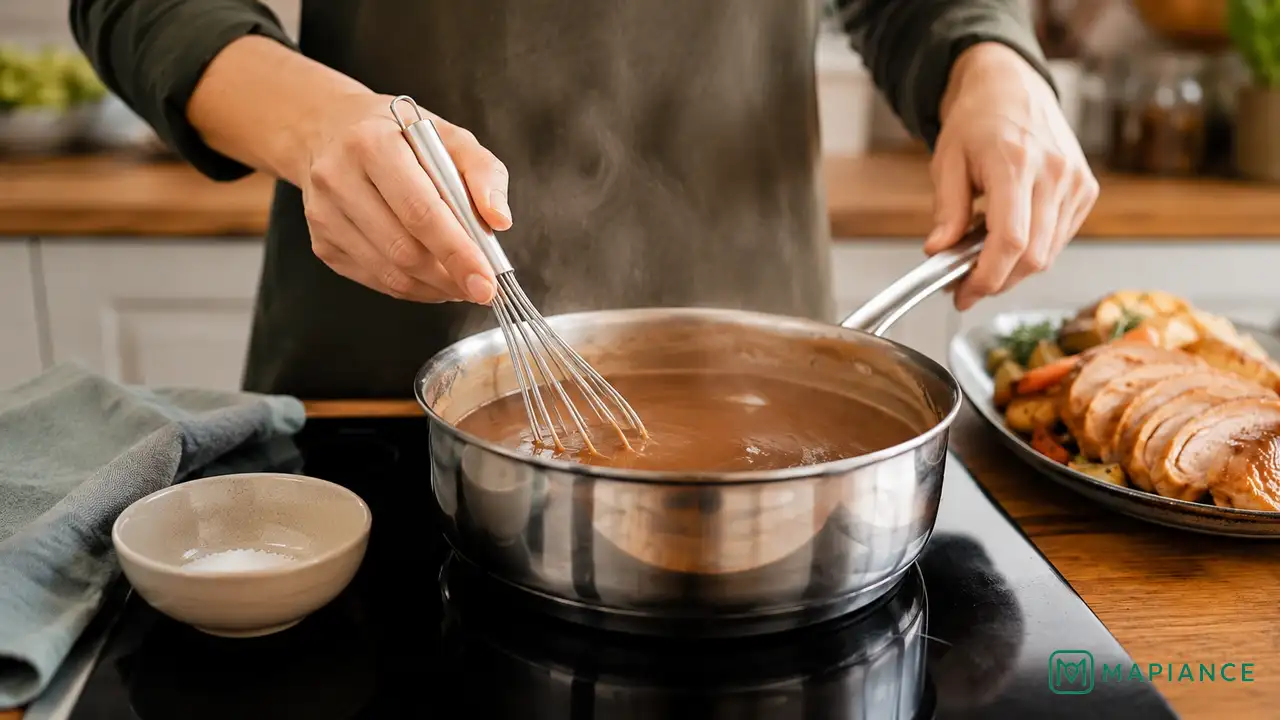
Simmer the Gravy Uncovered
Bring the gravy to a gentle simmer with the pan uncovered. Stir or whisk often so it does not stick to the bottom. Let some excess liquid evaporate for a few minutes, then check the consistency. Reduction also concentrates the flavor, so stop if the gravy begins to taste too salty or too strong.
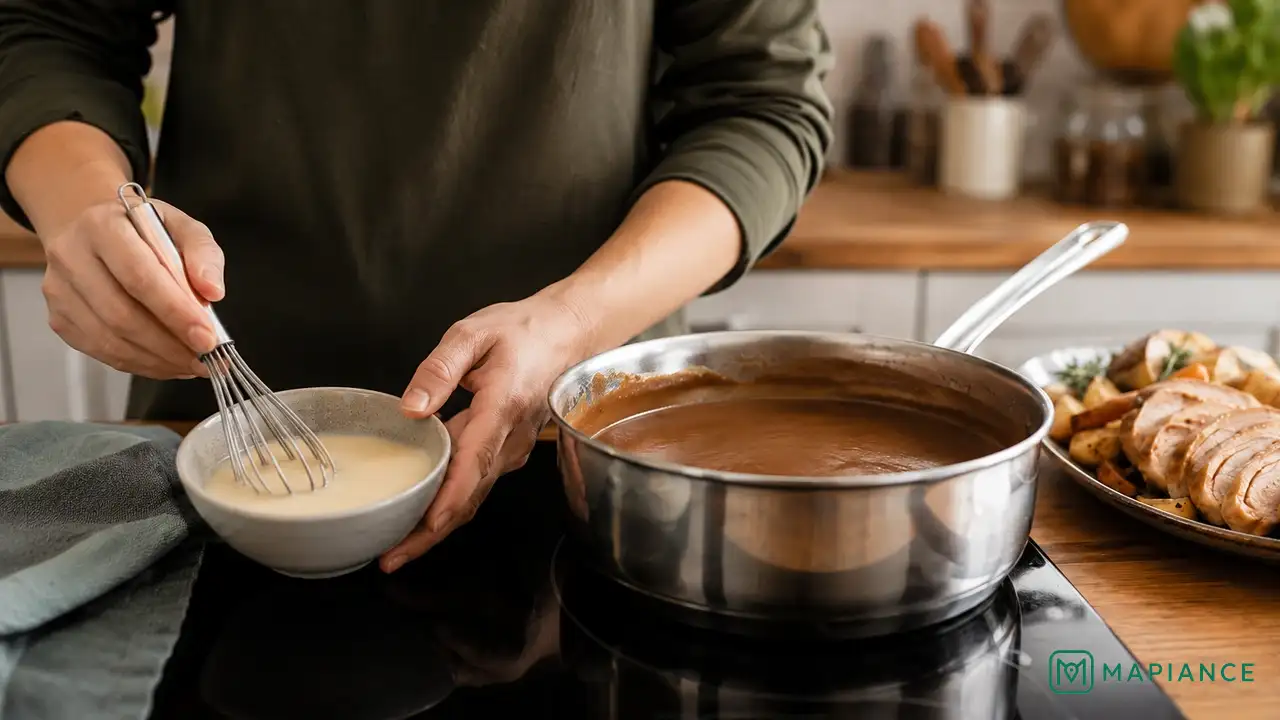
Make a Smooth Cornstarch Slurry
If the gravy is still too thin, mix cornstarch with an equal amount of cold water or cold broth in a small bowl. Stir until the mixture is completely smooth with no dry powder or lumps. For about 2 cups of gravy, 1 tablespoon of cornstarch mixed with 1 tablespoon of cold liquid is a useful starting amount, but you may not need all of it.
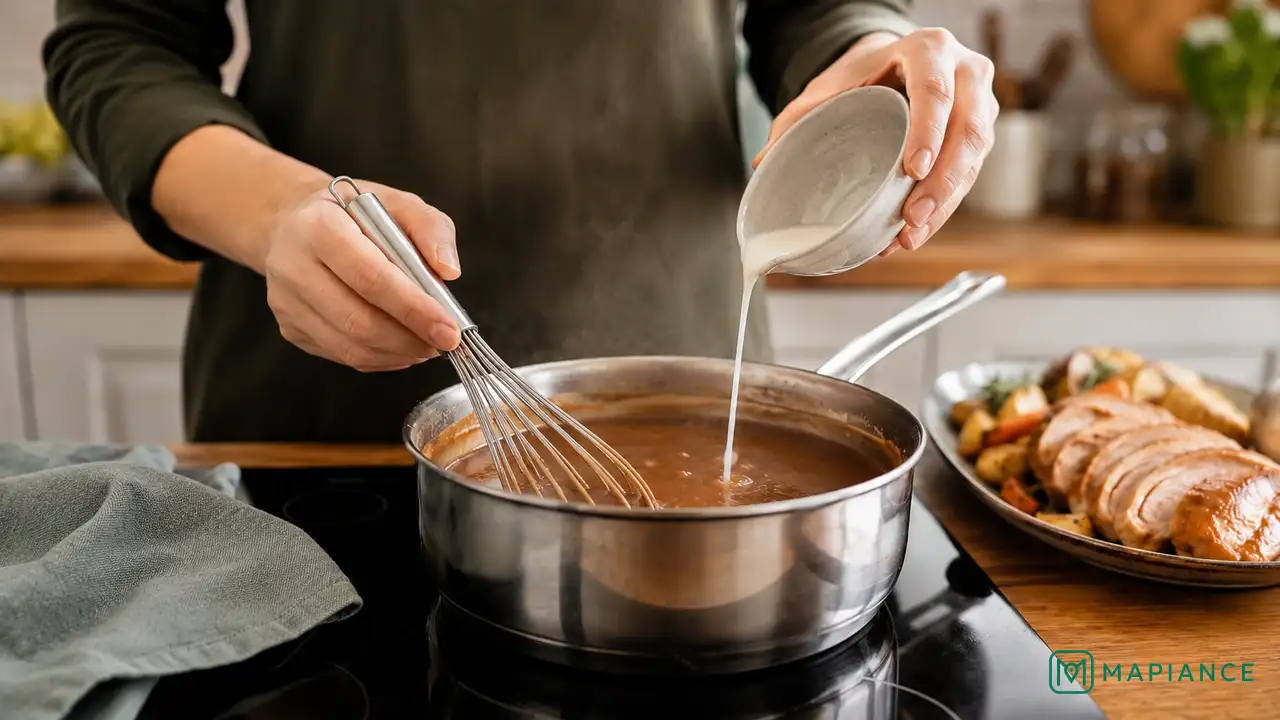
Whisk In the Slurry Gradually
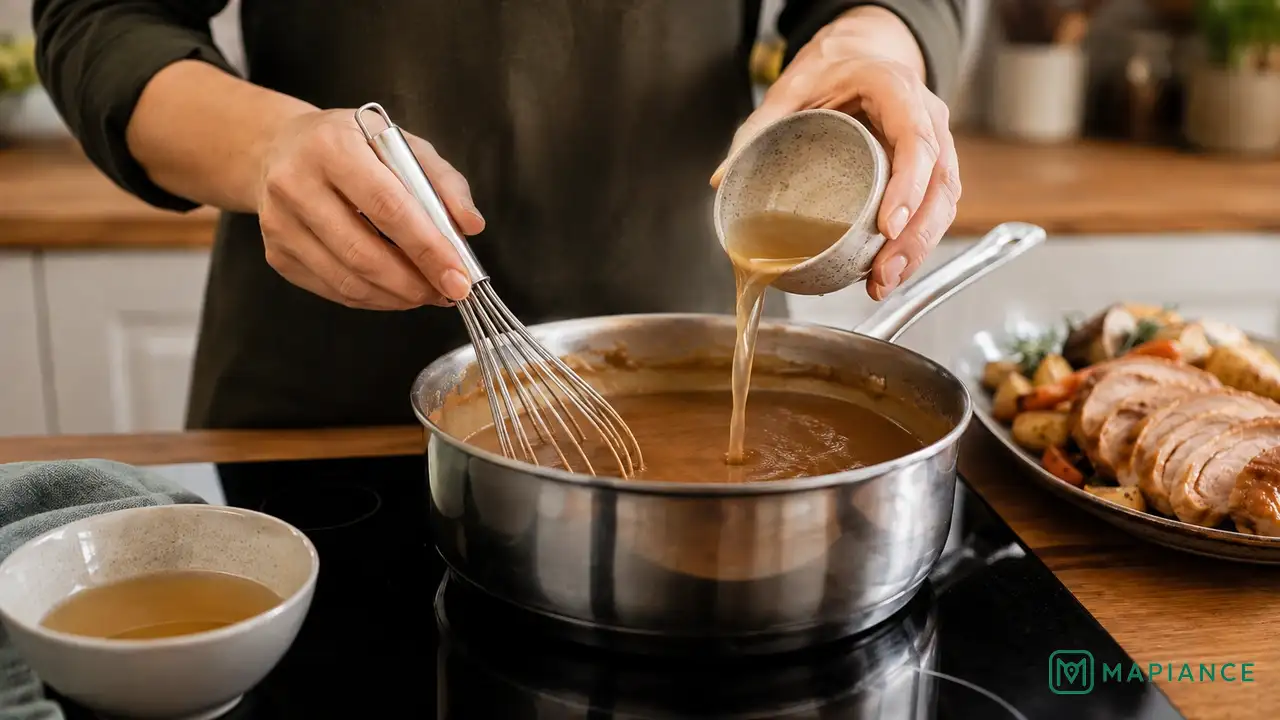
Keep the gravy at a gentle simmer and whisk in a small amount of the slurry. Continue whisking as you pour so the starch spreads evenly. Let the gravy cook for about 1 to 2 minutes before deciding whether it needs more. Add the remaining slurry only in small amounts until the gravy lightly coats a spoon.
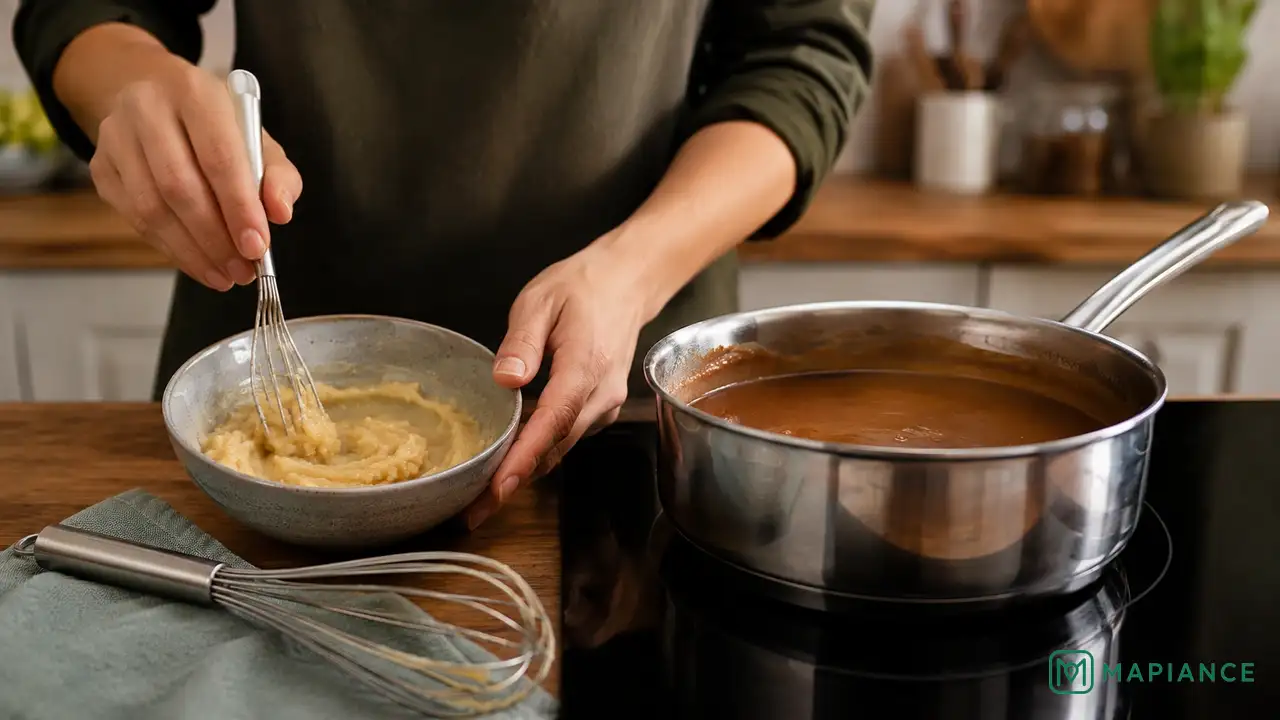
Use a Butter-Flour Paste as an Alternative
If you do not want to use cornstarch, mash equal parts soft butter and plain flour into a smooth paste. Whisk a small piece of this paste into the simmering gravy and let it cook for several minutes so the flour loses its raw taste. Add more only if needed. This method works well for richer gravies and gives a softer, less glossy finish than cornstarch.
Check the Texture and Seasoning
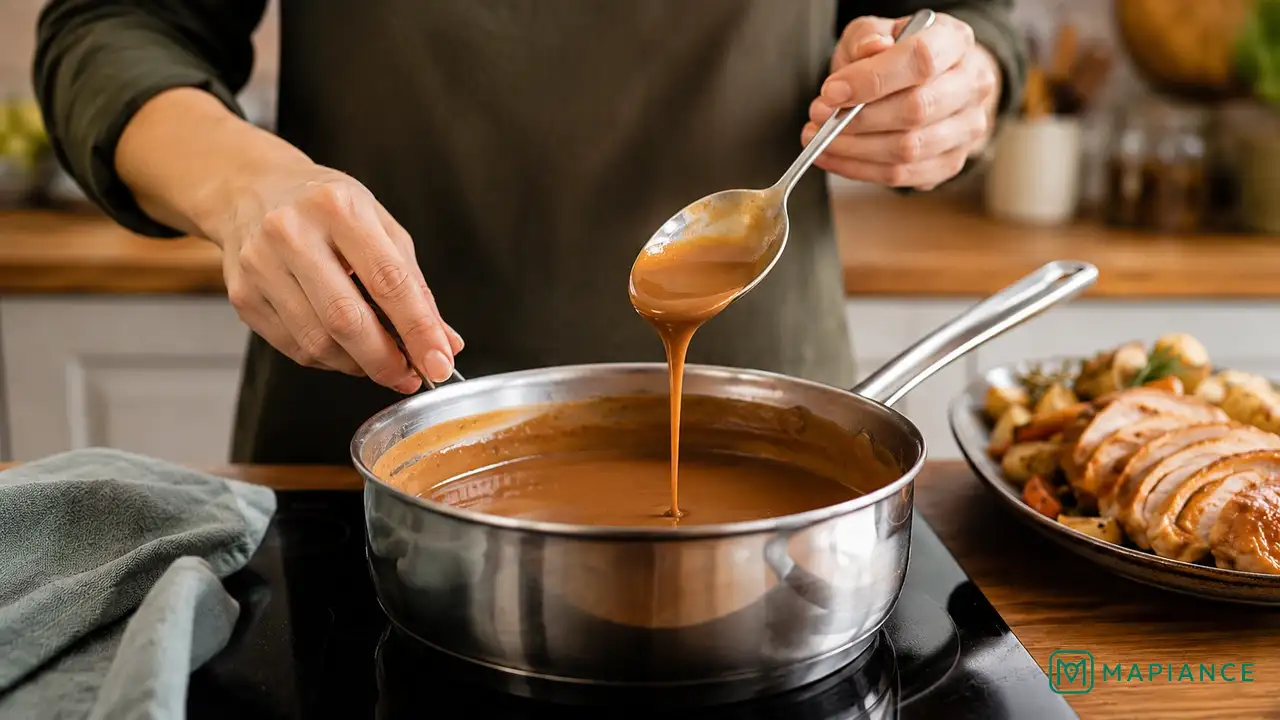
Remove the gravy from the heat for a moment and let it settle. Dip in a spoon and check whether the gravy coats the back lightly instead of running off like water. Taste it again because reduction can make salt and seasoning stronger. If needed, adjust the seasoning only after the final thickness is correct.
Thin It Back if You Added Too Much
If the gravy becomes thicker than you want, whisk in a small splash of warm unsalted broth or water. Add only a little at a time until the texture is right again. Warm the gravy gently and taste once more before serving.
Tips & common mistakes
Tips for best results
- Use unsalted broth for a slurry when the gravy already tastes salty.
- Add thickener in small stages because gravy continues to thicken as it cooks and cools slightly.
- Whisk continuously when adding starch to prevent small lumps from forming.
- If the gravy contains pan drippings, strain it before thickening when you want a smoother finish.
- Keep finished gravy warm over low heat rather than boiling it for a long time.
Common mistakes
- Adding dry cornstarch directly to hot gravy can create lumps that are difficult to remove.
- Adding the entire slurry at once can make the gravy turn thick and gel-like very quickly.
- Reducing gravy too far can make the flavor overly salty even when the texture improves.
- Serving immediately after adding flour can leave a raw flour taste; let flour-thickened gravy cook for several minutes.
- Using cold broth to thin very hot gravy can cool it quickly and make the texture less even; warm liquid blends in more smoothly.
Frequently asked questions
How much cornstarch should I use to thicken gravy?
For about 2 cups of gravy, start with 1 tablespoon of cornstarch mixed with 1 tablespoon of cold liquid. Add the slurry gradually because you may not need all of it.
Can I thicken gravy without cornstarch?
Yes. You can reduce the gravy by simmering it uncovered or whisk in a small butter-and-flour paste and cook it for several minutes.
Why is my gravy still thin after adding cornstarch?
The gravy may need another minute or two of gentle simmering for the starch to thicken fully. If it is still thin after that, add a little more slurry.
How do I fix lumpy gravy?
Whisk the gravy firmly while it is warm. If lumps remain, strain the gravy through a fine sieve, then return it to the pan and adjust the consistency.
Does gravy get thicker as it cools?
Yes. Starch-thickened gravy usually becomes slightly thicker as it cools, so stop cooking when it is just a little looser than the final texture you want.
What can I do if reducing the gravy makes it too salty?
Stop reducing it and use a starch thickener instead. If it is already too salty, add a little unsalted broth or water before adjusting the thickness again.
Written by Mapiance Editorial Team
The Mapiance Editorial Team researches, writes, reviews, and maintains practical guides and explainers for MAPIANCE.
Published Aug 30, 2026 · Updated Sep 30, 2026