 MAPI
MAPIHow to Fix Over-Salted Food
Food can taste too salty because too much salt was added, a salty ingredient reduced too far, or liquid evaporated during cooking. The best solution depends on the dish, but the main goal is always the same: lower the concentration of salt without ruining the texture. Start with the least disruptive change, taste again, and only add more if needed.
The most reliable fix is to reduce the salt concentration: add unsalted liquid, more of the main ingredients, or another unsalted batch. For some dishes, a little acid, dairy, or sweetness can make the flavor feel more balanced, but these do not remove the salt.
Things you'll need
- Unsalted water, stock, milk, or another suitable liquid
- Extra unsalted ingredients from the recipe
- Lemon juice or vinegar for dishes that suit acidity
- Cream, yogurt, or coconut milk for suitable dishes
- A small amount of sugar or another sweet ingredient when appropriate

Stop adding salty ingredients
Take the dish off the heat if it is reducing quickly, and do not add more salt, salty stock, cheese, soy sauce, cured meat, or other salty ingredients. Taste a small spoonful after it cools slightly so you can judge the salt level accurately.
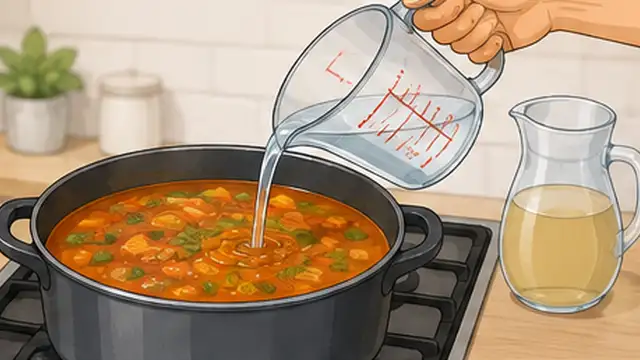
Dilute soups, sauces, and stews
For a liquid dish, stir in a small amount of unsalted water, stock, milk, or another liquid that matches the recipe. Add a little at a time so the dish does not become watery. Simmer briefly if needed, then taste again before adding more.
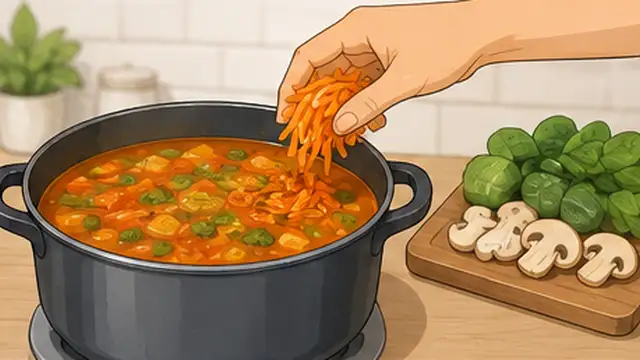
Add more unsalted ingredients
If extra liquid would damage the texture, increase the volume of the dish instead. Add more cooked rice, pasta, vegetables, beans, potatoes, meat, tomatoes, or another unsalted main ingredient that belongs in the recipe. This spreads the salt through more food.
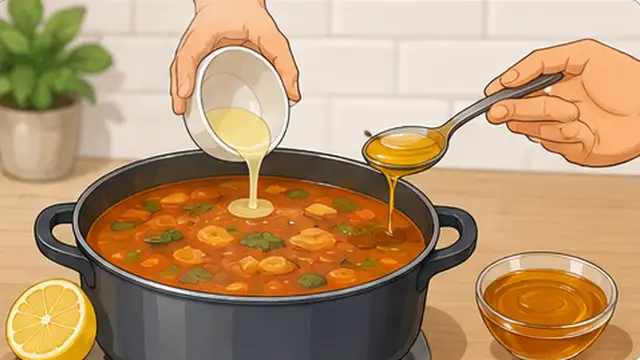
Balance the flavor if the dish allows it
Once the salt level is closer to normal, a small amount of acidity, dairy, or sweetness can improve the balance. Lemon juice or vinegar can brighten rich foods, while cream, yogurt, or coconut milk can soften some sauces and curries. A tiny amount of sugar may help certain tomato-based or spicy dishes. These additions change how the salt tastes; they do not remove it.
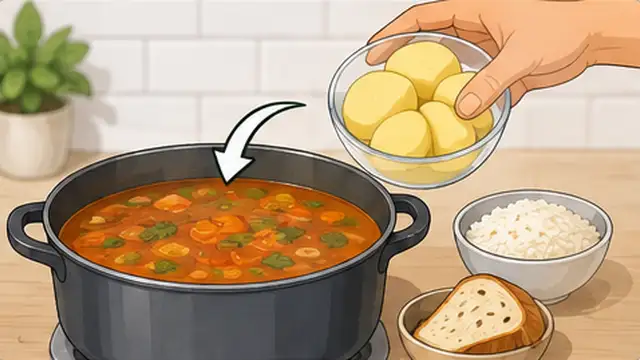
Make a second unsalted batch for very salty food
If the dish is still much too salty, make another portion without salt and combine the two. This is often the cleanest fix for casseroles, sauces, soups, chili, curries, fillings, and other dishes that can be mixed. Freeze or refrigerate extra portions if the combined batch is larger than you need.

Taste again before serving
Let the dish settle for a minute, then taste a small amount again. Check the overall flavor, not only the salt. If the dish now tastes balanced, stop adjusting it. Too many extra fixes can turn one seasoning problem into several new ones.
Tips & common mistakes
Tips for best results
- Add corrective ingredients in small amounts and taste between changes; it is easier to add more than to undo another adjustment.
- If a sauce is already the right thickness, add more of its solid ingredients or an unsalted second batch instead of pouring in too much liquid.
- Serve a slightly salty food with an unsalted side such as plain rice, potatoes, bread, or vegetables when changing the main dish further would damage it.
- Remember that ingredients such as cheese, cured meats, bouillon, soy sauce, and packaged stock can add a large amount of salt even when you do not add table salt.
- When reducing a soup or sauce, season lightly early in cooking and make the final salt adjustment near the end.
Common mistakes
- Adding a raw potato and expecting it to remove only salt: A potato absorbs seasoned liquid along with everything else, so it does not selectively pull salt from the dish.
- Adding a lot of sugar: Sweetness can distract from saltiness, but too much changes the dish and does not reduce the actual salt level.
- Adding acid before diluting a very salty dish: Lemon or vinegar can improve balance, but strong saltiness usually needs dilution or more unsalted food first.
- Pouring in too much water at once: The salt may improve while the flavor and texture become weak.
- Continuing to reduce the dish after correcting it: Evaporation can concentrate the salt again.
Frequently asked questions
Does adding a potato remove salt from food?
Not in a selective way. A potato absorbs some of the cooking liquid, including salt and other flavors, but it does not specifically pull excess salt out of the dish.
Can sugar fix food that is too salty?
A very small amount can balance perception in some dishes, but sugar does not remove salt. If the dish is strongly over-salted, dilute it or add more unsalted ingredients first.
How do I fix over-salted soup?
Add unsalted liquid or more unsalted soup ingredients a little at a time. If the salt level is very high, combine the soup with a second unsalted batch.
How do I fix over-salted meat?
If the salt is mostly on the surface, serve the meat with an unsalted sauce or side. For chopped or shredded meat, mix it into a larger unsalted dish so the salt is spread through more food.
Can cream or yogurt reduce a salty taste?
They can soften and balance the flavor in dishes where dairy fits, such as some sauces, soups, and curries. They do not remove salt, so very salty food still needs dilution or more unsalted ingredients.
Written by Mapiance Editorial Team
The Mapiance Editorial Team researches, writes, reviews, and maintains practical guides and explainers for MAPIANCE.
Published Aug 24, 2026 · Updated Sep 8, 2026