 MAPI
MAPIHow to Fix Squeaky Floors
Most floor squeaks come from movement: a floorboard rubs against another board, the subfloor moves on a joist, or a fastener has loosened. The best repair depends on the floor covering and whether you can reach the underside. Find the movement first, then use the smallest repair that stops it instead of adding screws at random.
Walk slowly over the squeaky area while another person listens, then mark the exact spot. If you can access the floor from below, tighten a loose subfloor-to-joist connection with a small glued wood shim or suitable screw. From above, use a floor-specific repair screw only after confirming the joist location and checking for hidden pipes or wiring.
Things you'll need
- Painter's tape or chalk
- Flashlight
- Drill or driver with suitable bits
- Wood screws or floor-specific squeak repair screws
- Wood shims and construction adhesive if working from below
- Joist finder or another reliable way to locate framing
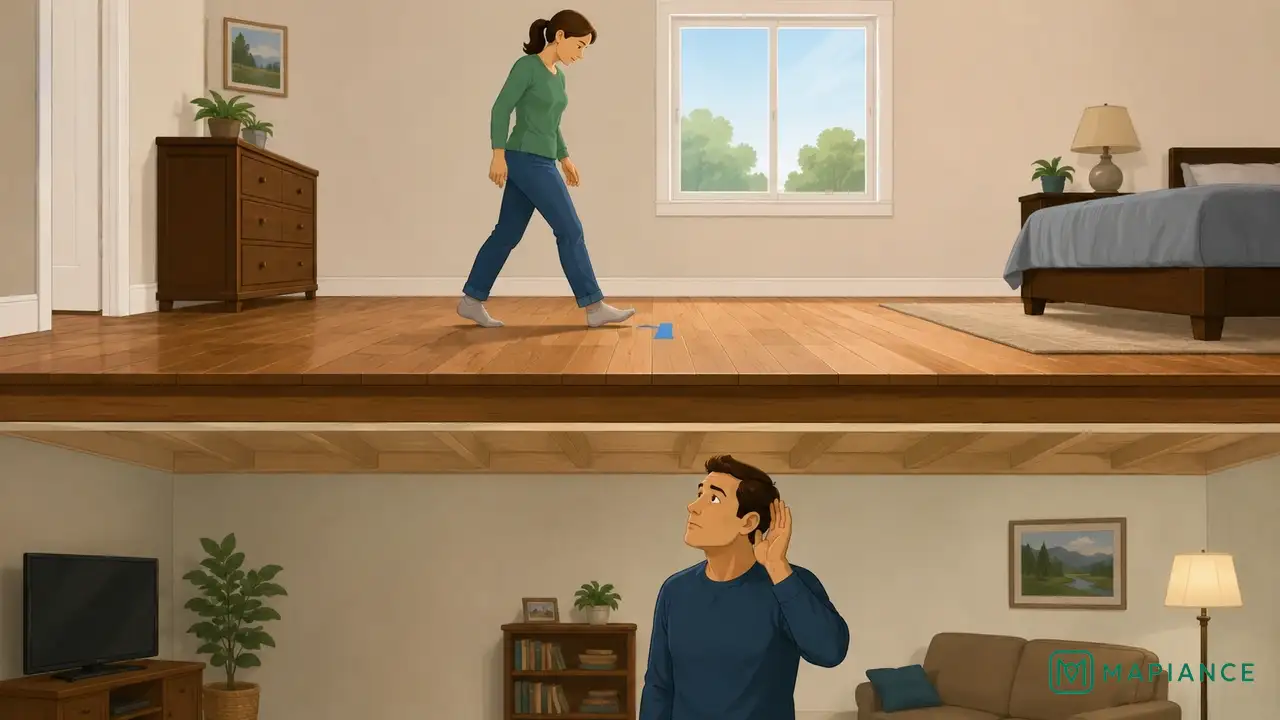
Find the exact squeaky spot
Walk slowly across the noisy area and shift your weight from side to side. Mark the point where the sound is strongest with painter's tape or chalk. If possible, have another person listen from the room below while you step on the floor. A small marked area is easier to repair than guessing across the whole room.
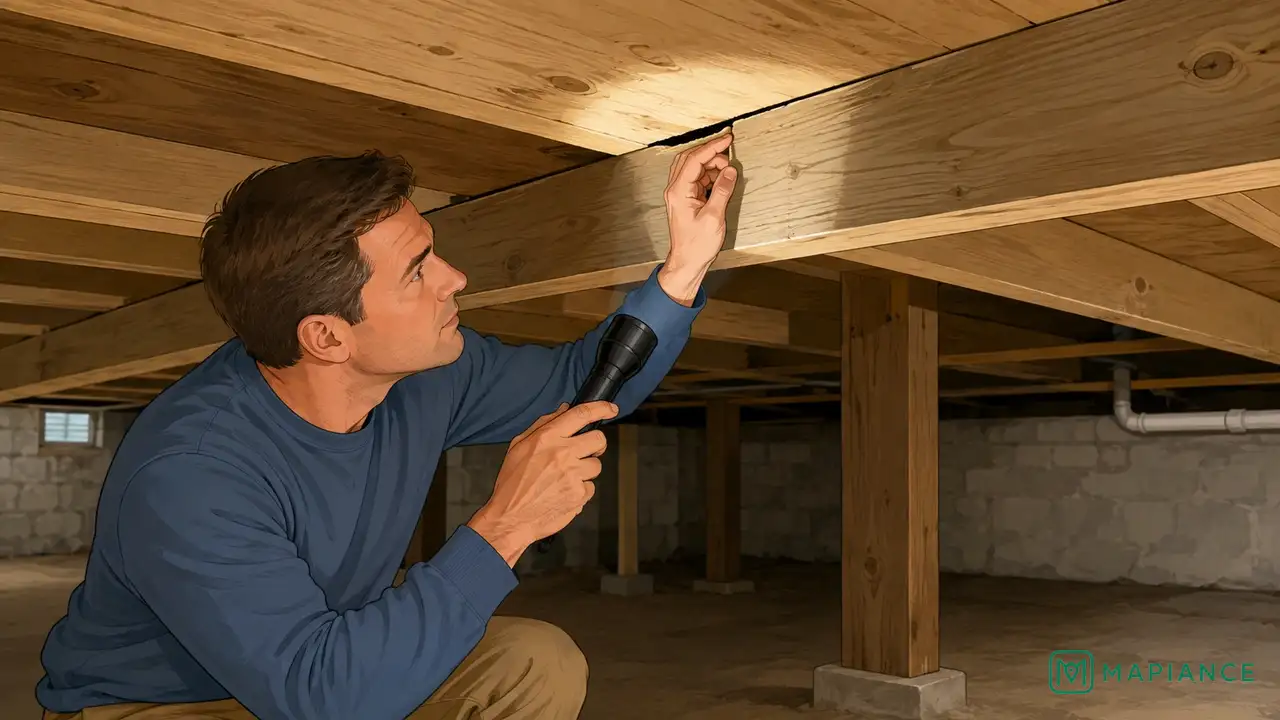
Identify what is moving
Check whether the finished floorboard itself moves or whether the whole subfloor flexes over a joist. If you have basement or crawlspace access, watch the underside while someone steps on the marked spot. Look for a small gap between the subfloor and joist, a loose fastener, or two wood surfaces rubbing together. Also note any plumbing pipes or electrical cables near the repair area.
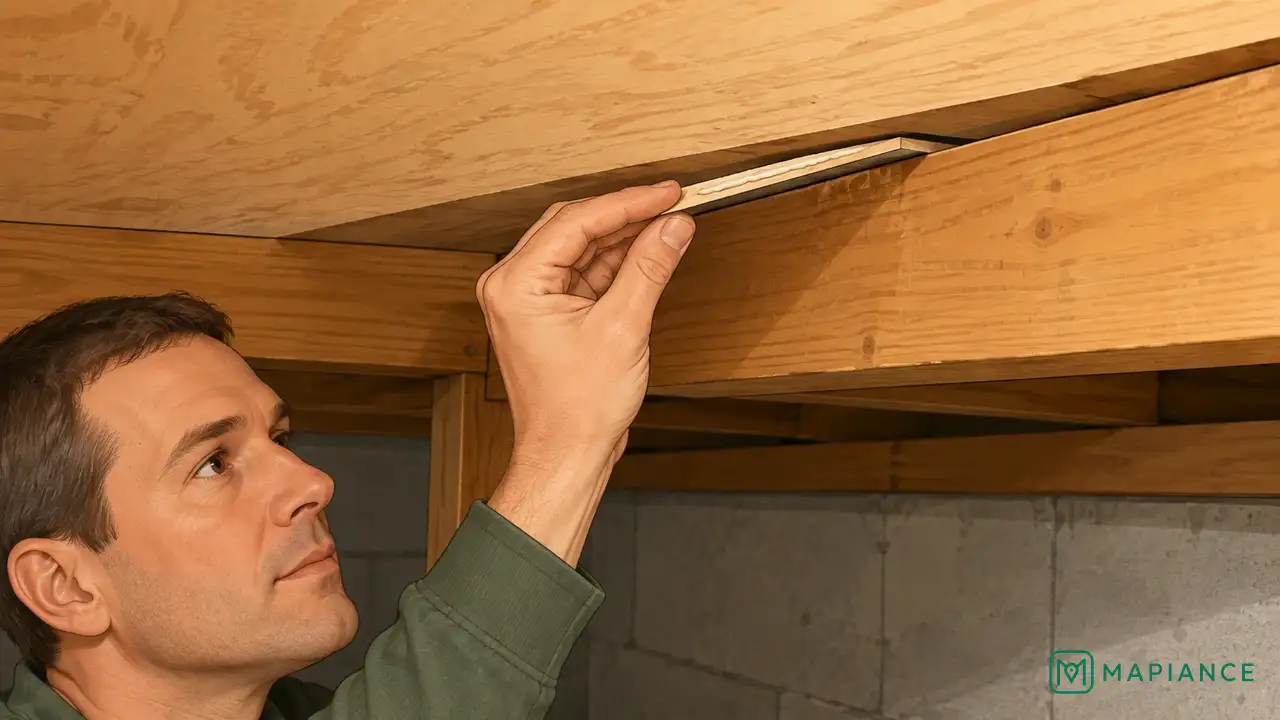
Shim a small gap from below
If the squeak comes from a narrow gap between the subfloor and joist, coat a thin wood shim with a small amount of construction adhesive and slide it gently into the gap. Push only until it is snug. Do not hammer the shim hard because lifting the subfloor can create a hump in the finished floor. Let the adhesive cure according to its label.
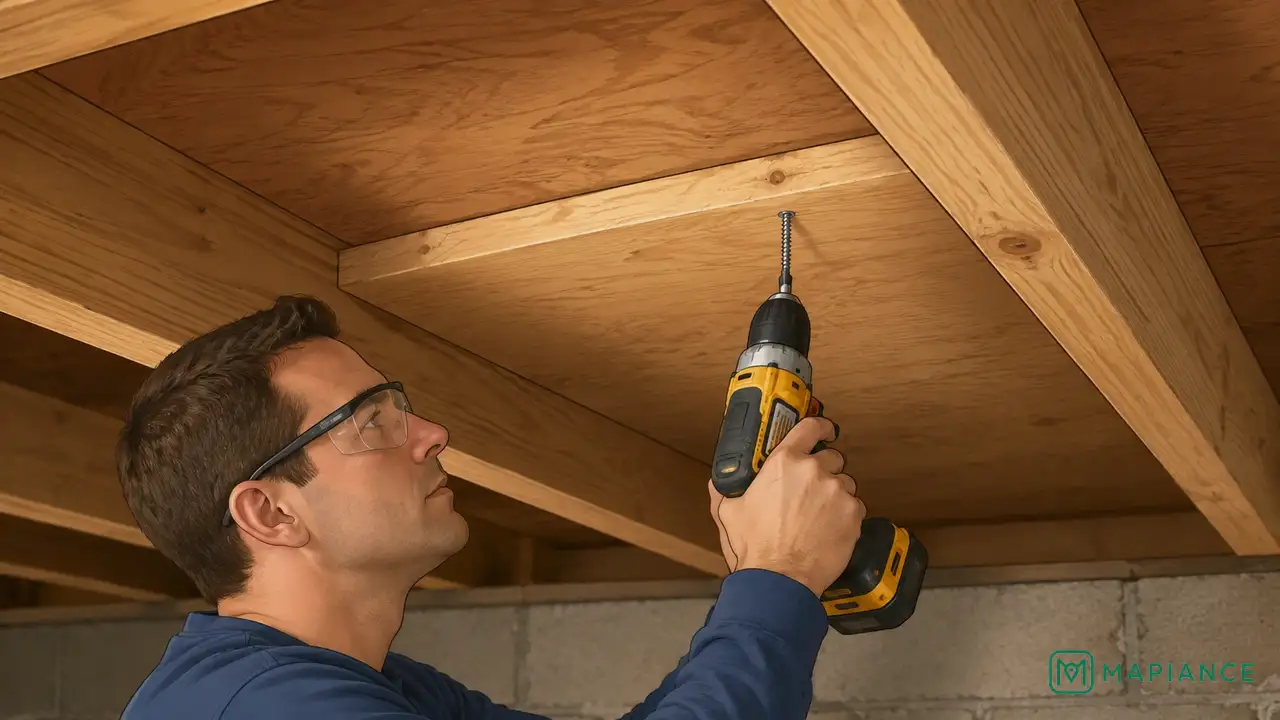
Secure a loose subfloor to the joist
If the subfloor moves on the joist but there is no useful gap to shim, pull the two surfaces together with a suitable wood screw from below where access allows. Choose a screw length that will hold the subfloor firmly without reaching through the finished floor above. Keep screws away from visible plumbing, wiring, and heating lines, and stop if you are not sure what is hidden in the floor.
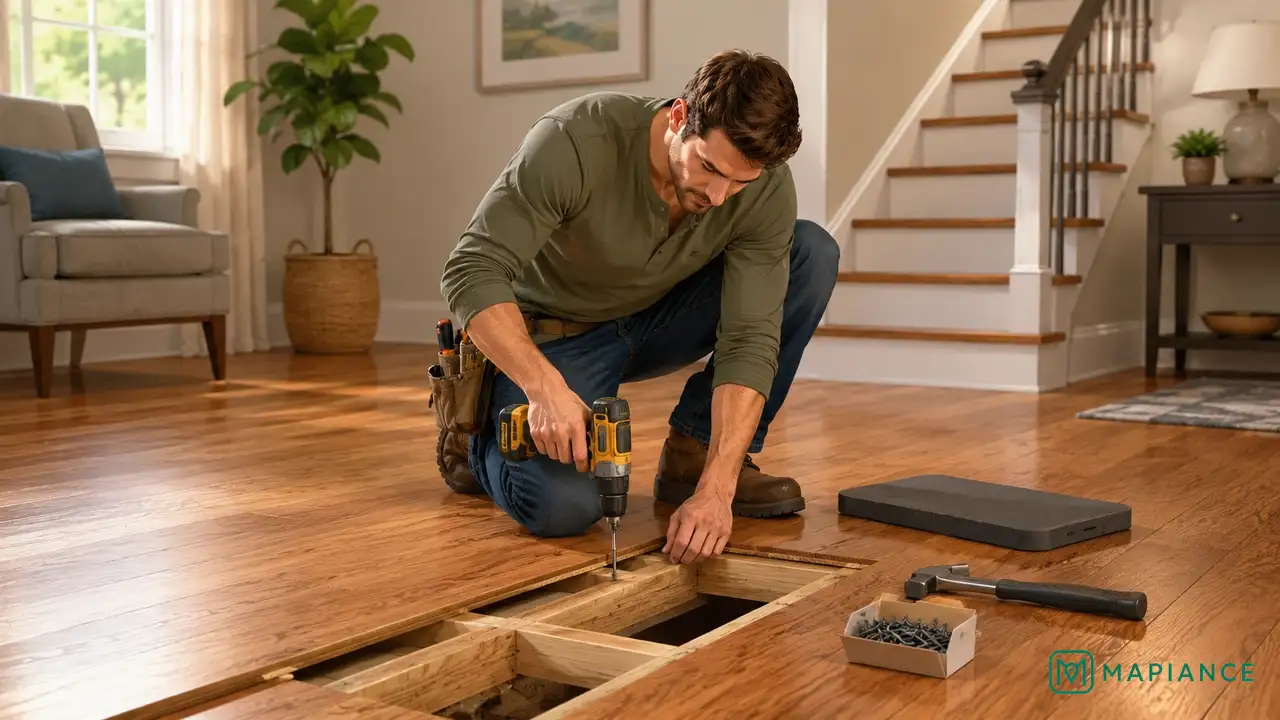
Repair from above when there is no access below
For exposed wood or carpeted floors, first locate the joist accurately. Use a floor-specific squeak repair screw designed for your floor type and follow its instructions for depth and finishing. Never drive screws blindly through a floor because pipes, cables, or heating systems may run below. On finished hardwood, use the smallest appropriate repair and fill any visible hole with a matching wood filler if needed.

Test the floor and check for deeper problems
Walk over the repaired area several times and listen for the squeak. If the sound remains, recheck the exact source before adding another fastener. Get professional help if the floor also feels soft, sags, shows water damage, has cracked structural framing, or squeaks across a large area. Those signs can point to a problem beyond a simple loose connection.
Tips & common mistakes
Tips for best results
- Mark the noise before opening a ceiling or driving any fastener; squeaks can travel and sound as if they come from a nearby spot.
- When working from below, have someone step on the floor so you can see the movement while you watch the joist connection.
- Use the shortest screw that provides solid holding power without risking the finished floor above.
- A thin shim should remove movement, not force the subfloor upward.
- If the floor has radiant heating, plumbing, or dense electrical runs, confirm their locations before drilling or use a professional.
Common mistakes
- Driving screws at random: This can miss the joist and may hit hidden pipes, wiring, or heating lines.
- Hammering a shim too tightly: The shim can lift the subfloor and create a visible high spot.
- Using a screw that is too long: The tip can damage or break through the finished floor.
- Assuming every squeak comes from the same cause: Loose floorboards, subfloor movement, joist gaps, and rubbing fasteners need different repairs.
- Ignoring a soft or sagging floor: Structural damage or moisture problems should be investigated before treating the noise as a simple squeak.
Frequently asked questions
What usually causes a floor to squeak?
Most squeaks come from wood moving and rubbing against another board, a joist, or a loose fastener. Small gaps between the subfloor and joists are also common causes.
Can I fix a squeaky floor without removing the flooring?
Often yes. If you can reach the floor from below, you may be able to shim or secure the subfloor to a joist. Floor-specific repair screws can also work from above on some finished or carpeted floors.
Can I use nails to stop a squeaky floor?
Screws usually hold moving wood more securely than nails for this type of repair. Use a fastener suited to the floor construction and make sure its length is safe.
Why does my floor squeak more in some seasons?
Wood expands and contracts as indoor humidity changes. Seasonal movement can increase rubbing between boards or around fasteners, making an existing loose connection more noticeable.
When should a squeaky floor be checked by a professional?
Get help if the floor is soft, sagging, damaged by water, structurally cracked, or noisy across a large area, or if you cannot safely locate hidden utilities before drilling.
Written by Mapiance Editorial Team
The Mapiance Editorial Team researches, writes, reviews, and maintains practical guides and explainers for MAPIANCE.
Published Aug 28, 2026 · Updated Sep 14, 2026