 MAPI
MAPIHow to Fix Yellow Leaves on Tomato Plants
Tomato leaves can turn yellow for several different reasons, so the color alone does not identify the problem. Overwatering, underwatering, poor drainage, nutrient shortages, pests, disease, root stress, and normal aging can look similar at first. The safest approach is to check the plant and soil in a simple order before adding fertilizer or spraying anything.
Start by checking the soil moisture. Water deeply when the upper soil begins to dry, but do not keep the roots constantly wet. Make sure the plant drains well, feed only if the soil or plant shows a likely nutrient shortage, inspect the undersides of leaves for pests, and remove badly diseased leaves. Yellow lower leaves can also be normal as a tomato plant matures.
Things you'll need
- Watering can or garden hose
- Clean pruning shears
- Balanced tomato fertilizer if needed
- Mulch such as straw or shredded leaves
- Magnifying glass for checking small pests if available
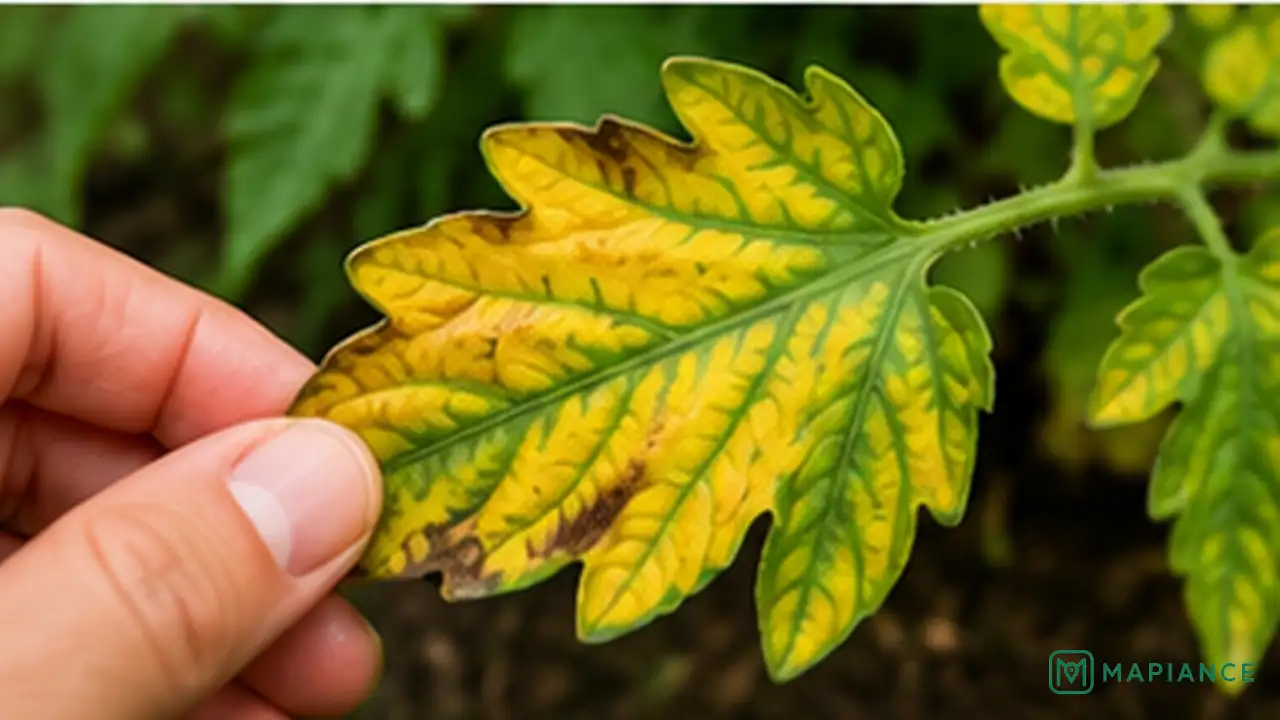
Check where the yellowing starts
Look at the whole plant before changing anything. Note whether the oldest lower leaves are yellow, whether new growth is pale, or whether yellow areas appear with spots, curling, or wilting. A few older lower leaves may naturally yellow as the plant grows, while rapid yellowing across the plant usually needs attention.
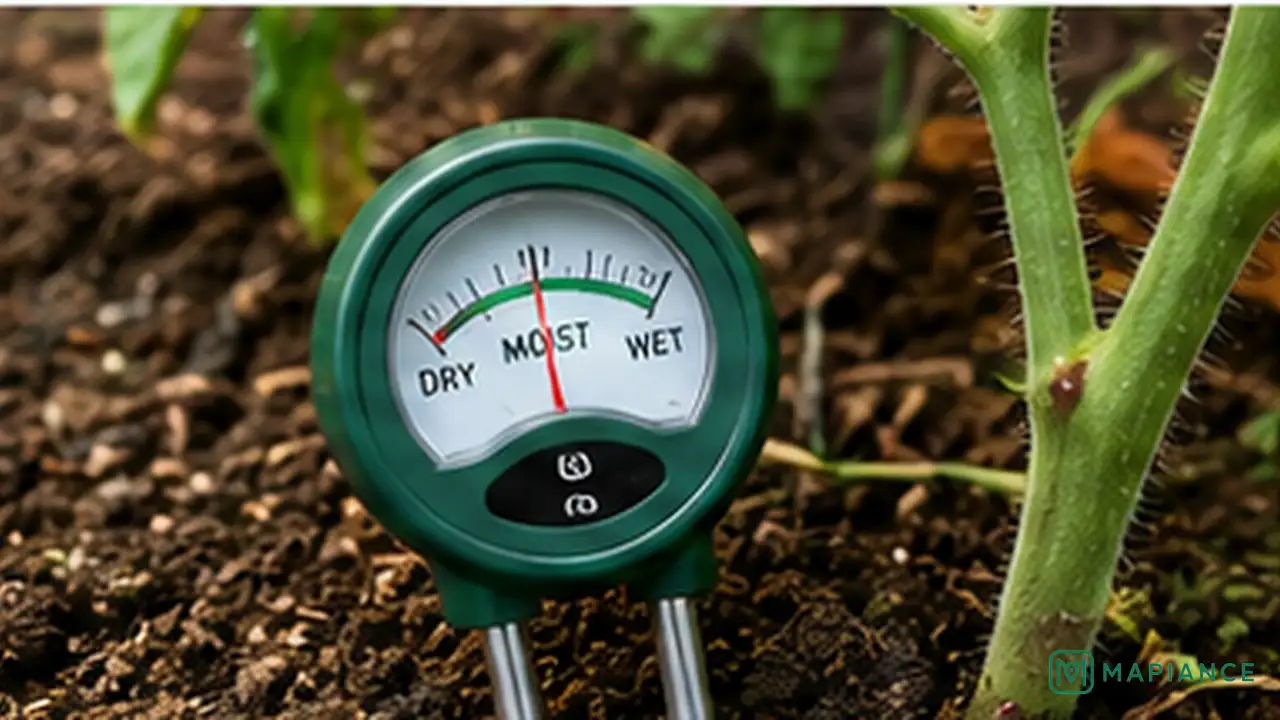
Check the soil moisture
Push a finger a few centimeters into the soil near the plant. If it is very dry, water slowly and deeply around the root zone. If it stays wet for long periods, reduce watering and improve drainage. Tomatoes prefer consistent moisture, but roots that remain waterlogged can struggle to take up oxygen and nutrients.
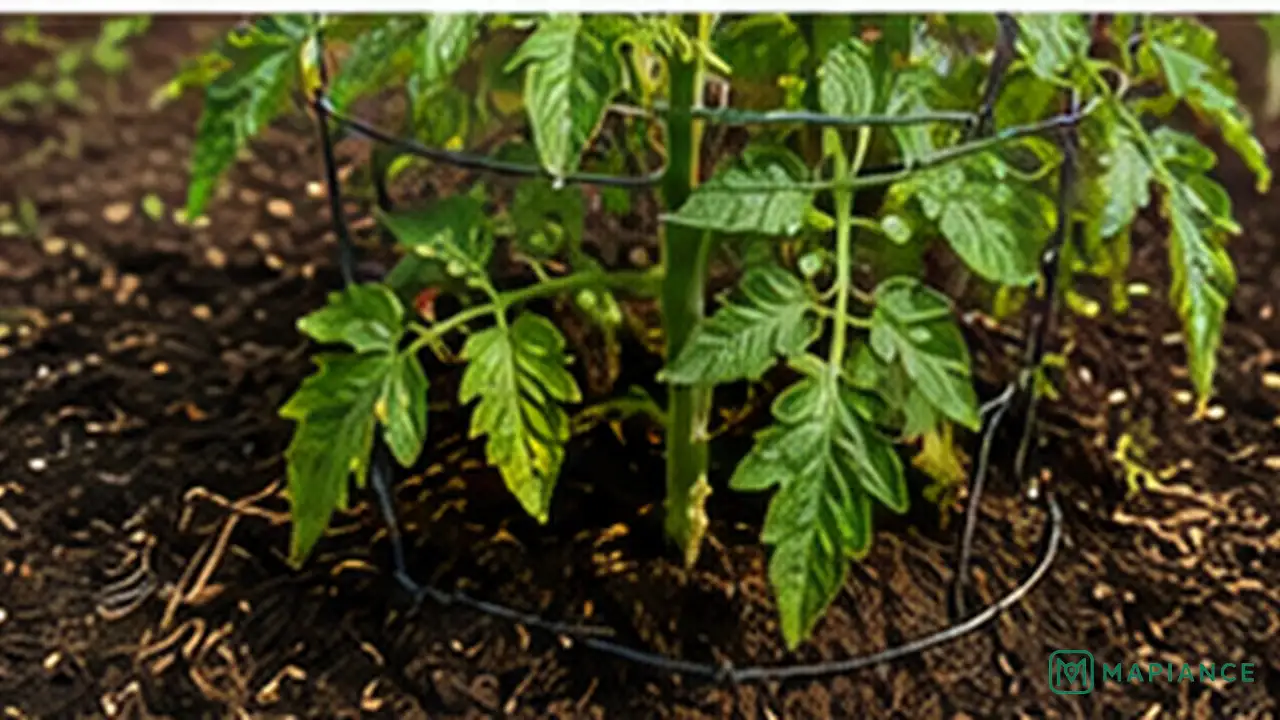
Improve drainage and watering habits
Water the soil around the base instead of repeatedly wetting the leaves, and water deeply enough to moisten the root zone. Containers must have open drainage holes, and garden soil should not stay saturated after normal watering. Add a light layer of mulch to slow moisture loss, but keep it a short distance away from the main stem.
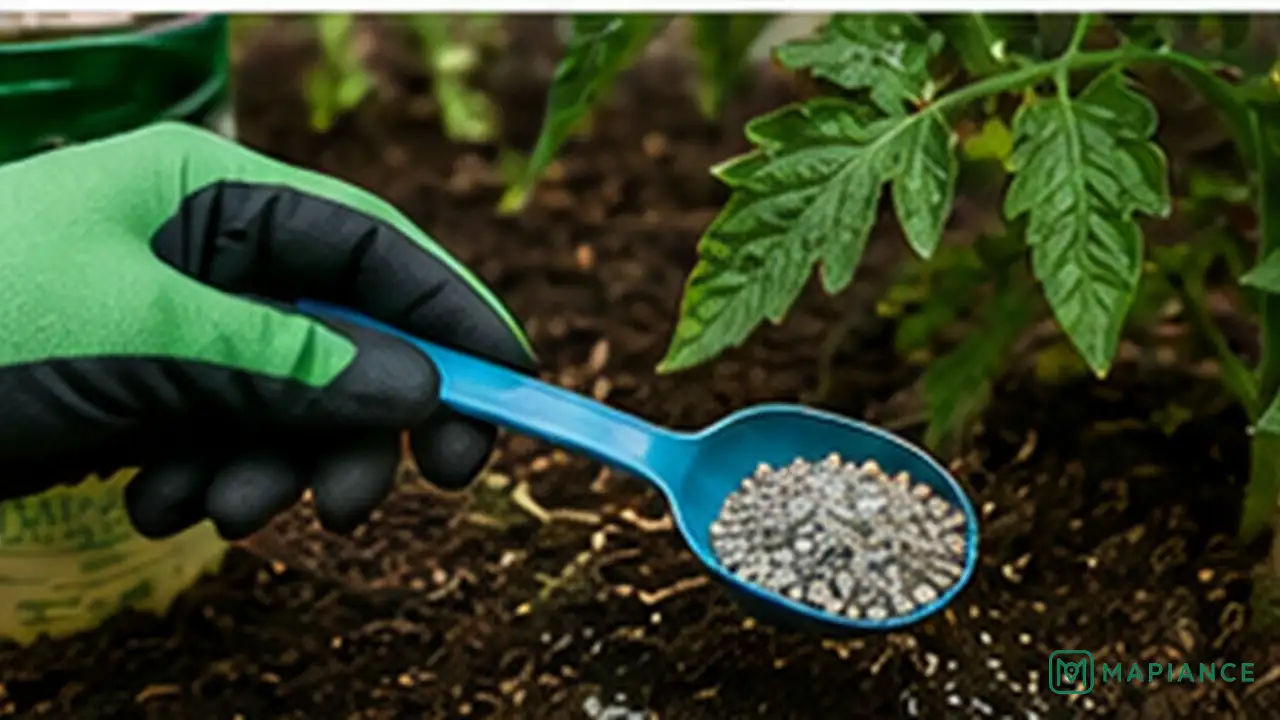
Check for nutrient problems
If the plant is growing in depleted soil or a container and the yellowing is not explained by watering, a nutrient shortage may be involved. Use a balanced tomato fertilizer according to the label rather than adding a large dose. Avoid feeding a waterlogged or severely stressed plant first, because the roots may not use the nutrients properly.
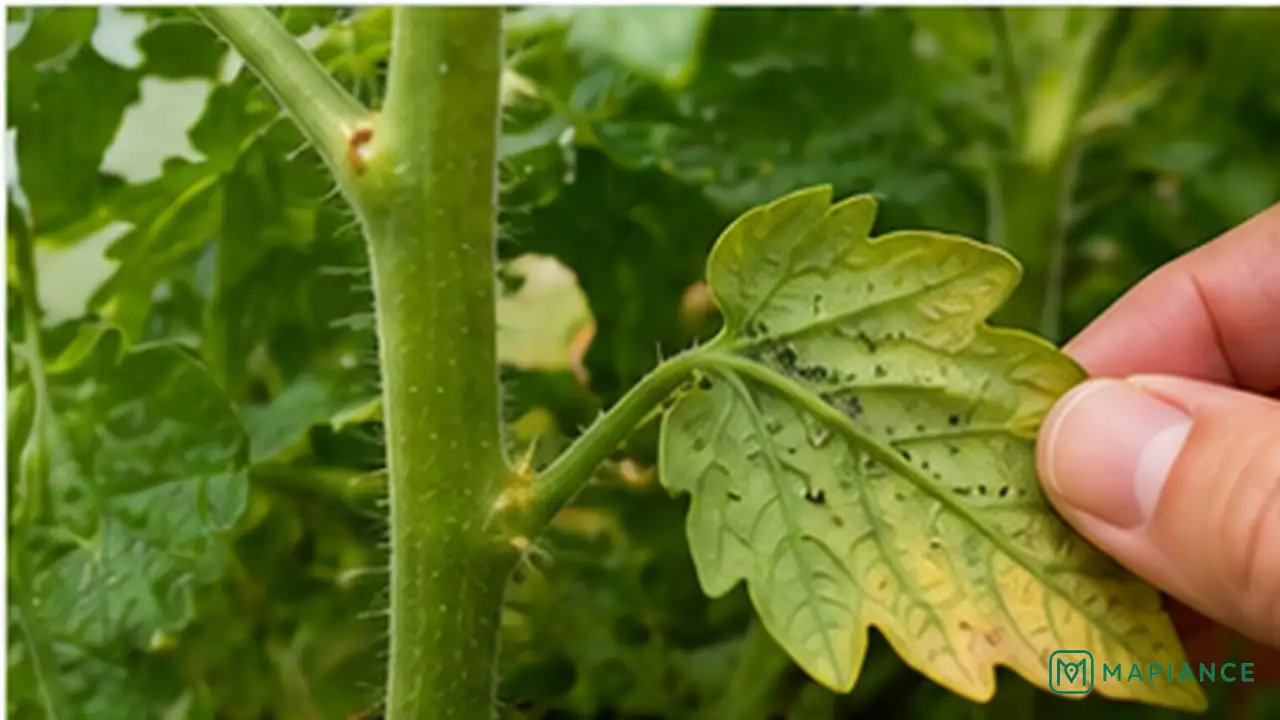
Inspect for pests and disease
Check both sides of the leaves and the stems for small insects, webbing, sticky residue, dark spots, or expanding lesions. Remove badly affected leaves with clean shears and keep fallen leaves out of the bed. If a pest or disease is present, identify it before choosing a treatment because different problems need different controls.
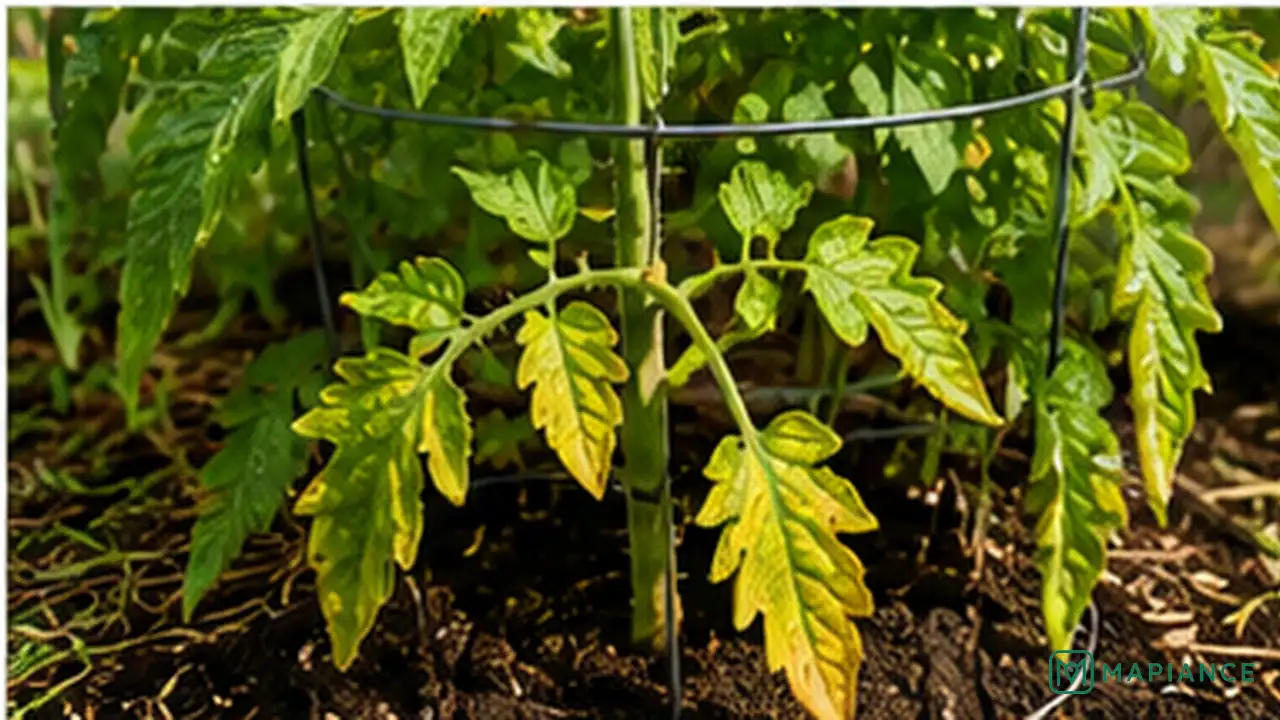
Remove damaged leaves and monitor new growth
Trim leaves that are badly yellowed, dead, or clearly diseased, but keep healthy green foliage. Disinfect pruning tools after cutting diseased material. Over the next several days, watch the newest leaves and overall plant growth. If new growth stays green and vigorous, the correction is working. If yellowing continues to spread, reassess the cause or seek local gardening advice.
Tips & common mistakes
Tips for best results
- Water at the soil level when possible because repeatedly wet foliage can encourage some tomato diseases.
- Use mulch to reduce rapid swings between very dry and very wet soil.
- Do not fertilize automatically when leaves turn yellow; excess fertilizer can create new problems.
- Remove fallen tomato leaves from around the plant if disease is suspected.
- Compare new growth with older leaves. New healthy growth is often a better sign of recovery than damaged leaves turning green again.
Common mistakes
- Watering more just because the leaves are yellow: Overwatered roots can also cause yellow foliage.
- Adding a strong fertilizer before checking the soil: Too much fertilizer can damage roots and may worsen stress.
- Removing most of the leaves at once: Tomato plants still need healthy foliage to produce energy.
- Ignoring leaf spots or spreading lesions: Yellowing combined with spots can indicate a disease problem rather than simple nutrient stress.
- Letting mulch touch the main stem: Keeping a small gap around the stem helps reduce excess moisture against the plant.
Frequently asked questions
Why are the bottom leaves on my tomato plant turning yellow?
Older lower leaves may yellow naturally as the plant grows, but persistent or spreading yellowing can also come from watering problems, nutrient stress, pests, or disease.
Can overwatering make tomato leaves yellow?
Yes. Waterlogged soil can reduce oxygen around the roots and interfere with nutrient uptake, which can cause yellow leaves and weak growth.
Should I cut yellow leaves off tomato plants?
Remove leaves that are badly yellowed, dead, or clearly diseased, but keep healthy green leaves. Avoid stripping too much foliage at once.
Do yellow tomato leaves always mean the plant needs fertilizer?
No. Watering, drainage, root stress, pests, disease, and normal aging can all cause yellow leaves. Check the plant and soil before feeding.
Can yellow tomato leaves turn green again?
Sometimes mildly stressed leaves improve, but badly yellowed leaves often stay damaged. The better sign of recovery is healthy green new growth after the underlying problem is corrected.
Written by Mapiance Editorial Team
The Mapiance Editorial Team researches, writes, reviews, and maintains practical guides and explainers for MAPIANCE.
Published Aug 26, 2026 · Updated Sep 9, 2026