 MAPI
MAPIHow to Get Rid of Fungus Gnats in Houseplants
Fungus gnats are tiny dark flies that spend most of their life in damp potting mix. The adults are mainly a nuisance, while the larvae feed on fungi, decaying material, and sometimes fine roots. Constantly wet soil gives them the conditions they need to keep reproducing, so the most useful fix is to change the moisture conditions and target both adults and larvae. Yellow sticky traps help reduce and monitor the flying adults, but they do not solve the larvae in the soil by themselves.
Let the top 2.5–5 cm (1–2 inches) of potting mix dry between waterings when the plant can tolerate it, and place yellow sticky traps near the soil to catch adults. If gnats continue, treat the potting mix with a houseplant-safe product containing Bacillus thuringiensis israelensis (Bti) according to its label so the larvae are controlled too.
Things you'll need
- Yellow sticky traps
- Clean scissors or small garden snips
- Bti product labeled for fungus gnat larvae in houseplants if needed
- Fresh sterile or pasteurized potting mix if repotting is necessary
- Clean pot with drainage holes if repotting is necessary
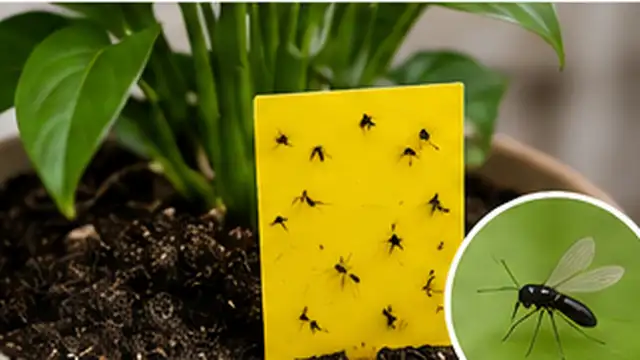
Confirm they are fungus gnats
Look for tiny dark, mosquito-like flies resting or running near the soil surface, pot rim, or nearby window. Fungus gnats are weak fliers and usually stay close to houseplants. To check for larvae, place a small slice of raw potato cut-side down on the soil for a few days; pale, worm-like larvae with dark heads may gather underneath.
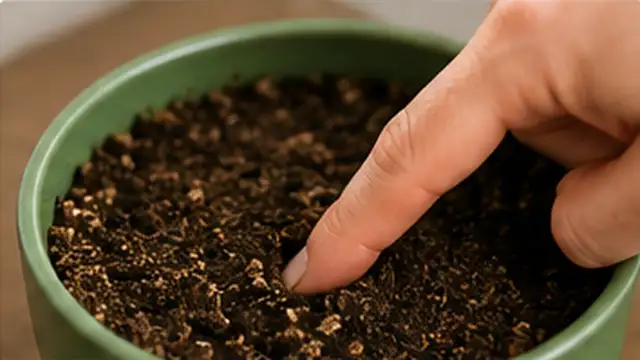
Let the soil surface dry
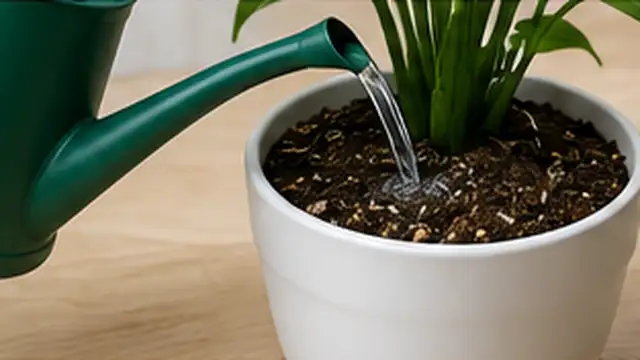
Reduce watering frequency so the top 2.5–5 cm (1–2 inches) of potting mix can dry between waterings, as long as your plant tolerates that level of drying. Empty saucers and cachepots after watering so the pot does not sit in water. Drier surface soil makes the pot less attractive for egg-laying adults and reduces survival of eggs and young larvae.
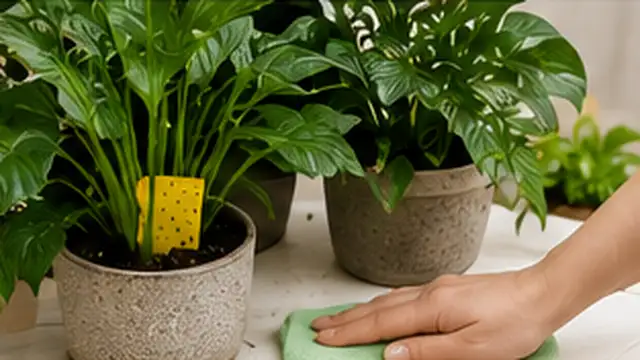
Remove damp debris and improve drainage
Pick out fallen leaves, dead stems, and other decaying material from the soil surface. Check that drainage holes are open and that excess water can leave the pot freely. If the potting mix stays wet for a long time even after you reduce watering, it may be old, compacted, or poorly draining and may need replacement.
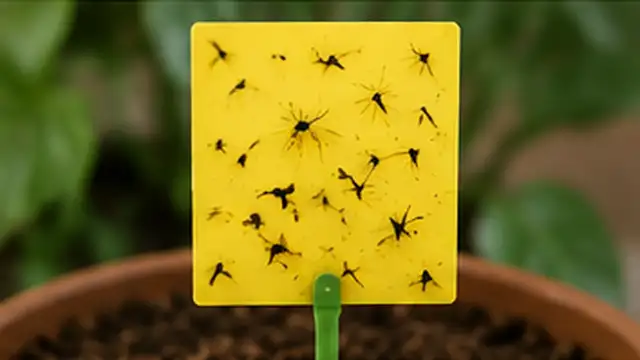
Trap the adult gnats
Place small yellow sticky traps close to the soil surface or just under the plant canopy. They catch flying adults and make it easier to see whether the population is falling. Replace traps when they become covered or dusty. Sticky traps help reduce adults, but continue the soil steps because larvae and pupae remain in the potting mix.
Treat the larvae if gnats continue
For an infestation that continues after watering changes, use a product containing Bacillus thuringiensis israelensis (Bti) that is labeled for fungus gnat larvae and suitable for your houseplants. Apply it to the potting mix exactly as the product label directs. Bti targets the larval stage, so repeated applications may be needed to cover new larvae as the existing adults complete their life cycle.
Repot plants that stay heavily infested
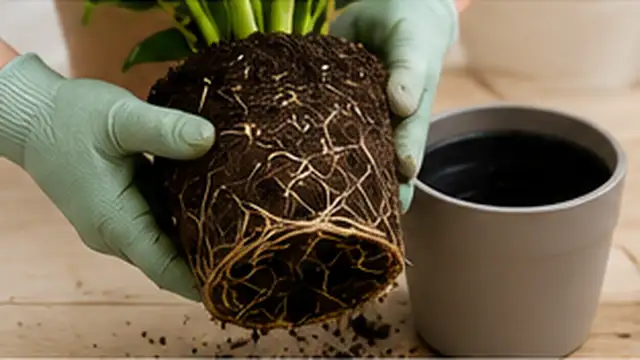
If a plant remains heavily infested or the potting mix has broken down and stays wet for too long, repot it in fresh sterile or pasteurized potting mix. Use a clean container with working drainage holes and remove as much badly degraded old mix as is practical without damaging healthy roots. Keep the plant away from other pots until the number of adult gnats has clearly dropped.
Tips & common mistakes
Tips for best results
- Check newly purchased plants for tiny flies before placing them beside your existing houseplants.
- Store unused potting mix in a closed container so adult gnats are less likely to reach it.
- Adjust watering in cooler or darker seasons because indoor plants often use water more slowly.
- Use sticky traps as a monitoring tool: fewer new adults over time is a good sign that the soil treatment is working.
- Water according to the needs of the plant; do not force drought-sensitive species to become severely dry just to control gnats.
Common mistakes
- Relying only on sticky traps: They catch adults but do not remove the larvae developing in the potting mix.
- Keeping the soil constantly wet: Moist growing media strongly favors fungus gnat reproduction.
- Watering a wilting plant automatically: Wilting can have several causes, including unhealthy roots, so check soil moisture before adding more water.
- Using unlabelled pesticides or homemade chemical mixtures in the pot: They can damage roots, create indoor exposure, or fail to target the larvae effectively.
- Moving a heavily infested plant beside healthy plants: Emerging adults can spread to other moist pots.
Frequently asked questions
Are fungus gnats harmful to people?
Adult fungus gnats do not bite people and are mainly a nuisance indoors. Their larvae live in potting mix and can damage fine roots when populations become very high, especially on young or sensitive plants.
Why do fungus gnats keep coming back?
The adults you see are only one stage of the life cycle. Eggs, larvae, and pupae remain in moist potting mix, so the problem can continue unless the soil conditions and larvae are also addressed.
Do yellow sticky traps get rid of fungus gnats completely?
No. Sticky traps reduce and monitor adult gnats, but they do not kill the larvae in the soil. Combine traps with better watering practices and, when needed, a larval treatment such as Bti.
How dry should the soil get?
When the plant can tolerate it, allow roughly the top 2.5–5 cm (1–2 inches) of potting mix to dry before watering again. Plants with different moisture needs may require a more careful approach.
When should I repot a plant with fungus gnats?
Repot when the infestation remains heavy despite moisture control, or when old potting mix has broken down and stays wet for an unusually long time. Use fresh sterile or pasteurized mix and a clean pot with good drainage.
Written by Mapiance Editorial Team
The Mapiance Editorial Team researches, writes, reviews, and maintains practical guides and explainers for MAPIANCE.
Published Aug 23, 2026 · Updated Sep 9, 2026