 MAPI
MAPIHow to Remove Grease From Kitchen Cabinets Without Damaging the Finish
Kitchen grease can build up on cabinet doors, handles, and areas near the stove, but aggressive cleaning can dull paint, soften some finishes, or damage wood. The safest method is to start with a mild, water-based cleaner and as little moisture as possible. Always test a hidden spot first, especially on painted, stained, lacquered, or older cabinets.
Mix a small amount of mild dish soap with warm water, test it on a hidden area, then wipe greasy spots with a damp microfiber cloth. Rinse with a second damp cloth and dry immediately, avoiding abrasive pads, strong solvents, and excess water.
Things you'll need
- Microfiber cloths
- Warm water
- Mild dish soap
- Small bowl
- Soft toothbrush or detailing brush
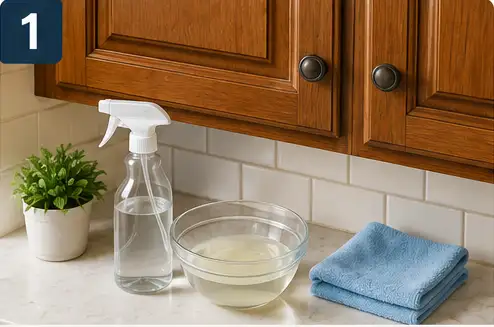
Check the cabinet finish
Look at the cabinet surface before cleaning. Painted, stained, lacquered, laminate, and wood-veneer finishes can react differently to moisture and cleaners. Check the cabinet maker's care instructions if available, then test your cleaning solution on a hidden area such as the inside edge of a door.
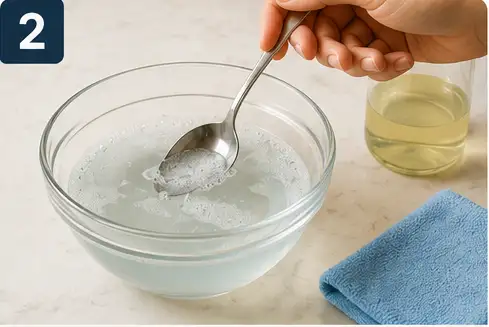
Mix a mild cleaning solution
Add a few drops of mild dish soap to a bowl of warm water and stir gently. The solution should be lightly soapy, not concentrated. Avoid strong degreasers, bleach, ammonia, abrasive powders, or solvents unless the cabinet manufacturer specifically says they are safe for the finish.
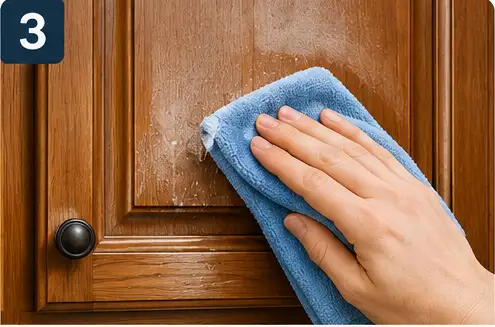
Wipe the grease gently
Dip a microfiber cloth into the soapy water and wring it out well so it is damp rather than wet. Wipe the greasy area in small sections, following the wood grain if the cabinet has a visible grain. Let the mild solution soften sticky grease for a few seconds, then wipe again without heavy scrubbing.
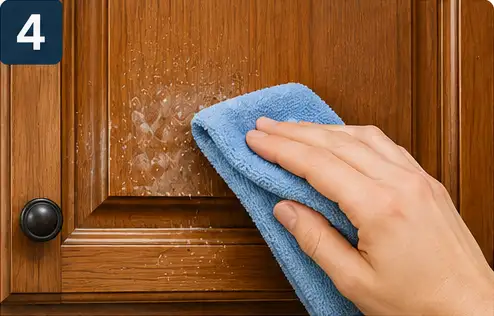
Clean corners and hardware
Use a soft toothbrush or small detailing brush for grease trapped around handles, grooves, and door edges. Apply the cleaning solution to the brush or cloth instead of pouring it directly onto the cabinet. Keep moisture away from unfinished edges, joints, and areas where water could seep behind veneer or into particleboard.
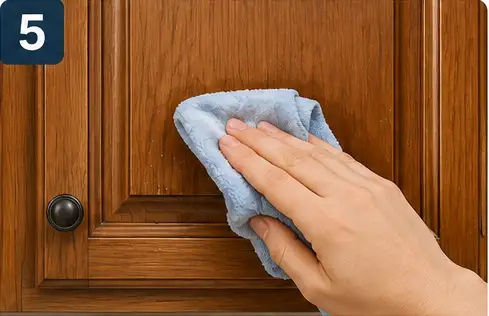
Rinse away soap residue
Dampen a second clean microfiber cloth with plain water and wring it out thoroughly. Wipe the cleaned cabinet surfaces to remove any remaining soap and loosened grease. Work in small areas so water does not sit on the finish.
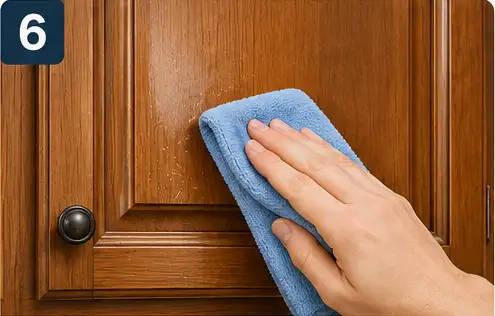
Dry the cabinets immediately
Use a dry microfiber cloth to remove all visible moisture from the cabinet doors, edges, handles, and joints. Check the surface from an angle for greasy streaks. If residue remains, repeat the mild cleaning process rather than switching immediately to a stronger cleaner.
Tips & common mistakes
Tips for best results
- Wipe cabinet fronts near the stove regularly so grease does not harden into a thick sticky layer.
- Apply cleaner to the cloth rather than spraying heavily onto cabinet doors, seams, or hinges.
- Use separate cloths for washing, rinsing, and drying so loosened grease is not spread back onto the surface.
- Work from the least greasy areas toward the dirtiest areas to keep the cleaning solution cleaner for longer.
- If the finish looks dull, soft, sticky, or discolored during your hidden-area test, stop and use the cabinet manufacturer's recommended cleaner instead.
Common mistakes
- Using abrasive scrubbers: Rough pads and scouring powders can scratch or dull painted and sealed cabinet finishes.
- Soaking the cabinets: Excess water can swell wood, veneer, MDF, or particleboard and can seep into joints.
- Using strong solvents without checking compatibility: Alcohol, acetone, and aggressive degreasers can soften or strip some finishes.
- Scrubbing aggressively: Heavy pressure can polish uneven spots into paint or wear through older finishes.
- Skipping the drying step: Moisture left around edges, joints, and hardware can damage cabinet materials over time.
Frequently asked questions
Can I use vinegar to remove grease from kitchen cabinets?
It is safer to start with mild dish soap and warm water. Vinegar is acidic and may dull or affect some painted, stone-adjacent, waxed, or specialty finishes, so only use it if the cabinet manufacturer confirms it is suitable.
What is the safest cleaner for greasy wood cabinets?
A small amount of mild dish soap diluted in warm water is a good starting point for many sealed wood cabinets. Test it in a hidden area first and keep the cloth only slightly damp.
How do I remove thick sticky grease without scrubbing hard?
Hold a warm, damp, lightly soapy microfiber cloth against the spot briefly to soften the grease, then wipe gently. Repeat several times rather than using a harsh abrasive.
Can I use a magic eraser on kitchen cabinets?
Melamine foam is mildly abrasive and can dull paint or remove sheen from some finishes. Avoid it unless the cabinet manufacturer specifically recommends it and a hidden-area test shows no change.
Why do my cabinets feel sticky after cleaning?
Soap or loosened grease may still be on the surface. Wipe again with a clean, barely damp cloth and dry immediately with a fresh microfiber towel.
Written by Mapiance Editorial Team
The Mapiance Editorial Team researches, writes, reviews, and maintains practical guides and explainers for MAPIANCE.
Published Aug 22, 2026 · Updated Oct 1, 2026