 MAPI
MAPIHow to Remove Hard Water Stains From Glass Shower Doors
Hard water leaves calcium and magnesium deposits on shower glass, creating cloudy white spots that normal wiping may not remove. A mild acidic cleaner such as white vinegar can loosen these mineral deposits so they can be wiped away without abrasive scraping. Protect nearby natural stone before using vinegar because acid can damage some stone surfaces.
Spray the glass with equal parts white vinegar and warm water, leave it for 10 to 15 minutes, then scrub with a non-scratch sponge. Rinse well and dry the glass with a microfiber cloth or squeegee.
Things you'll need
- White vinegar
- Warm water
- A spray bottle
- A non-scratch sponge or soft microfiber cloth
- A clean microfiber towel
- A shower squeegee
- An old towel for protecting nearby surfaces
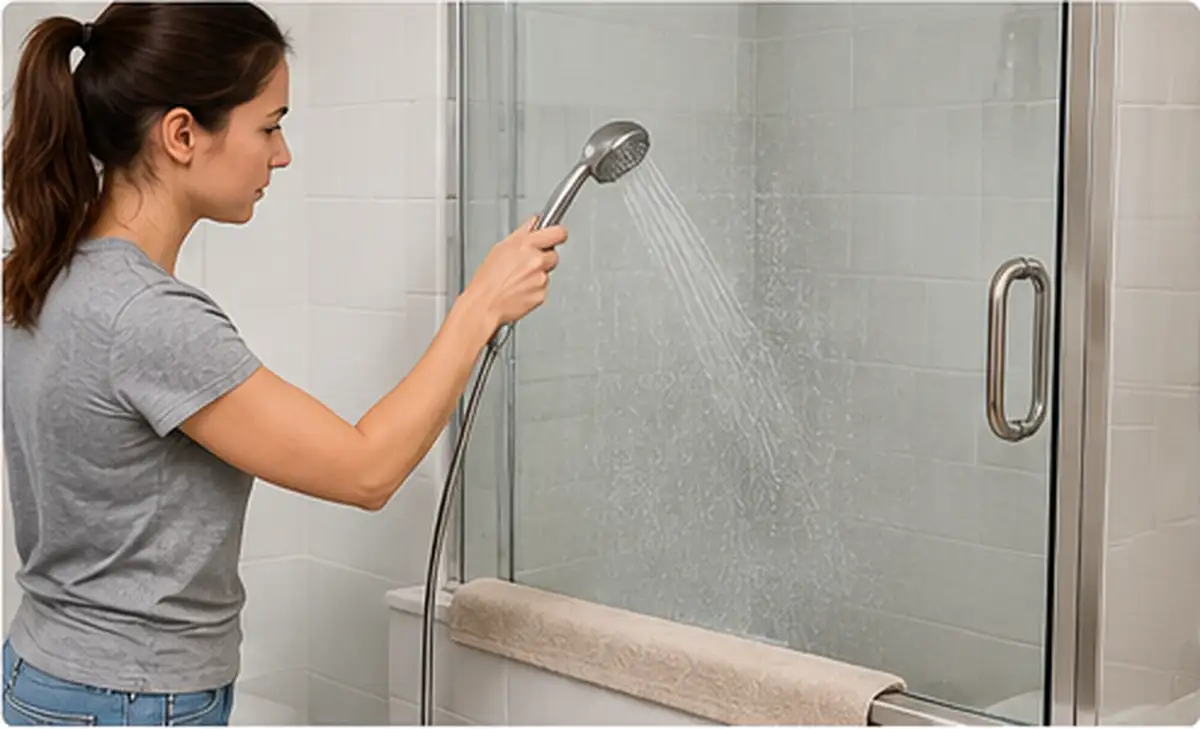
Rinse and prepare the glass
Rinse the shower door with warm water to remove loose soap and surface dirt. Place an old towel along the bottom edge to catch drips. If the shower has natural stone, marble, travertine, or other acid-sensitive surfaces near the glass, cover them before using vinegar.
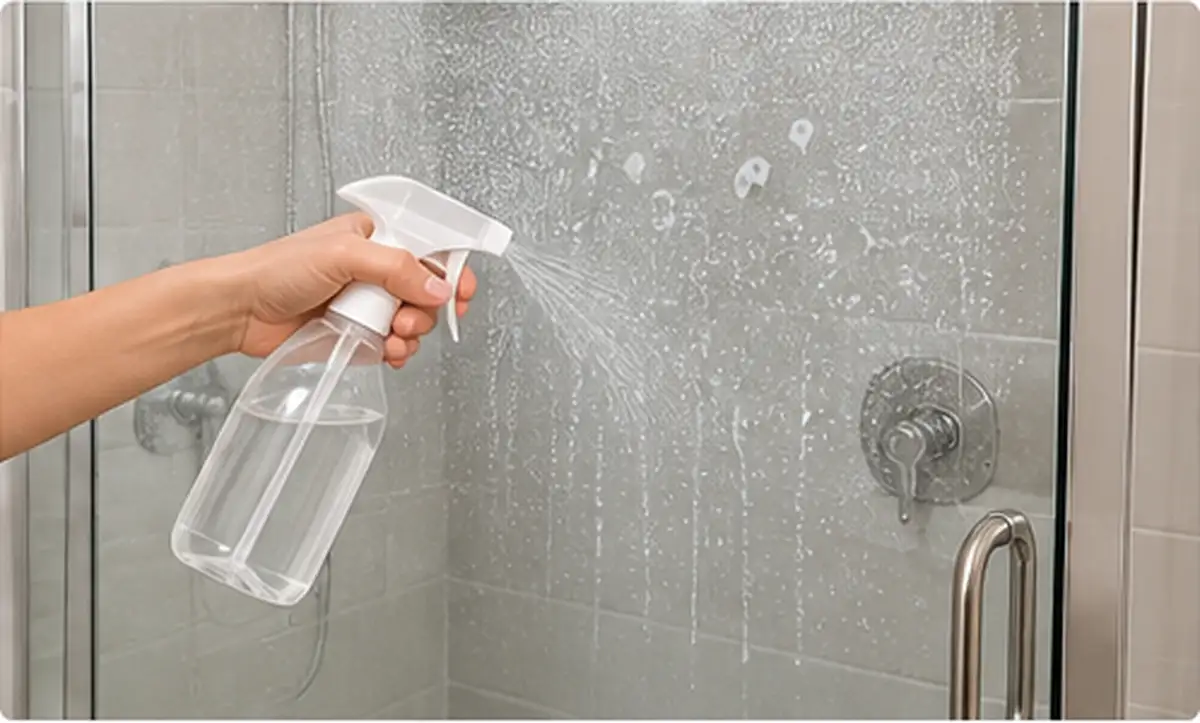
Apply the vinegar solution
Mix equal parts white vinegar and warm water in a spray bottle. Spray the stained areas generously so the mineral deposits are fully wet. Leave the solution on the glass for about 10 to 15 minutes, but do not allow it to dry completely.
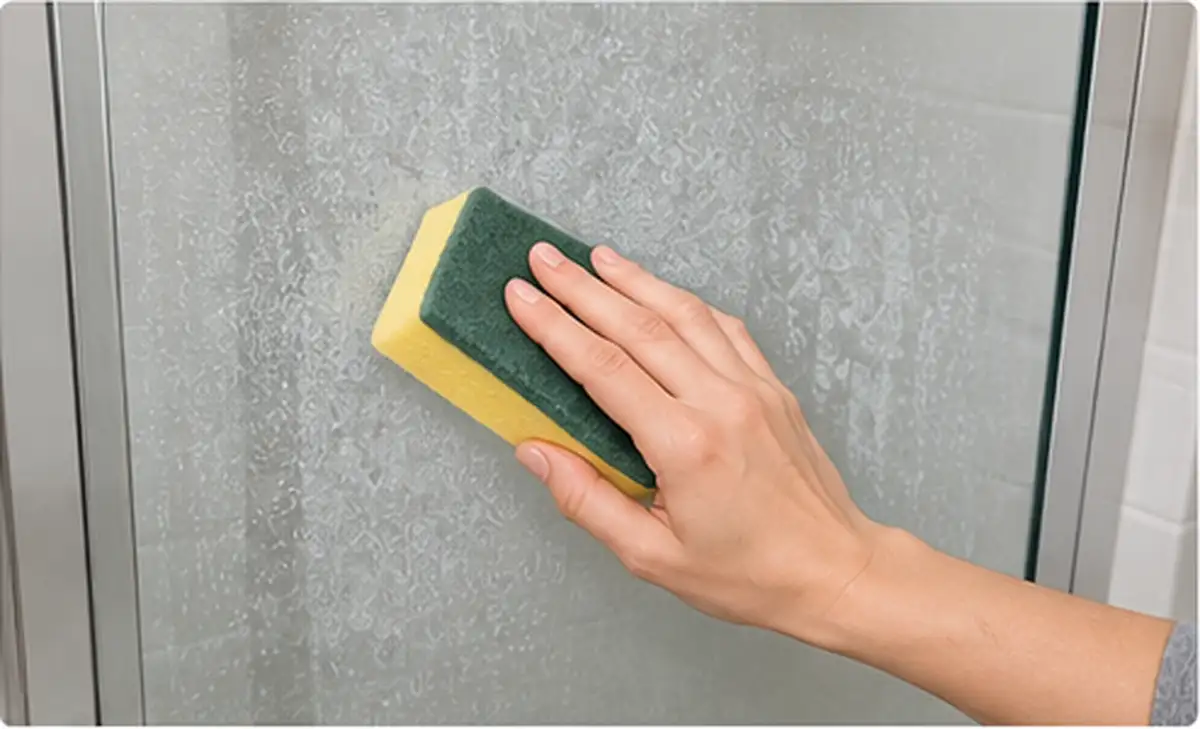
Scrub the mineral deposits gently
Use a non-scratch sponge or microfiber cloth to work over the cloudy areas with small circular motions. Apply moderate pressure, especially around the lower part of the door where mineral deposits are often heavier. Avoid steel wool, abrasive powders, or sharp blades that could scratch the glass or damage coatings.
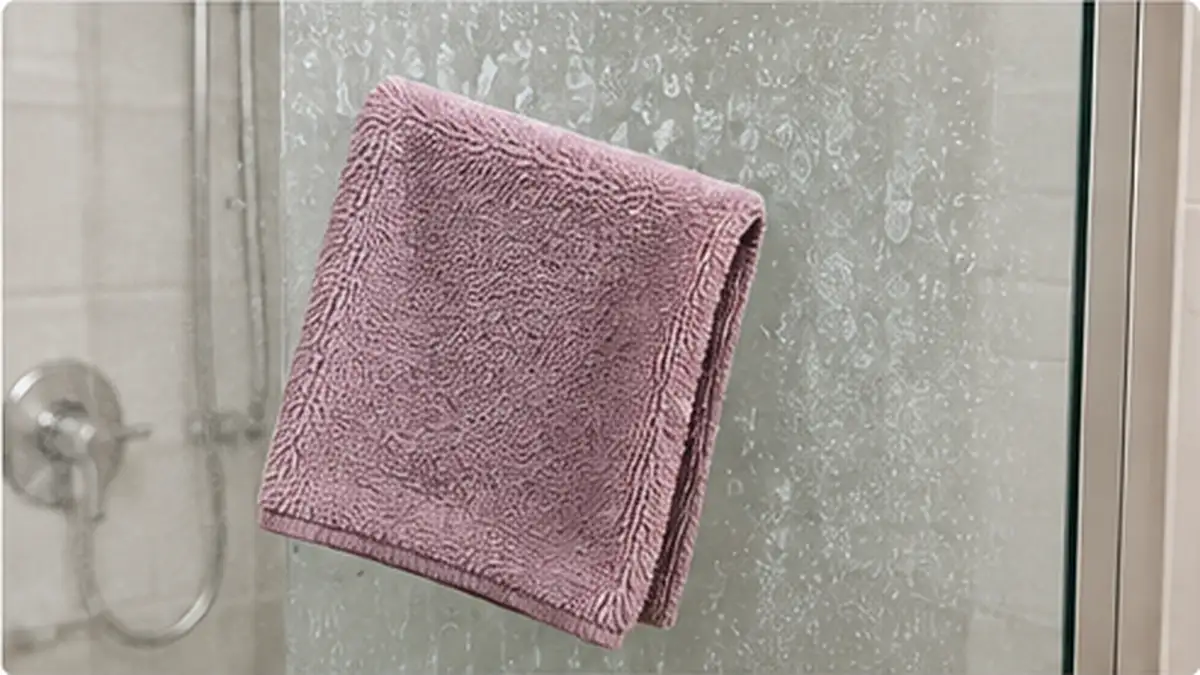
Treat stubborn spots again
If white or cloudy spots remain, spray those areas again and press a vinegar-soaked microfiber cloth against the glass for another 10 minutes. Remove the cloth and scrub gently once more. Several short treatments are safer than aggressive scraping.
Rinse and dry the glass
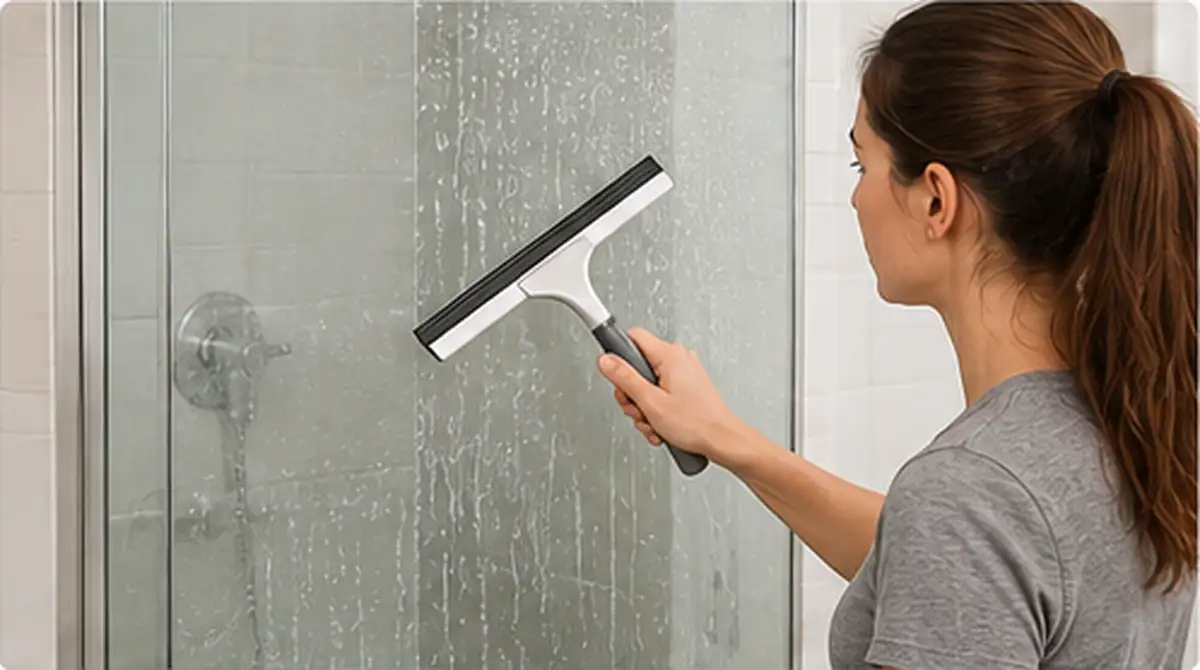
Rinse the entire door thoroughly with clean water until no vinegar remains. Pull a squeegee from the top of the glass toward the bottom in overlapping strokes, then wipe the edges and hardware with a clean microfiber towel. Check the dry glass from different angles because remaining mineral spots are easier to see once the surface is dry.
Tips & common mistakes
Tips for best results
- Clean hard water deposits before they build into a thick cloudy layer; fresh deposits are easier to dissolve.
- Squeegee the glass after each shower to reduce the amount of mineral-rich water that dries on the surface.
- For stubborn areas, repeat the vinegar treatment instead of using stronger pressure or abrasive tools.
- Dry metal tracks and fittings after rinsing so water does not immediately leave new mineral spots.
- Check the shower door manufacturer's care instructions if the glass has a special protective coating.
Common mistakes
- Letting the vinegar dry on the glass: Re-wet the surface if necessary so dissolved minerals do not dry back onto the door.
- Using abrasive scrubbers: Steel wool and harsh scouring pads can leave permanent scratches.
- Getting vinegar on natural stone: Acid can etch marble, travertine, limestone, and some other stone surfaces. Protect them before spraying.
- Mixing vinegar with bleach: Never combine vinegar with chlorine bleach because the mixture can release dangerous chlorine gas.
- Skipping the drying step: Allowing mineral-rich water to air-dry can quickly create new spots.
Frequently asked questions
Can vinegar damage glass shower doors?
Plain glass generally tolerates diluted white vinegar, but some shower doors have special coatings. Check the manufacturer's cleaning instructions before using acidic cleaners on coated glass.
How long should vinegar stay on hard water stains?
About 10 to 15 minutes is usually enough for light to moderate buildup. For stubborn deposits, repeat the treatment rather than leaving vinegar on nearby materials for a very long time.
Why are some white spots still visible after cleaning?
Heavy mineral buildup may need several treatments. If the glass remains cloudy after the deposits are removed, the surface may be etched rather than simply stained.
Can I use a razor blade on shower glass?
It is safer to start with non-abrasive methods. A blade can scratch coated glass, damage seals, or cause injury if used incorrectly.
How can I prevent hard water stains from returning?
Use a squeegee after each shower and dry the edges of the glass. Regular removal of water droplets reduces the mineral residue left behind as the water evaporates.
Written by Mapiance Editorial Team
The Mapiance Editorial Team researches, writes, reviews, and maintains practical guides and explainers for MAPIANCE.
Published Aug 21, 2026 · Updated Sep 30, 2026