 MAPI
MAPIHow to Remove Set-In Oil Stains From Clothes
Set-in oil stains are harder to remove because the oil has already moved deep into the fibers and may have been heated in a dryer. The safest approach is to pretreat the dry stain with a product designed to break up greasy soil, wash the garment at a fabric-safe temperature, and check the result before applying more heat. Several treatment cycles may be needed for an old stain.
Place the stained garment on a towel, apply a small amount of heavy-duty liquid laundry detergent or a laundry stain remover directly to the dry oil mark, and work it gently into the fibers. Let it sit according to the product directions, wash in the warmest water allowed by the care label, then air-dry and inspect. Repeat before using the dryer if any stain remains.
Things you'll need
- Heavy-duty liquid laundry detergent or laundry stain remover
- Clean white towel or absorbent cloth
- Soft toothbrush or laundry brush if the fabric can handle gentle brushing
- Washing machine or suitable hand-washing container
- Oxygen-based laundry bleach for stubborn stains if the care label allows it
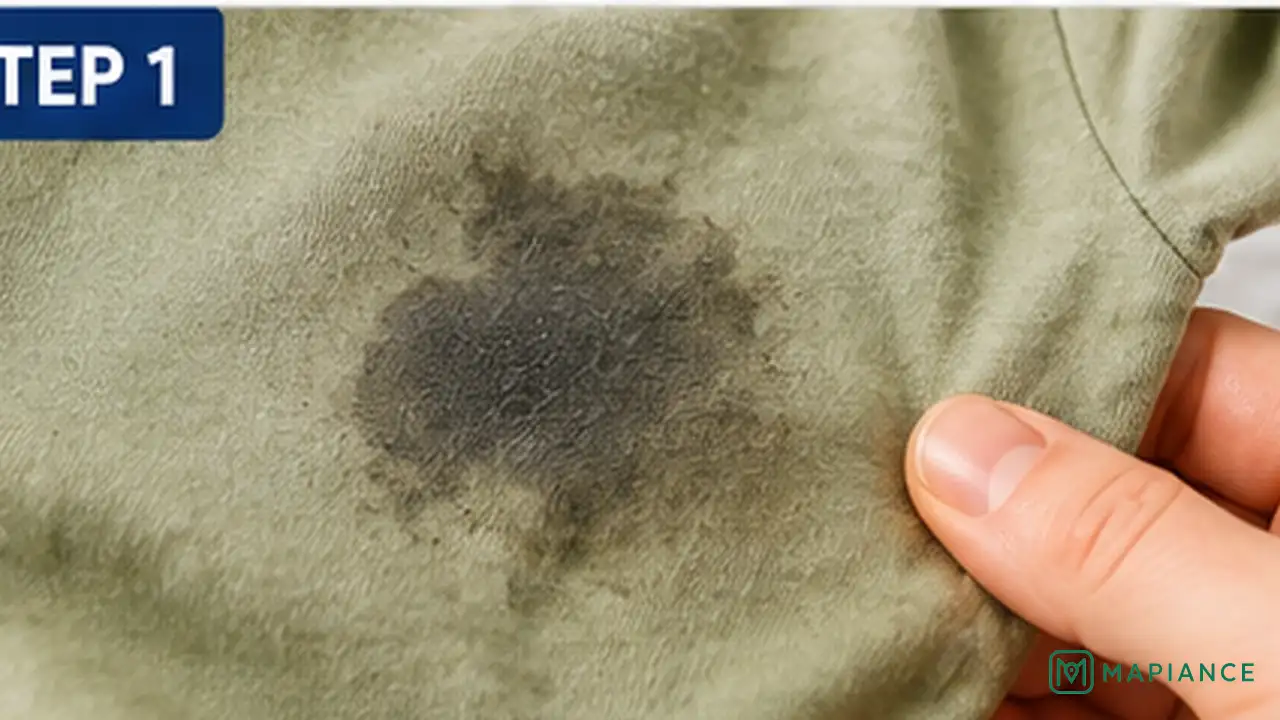
Check the care label
Read the garment care label before treating the stain. Confirm the recommended wash temperature and whether bleach or stain-removal products are allowed. If the item is dry-clean-only, very delicate, or made from a fabric that can be damaged by water, take it to a professional cleaner instead of using a normal laundry treatment.
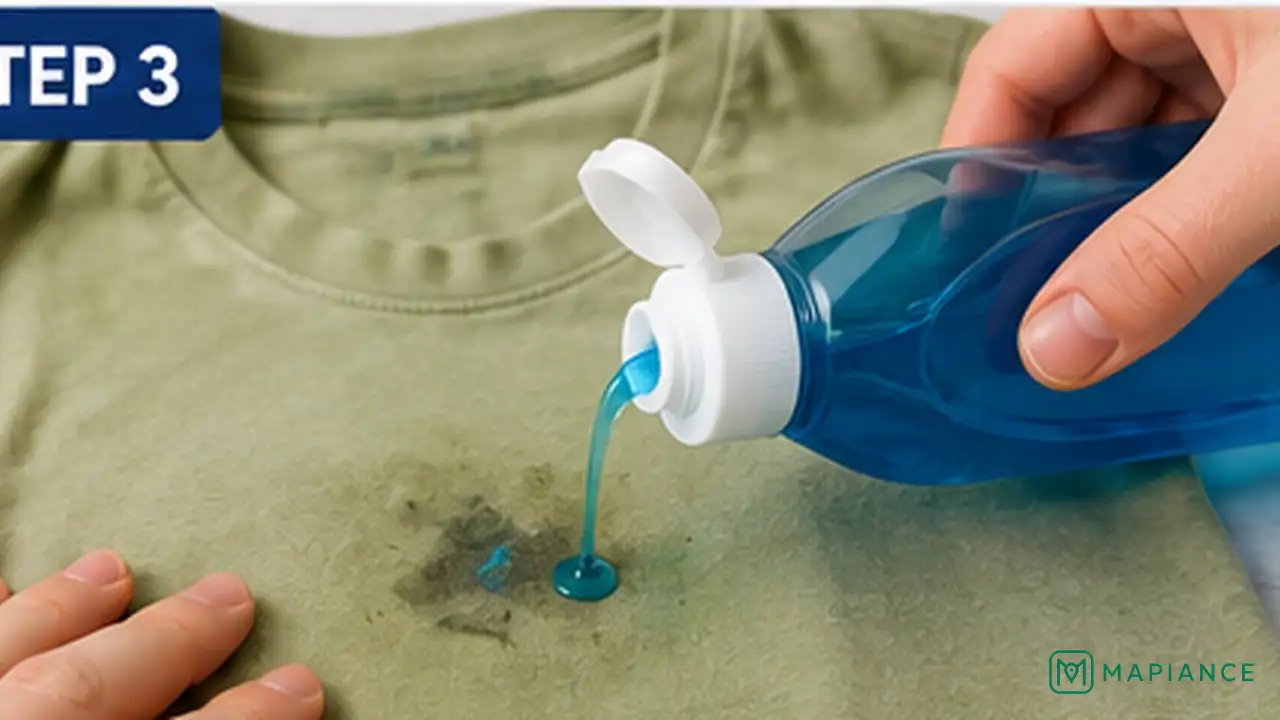
Pretreat the dry oil stain
Lay the garment on a clean towel with the stain facing up. Apply a small amount of heavy-duty liquid laundry detergent or a laundry stain remover directly to the dry stain. Gently work the product into the stained fibers with your fingers or a soft brush if the fabric can handle it. Follow the product label for how long to leave the treatment in place.
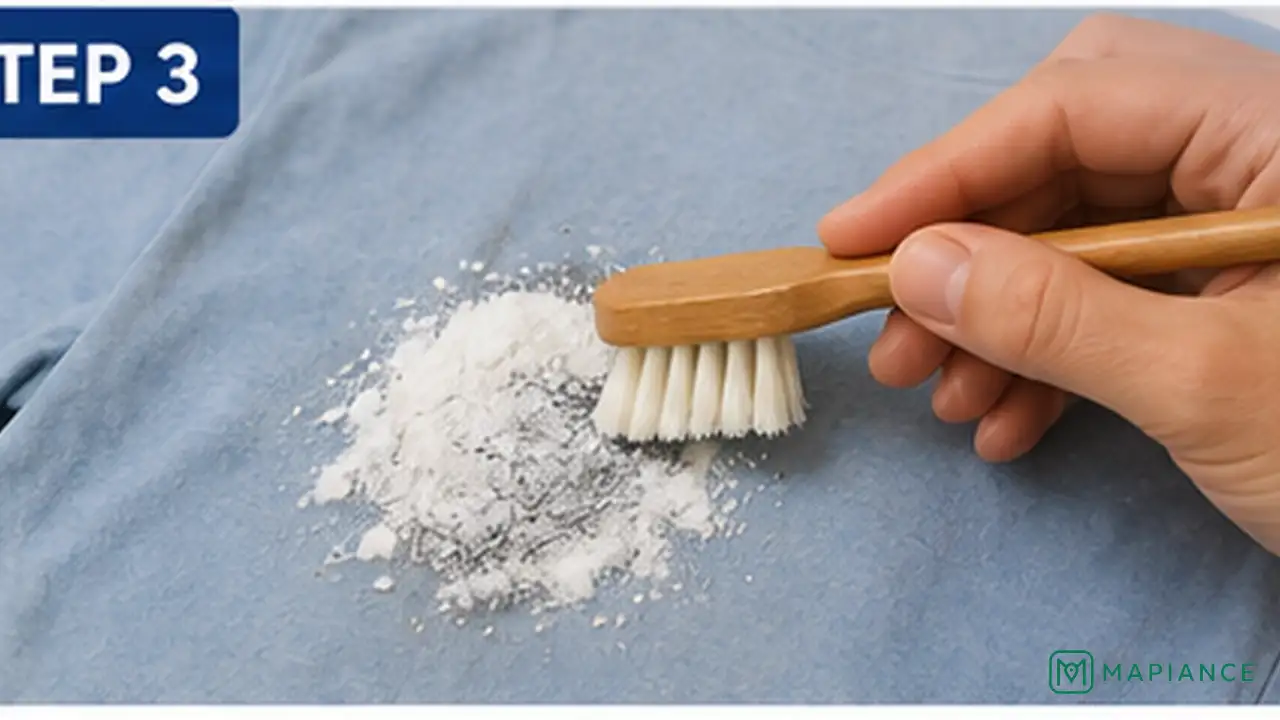
Work the treatment into the fibers
Gently rub the treated fabric against itself or use a soft toothbrush to work the detergent into the stained area. Do not scrub delicate fabric aggressively, because friction can damage the surface. The goal is to help the cleaner reach the oil trapped between the fibers, not to wear the fabric away.
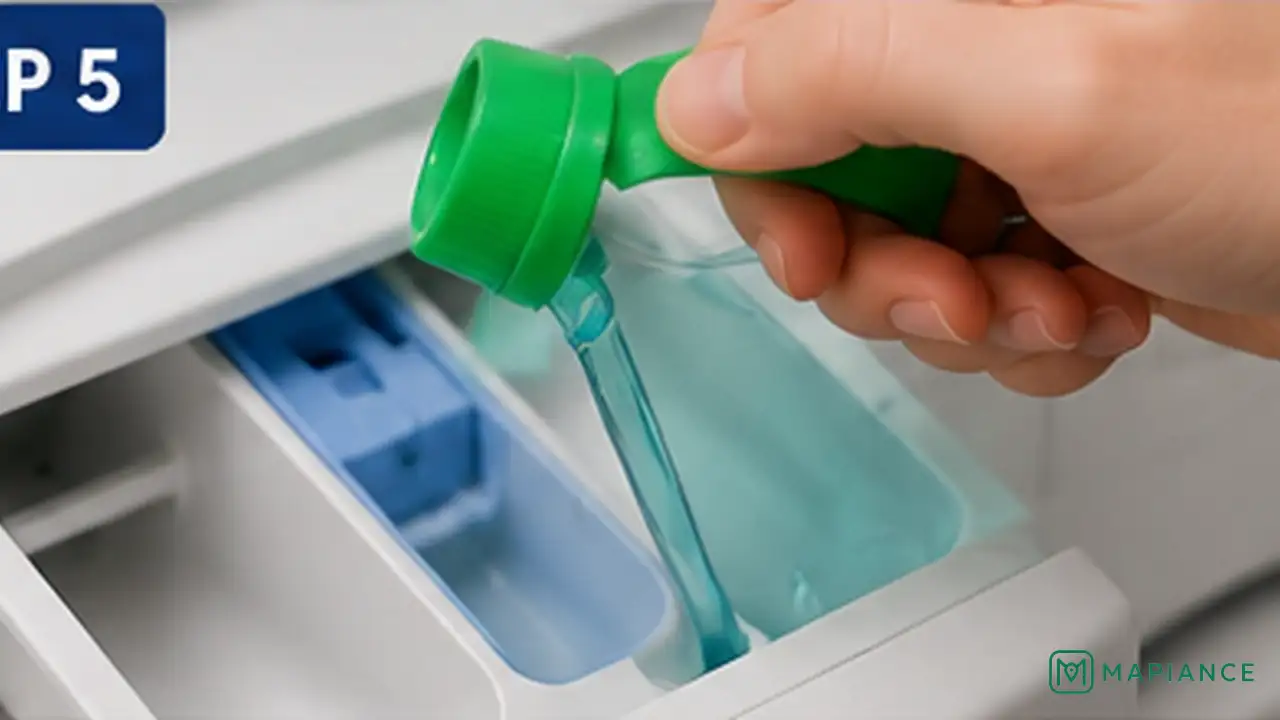
Wash at the warmest safe temperature
Wash the garment with laundry detergent using the warmest water temperature allowed by the care label. Do not exceed the fabric's safe temperature just to attack the stain. If the stain is very old and the garment allows it, an oxygen-based laundry bleach can be used according to its label as an additional treatment.
Air-dry and inspect the stain
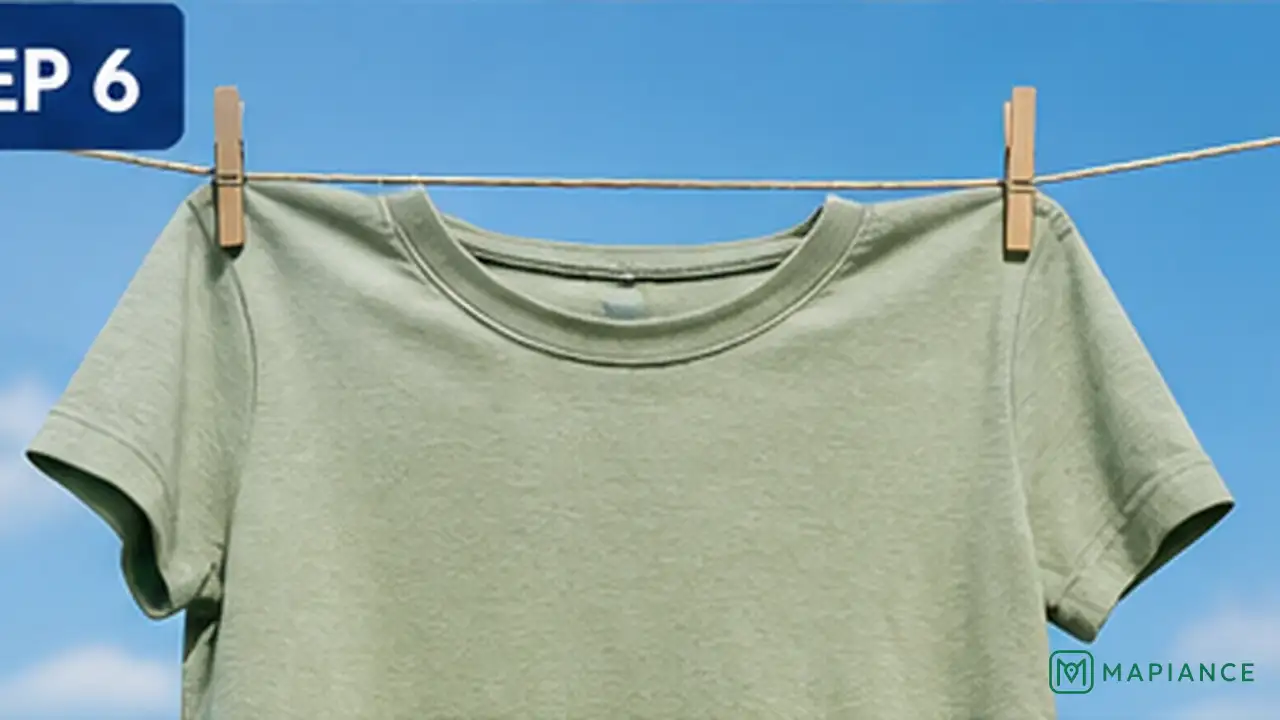
After washing, let the garment air-dry instead of putting it directly into the dryer. Check the stained area in good light once the fabric is dry. Heat from a dryer can make a remaining oily mark harder to remove, so do not machine-dry the garment until you are satisfied that the stain is gone.
Repeat the treatment if needed
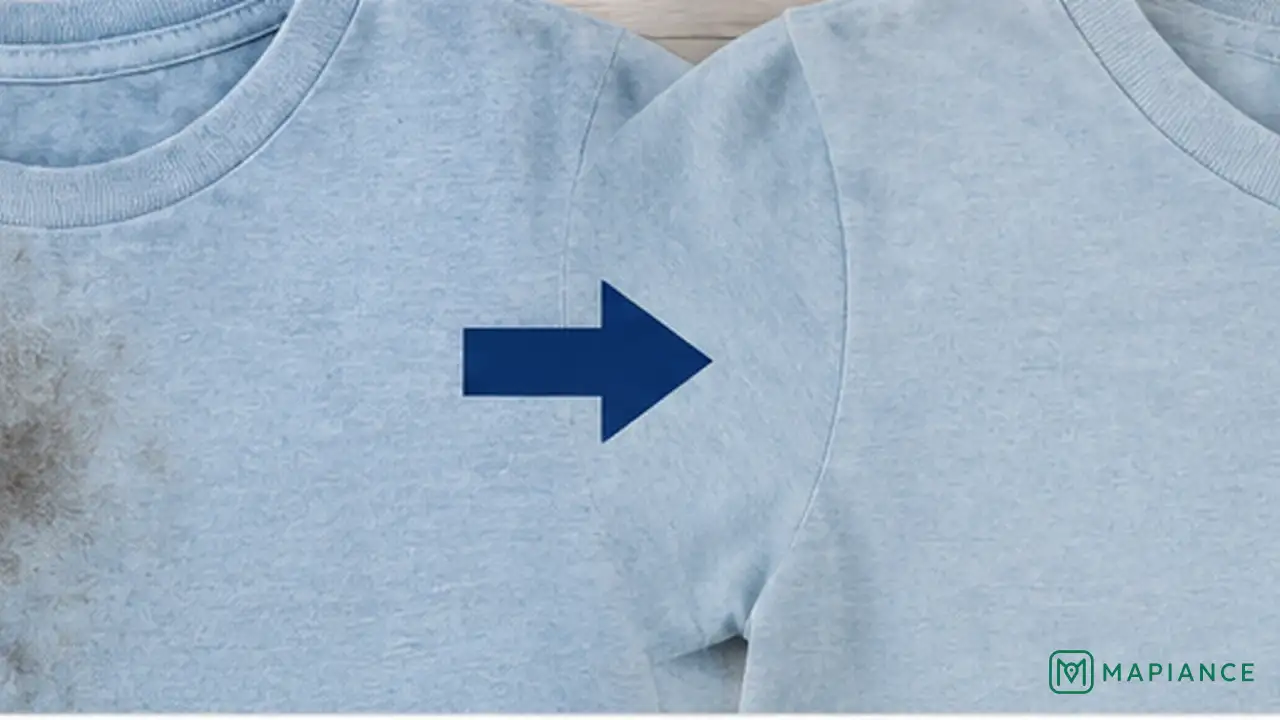
If a shadow or greasy mark remains, repeat the pretreatment and wash cycle before applying heat. Old stains may need two or more rounds. If repeated treatment does not improve the stain, stop using stronger household chemicals at random and consider a professional cleaner, especially for valuable or delicate clothing.
Tips & common mistakes
Tips for best results
- Treat the stain while the fabric is dry so the detergent can contact the oily soil directly instead of being diluted by water first.
- Use a white towel under the garment so you can see whether oil or color transfers during treatment.
- For thick fabrics such as denim or workwear, work the detergent gently from both sides of the stained area if the fabric allows it.
- Air-dry after each treatment cycle until you are sure the stain is gone.
- Test any unfamiliar stain remover on a hidden area first, especially on dark or brightly colored clothing.
Common mistakes
- Putting the garment in the dryer before checking the stain: Heat can make remaining oil residue harder to remove.
- Scrubbing delicate fabric aggressively: Excess friction can damage fibers or leave a lighter worn area.
- Using very hot water without checking the care label: Heat that is unsafe for the fabric can cause shrinking, fading, or other damage.
- Mixing different stain-removal chemicals: Combining cleaners can damage fabric or create unsafe fumes.
- Assuming one wash cycle will remove every old oil stain: Set-in stains often need repeated pretreatment and washing.
Frequently asked questions
Can old oil stains come out of clothes?
Often yes, especially on washable fabrics. Set-in stains may need several rounds of pretreatment, washing, and air-drying before the oily mark disappears.
Should I wet an oil stain before applying detergent?
For a set-in oil stain, applying liquid laundry detergent or stain remover to the dry fabric first can help the product contact the oily residue directly.
Can I use dish soap on a set-in oil stain?
Some people use grease-cutting dish soap, but laundry detergent or a stain remover designed for clothing is generally easier to rinse and is made for use in the wash. If you use any non-laundry product, test it first and use only a small amount.
Why should I air-dry the garment after washing?
Air-drying lets you inspect the stain without exposing it to dryer heat. If the oil mark is still present, you can treat it again before heat makes removal more difficult.
When should I take an oil-stained garment to a professional cleaner?
Use a professional cleaner for dry-clean-only clothing, delicate or valuable garments, or stains that do not improve after several careful home treatments.
Written by Mapiance Editorial Team
The Mapiance Editorial Team researches, writes, reviews, and maintains practical guides and explainers for MAPIANCE.
Published Aug 27, 2026 · Updated Sep 9, 2026