 MAPI
MAPIHow to Revive an Overwatered Houseplant
Overwatering damages houseplants mainly because roots stay wet for too long and lose access to oxygen. Early symptoms can include yellow leaves, soft stems, wilting despite wet soil, leaf drop, fungus gnats, or a sour smell from the potting mix. A mildly overwatered plant may recover simply by drying out, while a plant with root rot may need damaged roots removed and fresh potting mix.
Stop watering and empty any standing water from the saucer or outer pot. Move the plant to bright indirect light with normal airflow and let the potting mix begin to dry. If the soil stays soggy, smells sour, or the plant keeps declining, remove it from the pot, trim soft brown or black roots, and repot in fresh well-draining mix. Resume watering only when the plant actually needs it.
Things you'll need
- Clean towel or tray
- Clean scissors or pruning snips
- Fresh well-draining potting mix if repotting is needed
- Pot with drainage holes
- Clean gloves if preferred
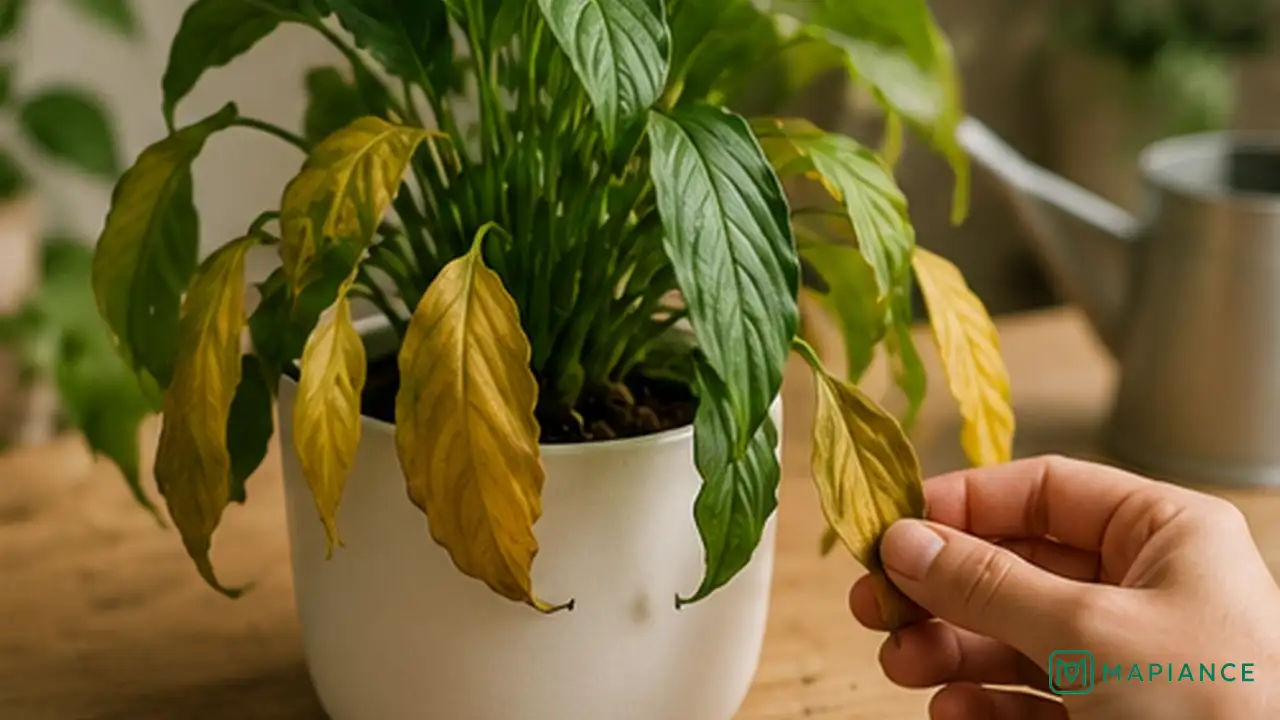
Confirm that the soil is staying too wet
Feel the potting mix below the surface and check the drainage holes. Overwatered soil often stays wet for many days, feels heavy, or has standing water in the saucer or decorative outer pot. Yellowing leaves, soft stems, and wilting can also happen, but those symptoms have other causes, so use the soil condition as an important clue before changing your care routine.
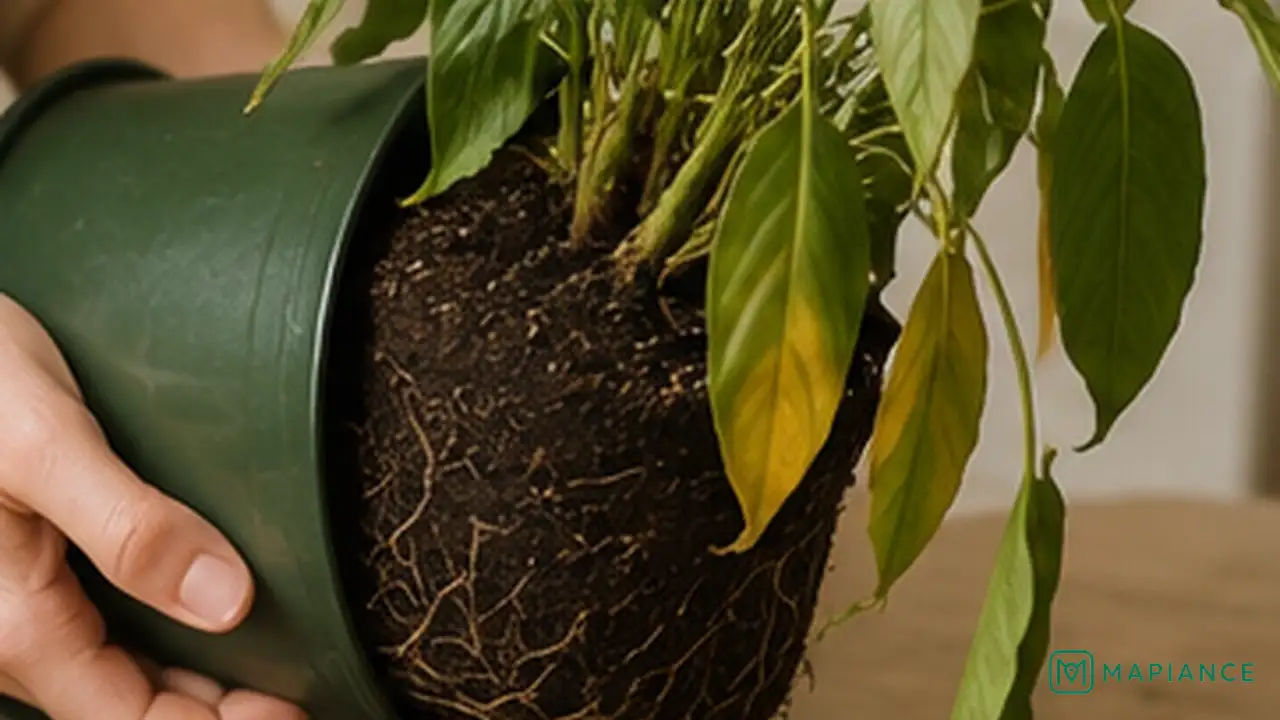
Stop watering and remove standing water
Do not add more water while the potting mix is still wet. Empty water from the saucer or outer cachepot, and make sure the inner pot is not sitting in water. If the pot has no drainage holes, move the plant into a draining container as soon as practical because trapped water can keep the root zone saturated.
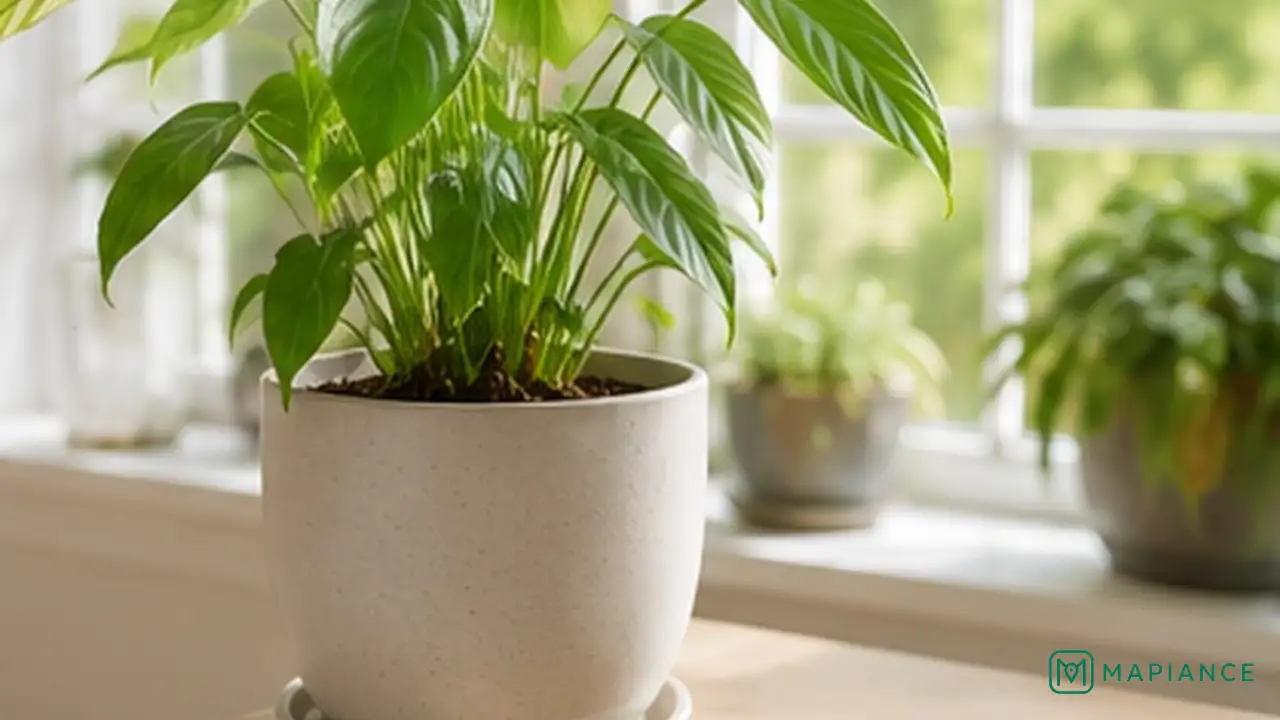
Let the potting mix begin to dry
Place the plant in bright indirect light with normal room airflow. Do not put a stressed shade plant into harsh direct sun just to dry the soil faster. Let the upper part of the potting mix dry according to the needs of that plant before watering again. A mild case of overwatering may improve during this drying period without repotting.
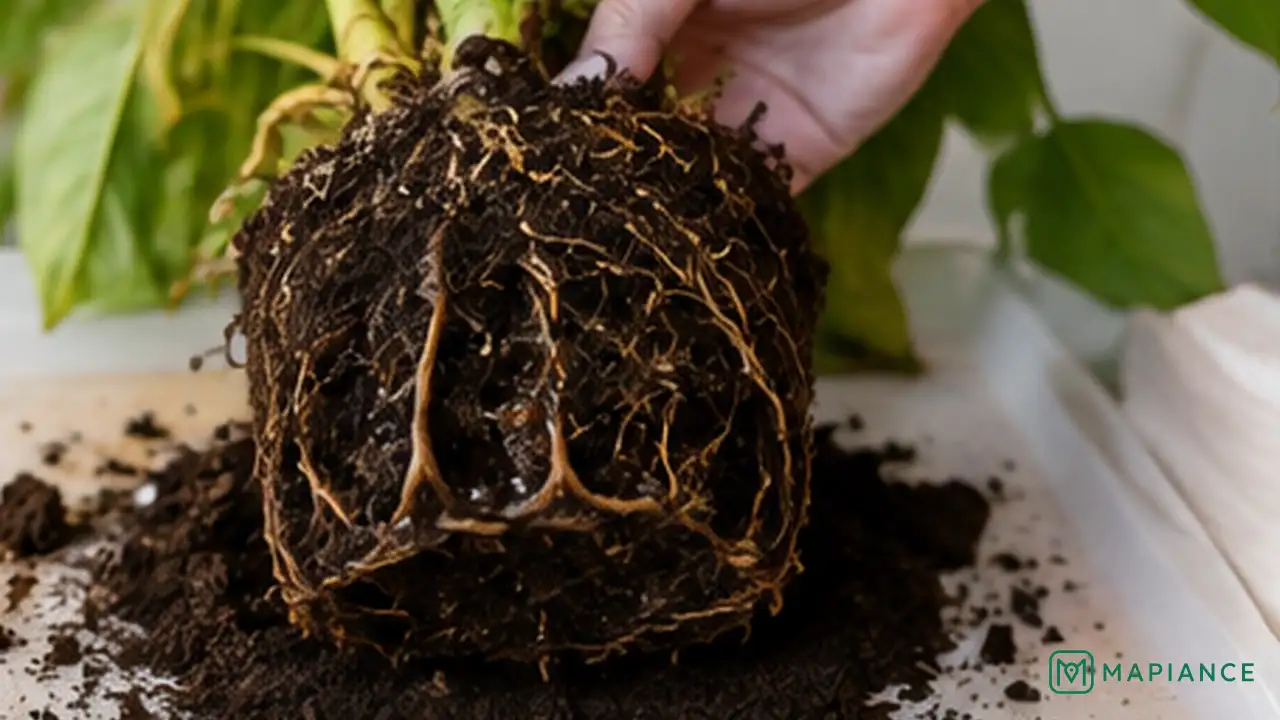
Inspect the roots if the plant keeps declining
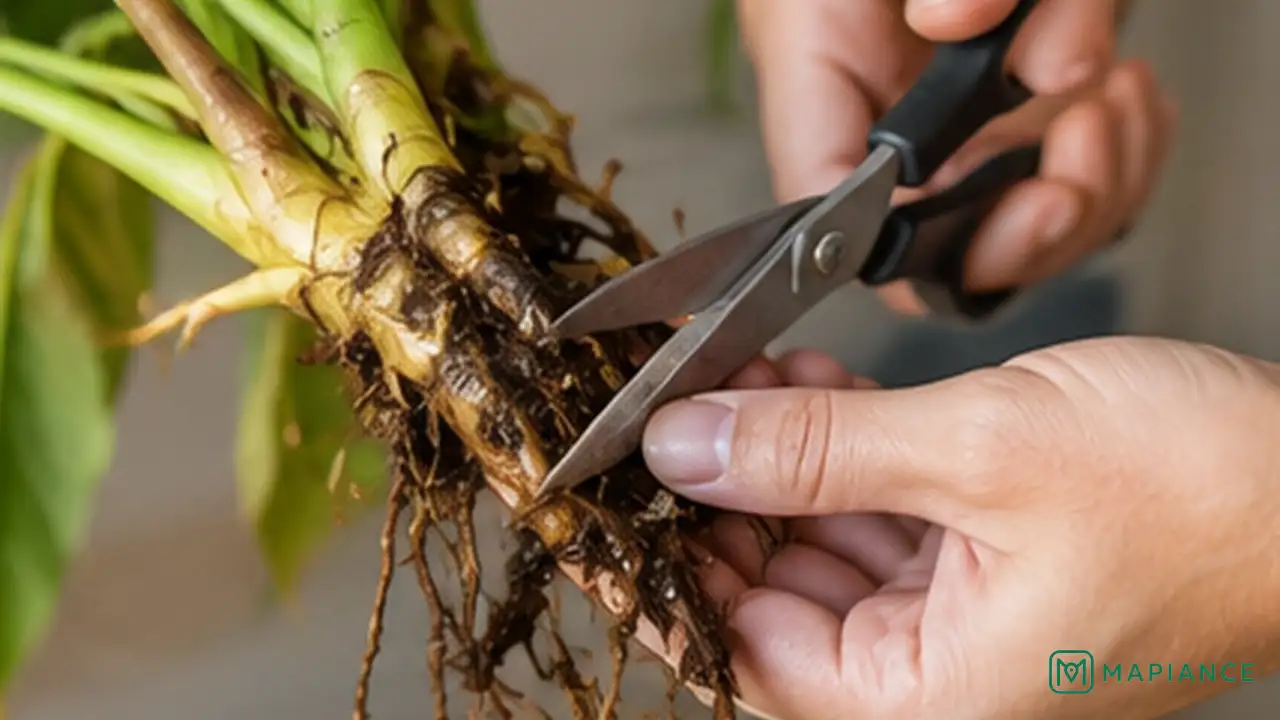
If the soil stays soggy, smells sour, or the plant continues to wilt or yellow, gently slide the root ball out of the pot. Healthy roots are usually firm. Rotting roots are often soft, mushy, dark brown or black, and may smell unpleasant. If the roots look healthy, return the plant to the pot and continue drying the mix instead of disturbing it further.
Trim rot and repot in fresh mix if needed
If you find clearly rotten roots, cut away the soft damaged sections with clean scissors or pruning snips. Repot the remaining healthy roots in fresh potting mix that suits the plant and drains well. Use a clean pot with drainage holes that is only slightly larger than the healthy root system. Do not move a weakened plant into an oversized pot because a large volume of wet soil can stay damp for too long.
Resume watering only when the plant needs it
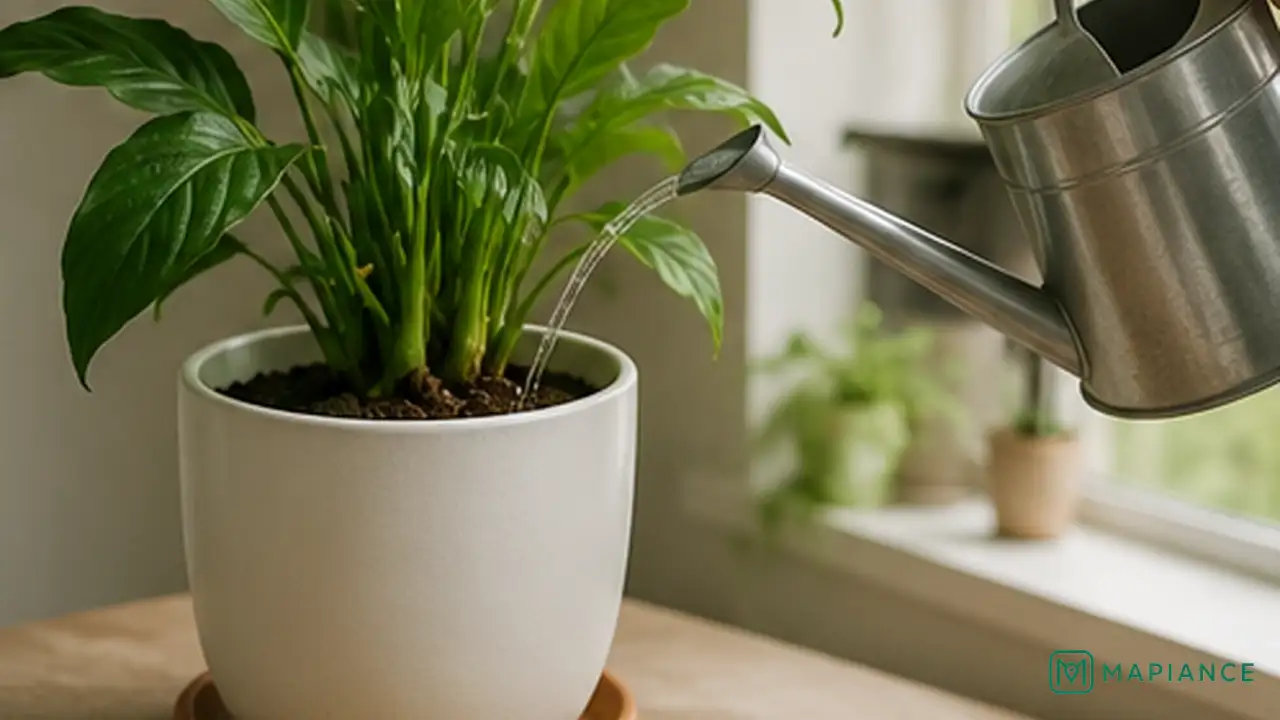
After the plant stabilizes, change the watering routine instead of following a fixed calendar. Check the potting mix before each watering and learn how much drying your plant type prefers. Water thoroughly when it is actually needed, let excess water drain out, and empty the saucer. New healthy growth and firmer leaves are better recovery signs than damaged old leaves returning to normal.
Tips & common mistakes
Tips for best results
- Lift the pot occasionally to learn how it feels when the soil is wet compared with when it is ready for water.
- Use a potting mix designed for the plant type because succulents, orchids, tropical foliage plants, and other houseplants need different drainage levels.
- Empty decorative outer pots after watering so the nursery pot does not sit in hidden water.
- Remove badly yellowed or rotting leaves only when they detach easily or are clearly declining; healthy green leaves still help the plant recover.
- Reduce watering frequency during cooler or darker periods when the plant uses water more slowly.
Common mistakes
- Watering again because the plant is wilted without checking the soil: Overwatered roots can also cause wilting.
- Putting the plant in intense direct sun to dry it quickly: A stressed plant can develop leaf scorch.
- Repotting every mildly overwatered plant: Unnecessary root disturbance can add more stress when simple drying would have been enough.
- Using a pot much larger than the root system: Extra wet soil can stay saturated for too long.
- Following a rigid watering schedule: Houseplants need water based on soil moisture, light, temperature, pot size, and plant type.
Frequently asked questions
Can an overwatered houseplant recover?
Yes. A plant can often recover if enough roots are still healthy. Mild cases may improve after the soil dries, while plants with root rot may need damaged roots removed and fresh potting mix.
How long should I stop watering an overwatered plant?
Do not use a fixed number of days. Wait until the potting mix has dried to the level appropriate for that plant before watering again.
Should I repot an overwatered plant immediately?
Not always. Repot if the soil remains waterlogged, drainage is poor, the mix smells sour, or you find root rot. If the roots and soil are otherwise healthy, allowing the plant to dry may be enough.
What do rotten roots look like?
Rotten roots are often dark brown or black, soft, mushy, or easy to pull apart. They may also have an unpleasant smell. Healthy roots are usually firmer.
Should I water immediately after repotting an overwatered plant?
If the fresh mix is already slightly moist and the plant was recently waterlogged, avoid soaking it again immediately. Follow the needs of the plant type and the moisture level of the new mix.
Written by Mapiance Editorial Team
The Mapiance Editorial Team researches, writes, reviews, and maintains practical guides and explainers for MAPIANCE.
Published Aug 28, 2026 · Updated Sep 9, 2026