 MAPI
MAPIHow to Unclog a Kitchen Sink
Kitchen sink clogs often form when grease, food particles, and soap residue collect inside the drain. A slow drain can become completely blocked if the buildup is not removed. Start with the least invasive method and only open the plumbing under the sink if plunging does not work. If a chemical drain cleaner is already in the sink or pipe, do not plunge or dismantle the drain because corrosive liquid can splash.
Remove visible debris first, then use a cup-style sink plunger with enough water to cover the plunger cup. If the sink still will not drain, clean the P-trap and use a hand drain auger to reach a deeper blockage.
Things you'll need
- Rubber gloves
- Cup-style sink plunger
- Bucket or shallow container
- Old towel or cleaning cloth
- Adjustable pliers
- Hand drain auger or drain snake
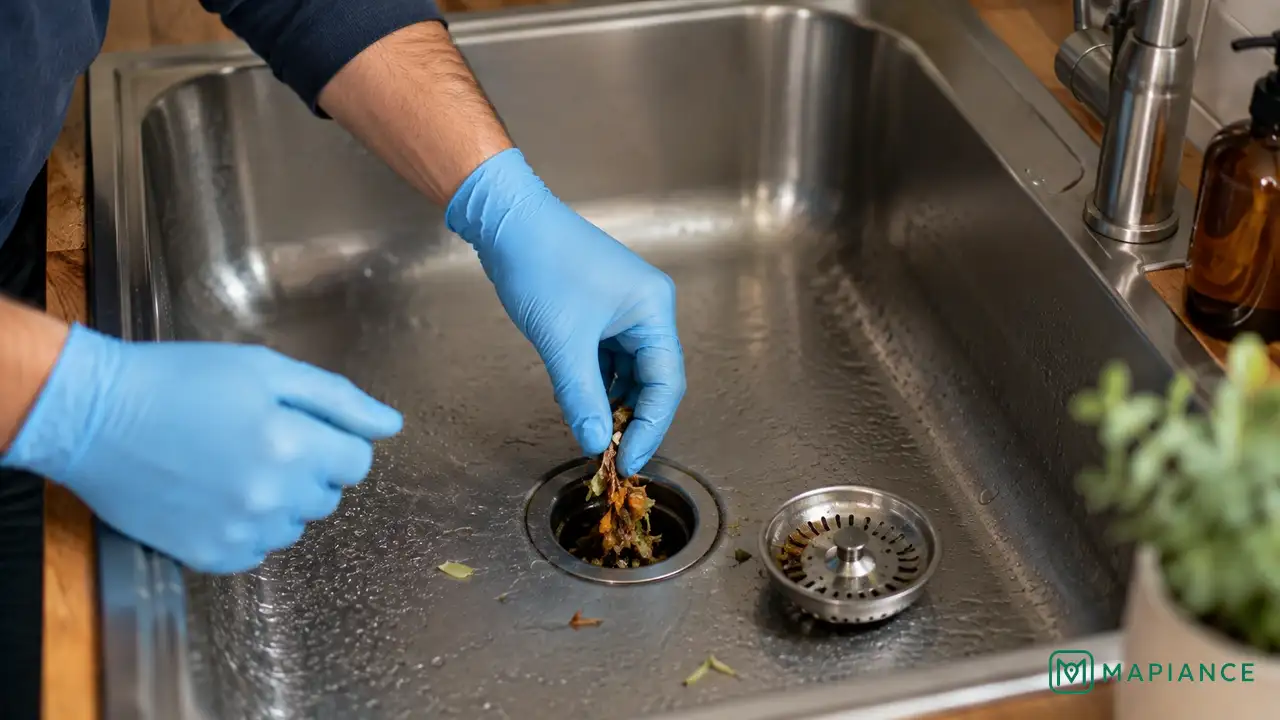
Remove Visible Debris
Scoop out most of the standing water so you can reach the drain opening. Remove the strainer and pull out visible food scraps, grease, or other debris while wearing gloves. If the sink has a garbage disposal, switch off its power at the wall switch and breaker before working near the drain, and never put your hand inside the disposal.
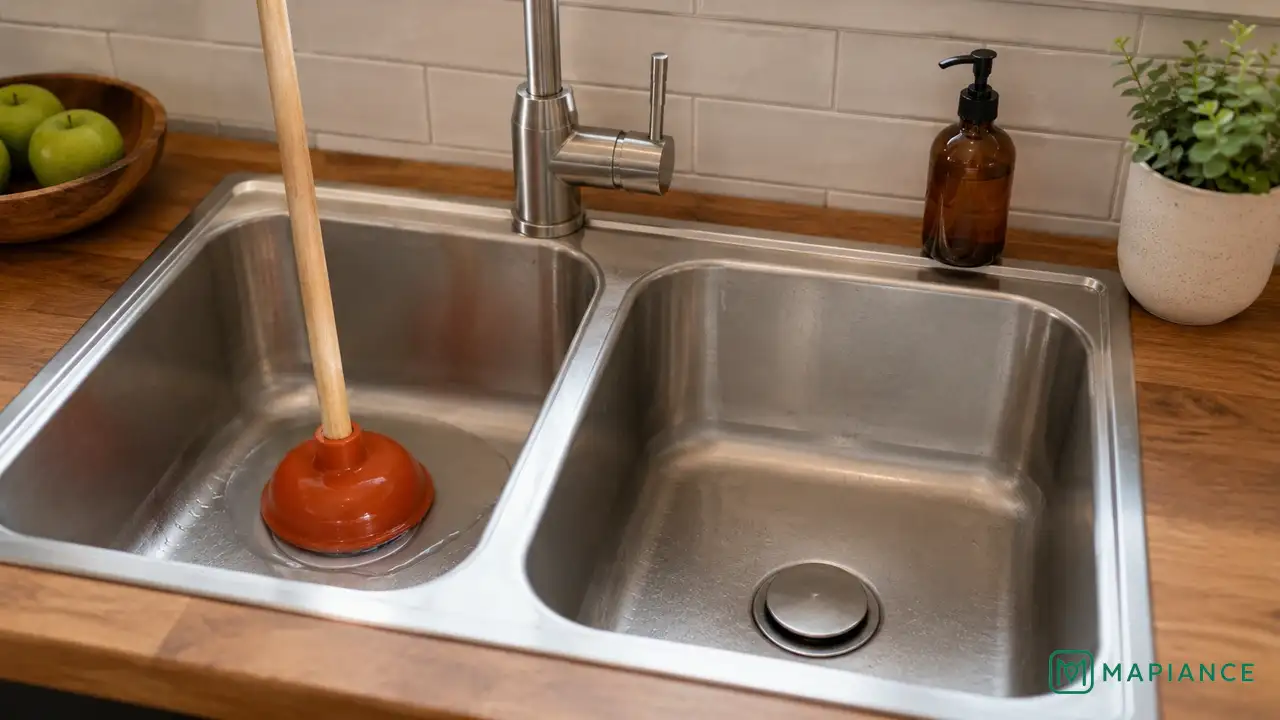
Plunge the Drain
Add enough water to cover the lower edge of the plunger cup. Center a cup-style plunger over the drain, press down to make a tight seal, then pump it up and down firmly several times without breaking the seal. On a double sink, block the second drain with a stopper or wet cloth so the pressure stays in the clogged pipe. Lift the plunger and check whether the water begins draining freely.
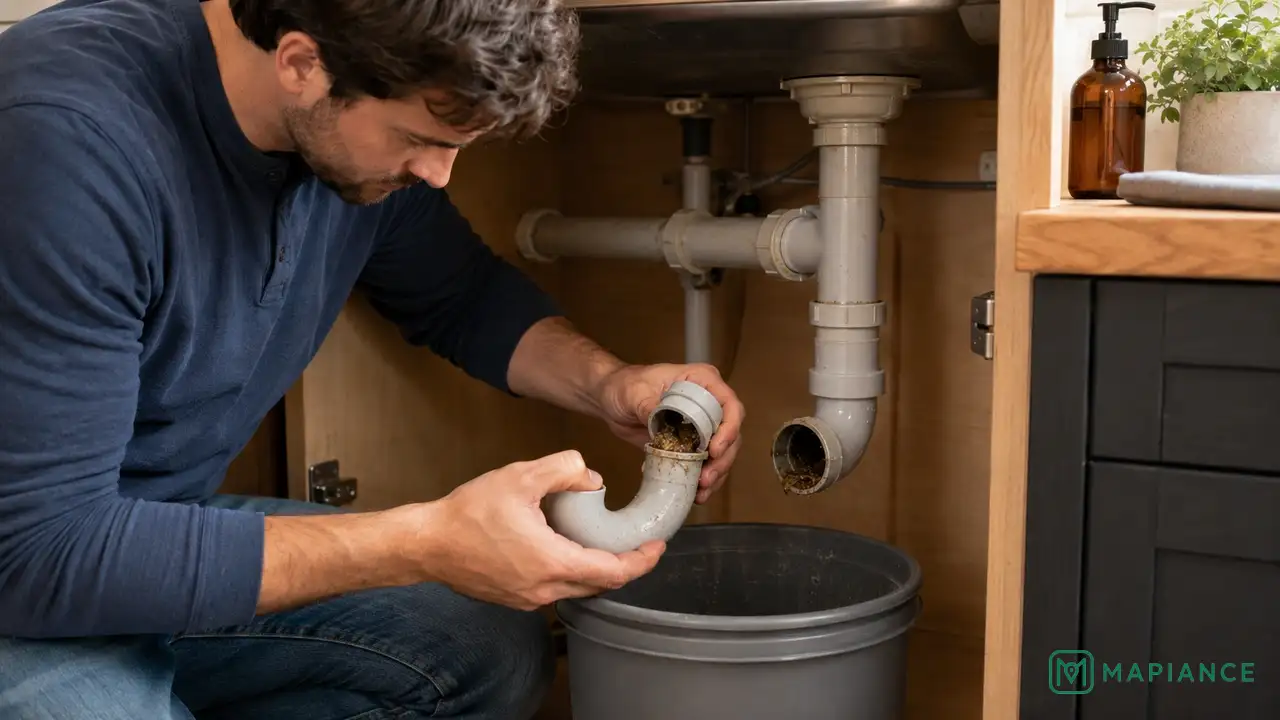
Clean the P-Trap
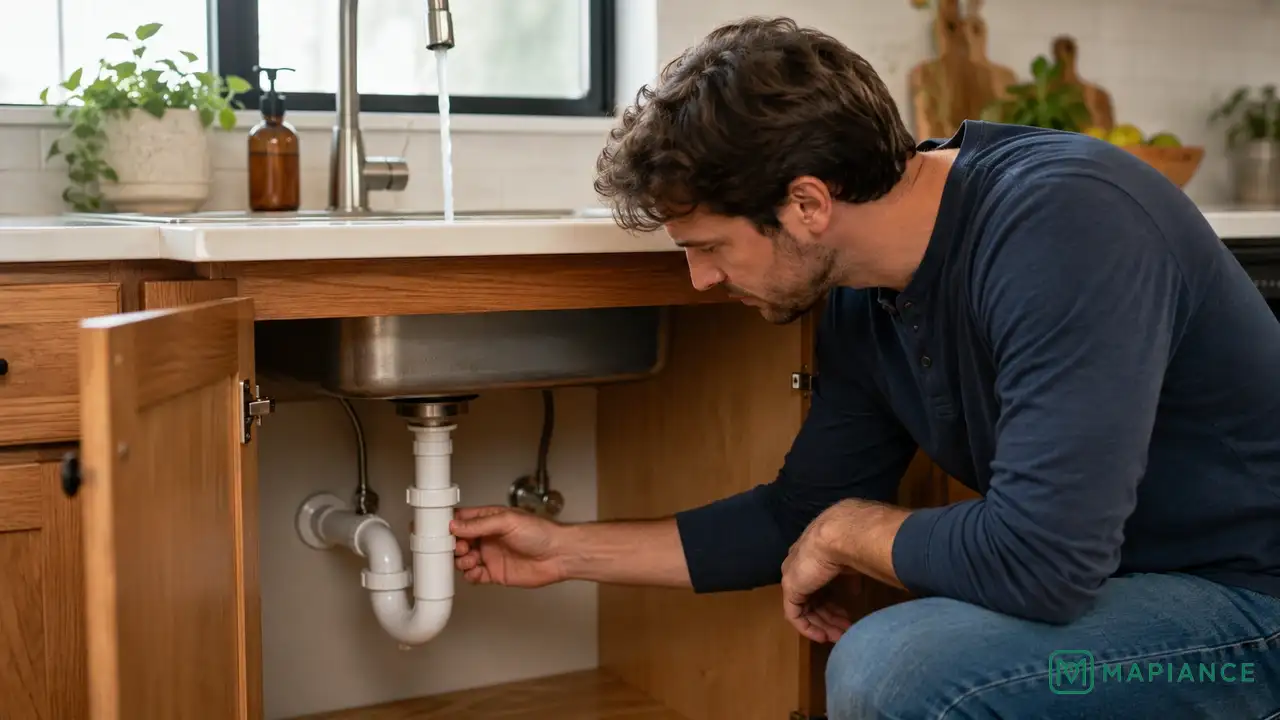
If plunging does not clear the clog, place a bucket directly under the curved P-trap below the sink. Loosen the slip nuts while supporting the trap, then lower it carefully so trapped water falls into the bucket. Remove grease, food, and sludge from inside the trap, rinse it, and keep the washers in their original positions for reassembly.
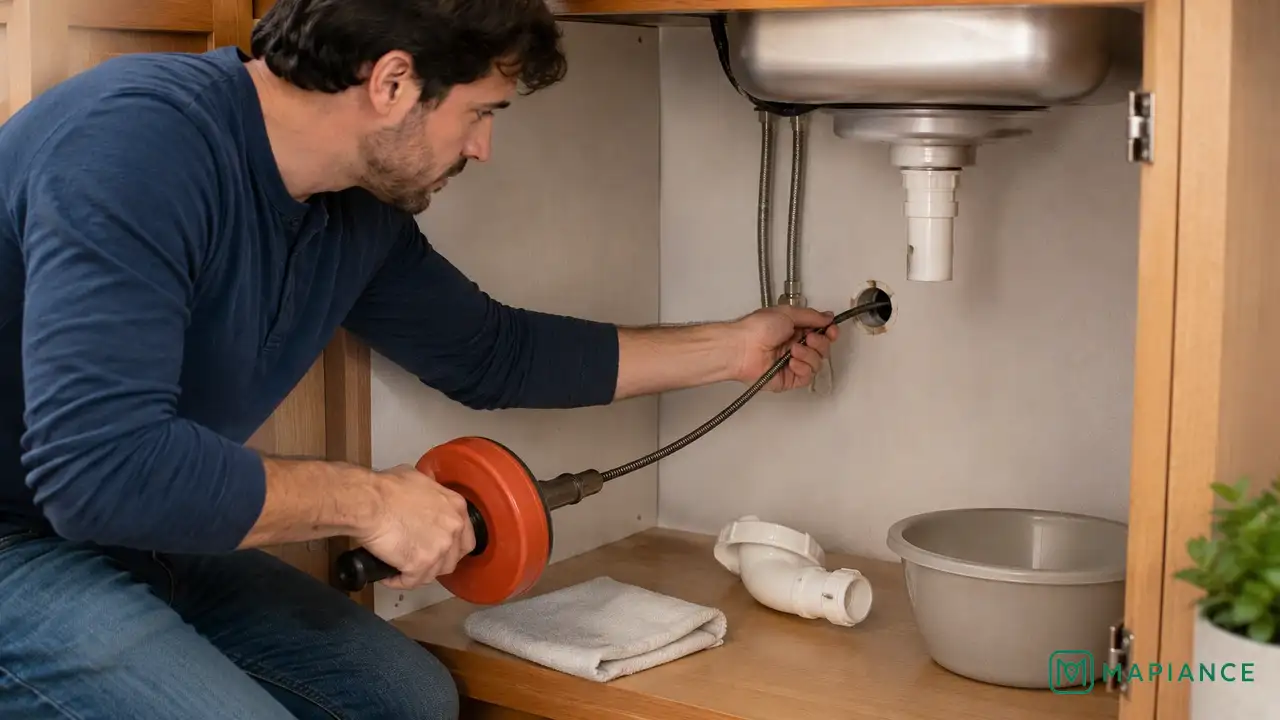
Snake the Drain Pipe
If the P-trap is clear but the sink is still blocked, feed a hand drain auger into the pipe that enters the wall. Turn the handle while slowly advancing the cable. When you feel resistance, rotate the cable gently to work through or catch the blockage instead of forcing it. Pull the cable back periodically and remove any debris attached to the tip.
Reassemble and Test
Reinstall the P-trap with its washers seated correctly and tighten the slip nuts until the joints are secure. Do not over-tighten plastic fittings. Run water into the sink for about a minute while watching every connection underneath. The sink should drain normally and the trap joints should stay dry. If the clog quickly returns or several fixtures are backing up, the blockage may be deeper in the plumbing system.
Tips & common mistakes
Tips for best results
- Use a sink strainer to catch food before it enters the drain.
- Scrape plates into the bin or compost before rinsing them in the sink.
- Wipe excess oil and grease from cookware before washing it so less fat reaches the pipes.
- Seal the unused basin of a double sink before plunging so the pressure is directed toward the blockage.
Common mistakes
- Pouring cooking grease down the sink can create sticky buildup as the grease cools and catches food particles.
- Plunging a double sink without sealing the second drain lets pressure escape and makes the plunger less effective.
- Over-tightening plastic P-trap nuts can damage the fittings or washers and cause leaks.
- Forcing a drain auger hard against resistance can damage fittings or jam the cable; advance it gradually while turning the handle.
- Plunging or opening the trap after using a corrosive drain cleaner can splash hazardous liquid onto skin or eyes; follow the product label and avoid mechanical work until it is safe.
Frequently asked questions
Why is my kitchen sink draining slowly instead of being completely blocked?
A slow drain usually means grease, food, or soap residue has narrowed the pipe but has not fully blocked it yet. Clearing the buildup early can prevent a complete clog.
Can baking soda and vinegar unclog a kitchen sink?
They may help with light residue or odors, but the reaction usually does not create enough pressure to remove a tough grease or food clog. A plunger or hand auger is more reliable for a physical blockage.
Why are both sides of my double kitchen sink clogged?
Both basins usually share part of the same drain system. A blockage in the shared trap or drain pipe can stop water from leaving either basin.
What should I do if I already used a chemical drain cleaner?
Follow the product label carefully and avoid plunging, opening the P-trap, or using a drain snake while corrosive cleaner may still be present. If you are unsure, contact a plumber rather than risk a splash exposure.
When should I call a plumber?
Call a plumber if the clog keeps returning, a hand auger cannot clear it, several fixtures are backing up, or water appears in another drain when you use the kitchen sink.
Written by Mapiance Editorial Team
The Mapiance Editorial Team researches, writes, reviews, and maintains practical guides and explainers for MAPIANCE.
Published Aug 29, 2026 · Updated Sep 30, 2026